Indian Springs State Park
The water smells of sulfur. It has for centuries, bubbling up from deep underground into the Georgia piedmont, carrying minerals and a faintly medicinal tang that the Creek people recognized long before European settlers arrived. They came here to heal the sick, drawn to springs they considered sacred. Today, visitors to Indian Springs State Park can still cup their hands under the flow and taste what the Creek tasted -- the same water, the same mineral bite, the same spot of earth. Few places in America can claim such unbroken continuity of purpose.
Taken by Treaty
The springs passed from Creek hands through two treaties that reshaped the region. The Treaty of Indian Springs in 1825 and the Treaty of Washington in 1826 transferred the land to the state of Georgia, and with it, the springs that had been a gathering place for generations. The Creek people -- more properly the Muscogee -- lost not just territory but a site of deep cultural and medicinal significance. Georgia wasted no time putting the springs to use. The state has operated Indian Springs as a public park continuously since that acquisition, making it what many historians consider the oldest state park in the nation. The park did not formally receive the title "State Park" until 1931, when it became a founding unit of Georgia's state park system alongside Vogel State Park, but the land had been in public hands for over a century by then.
The Resort Era
In the 19th century, Indian Springs became a fashionable resort destination. The sulfur springs drew visitors who believed in the water's curative properties, and a small town grew up around the attraction. Hotels, boarding houses, and social gatherings turned the area into a seasonal retreat for Georgians seeking health and recreation. It was a pattern repeated across the American South wherever mineral springs surfaced -- the belief that the right water could cure what ailed you. The resort era eventually faded, but the park endured. In 1927, the site was designated a "State Forest Park," and by 1931 it had earned full state park status. The small museum on the grounds today traces this arc from healing springs to resort town to public park, preserving the memory of each era.
Built by the CCC
The Great Depression brought a new chapter. Young men from the Civilian Conservation Corps arrived at Indian Springs and built structures that still define the park's character. Their stone pavilion stands as a monument to Depression-era craftsmanship -- solid, handsome, built to last by workers who needed the paycheck as much as the park needed the buildings. The CCC crews constructed shelters, facilities, and infrastructure that transformed Indian Springs from a historic curiosity into a fully equipped recreational park. Several of these structures survive today, their stonework a testament to the skill of men who built something permanent during a time of profound impermanence.
Springs and Trails
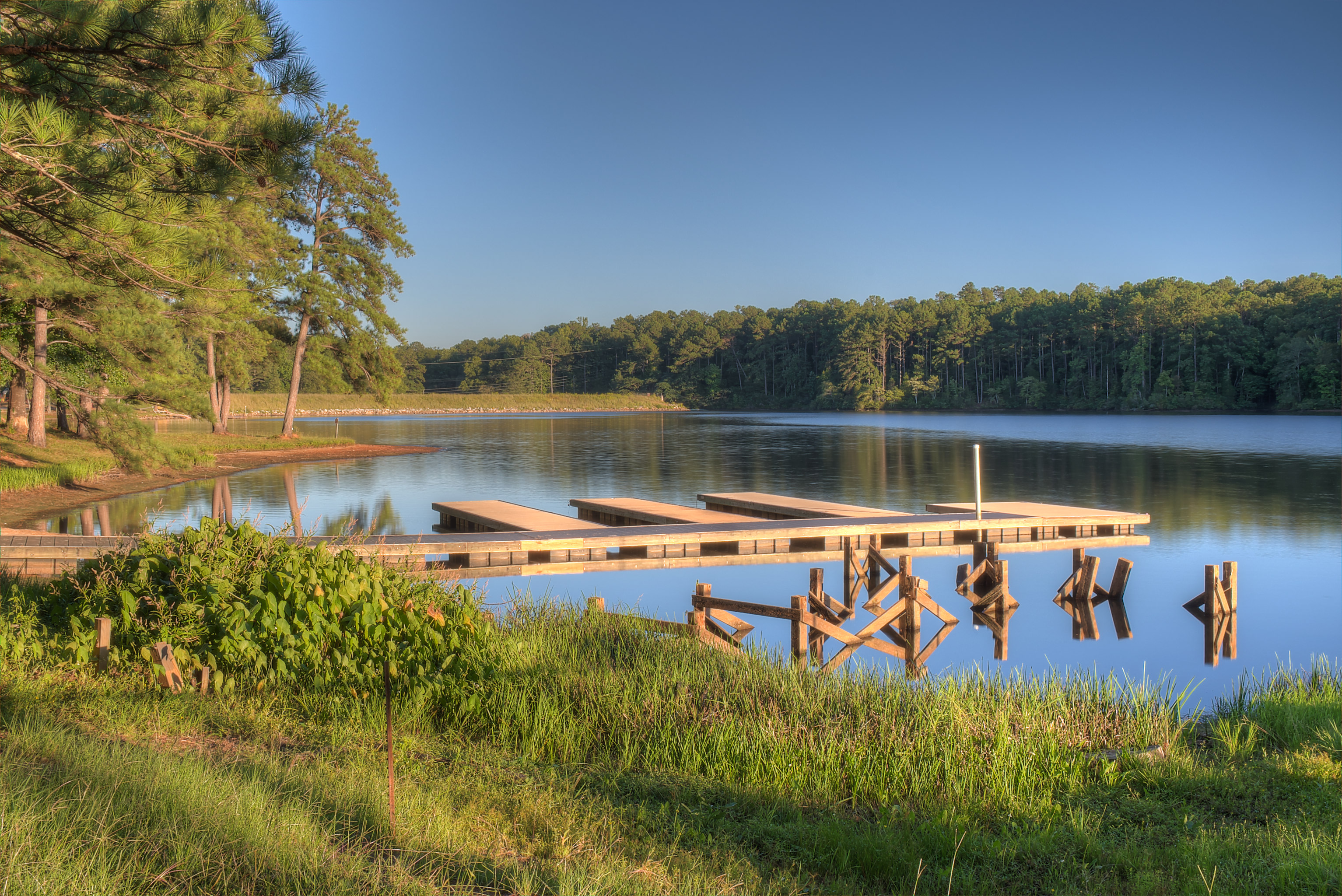
Modern Indian Springs State Park centers on its lake, stocked with fish and ringed by facilities that include 62 campsites, 10 cottages, picnic shelters, and a miniature golf course. A nature trail winds through the surrounding forest, and a longer trail connects the park to the Dauset Trails Nature Center nearby. But the springs remain the heart of the place. The Spring House, a stone structure that shelters the main spring, invites visitors to do what people have done here for centuries: drink the water. The Southeastern Indian Celebration held each June honors the Creek heritage of the site, ensuring that the story does not begin with the treaties but with the people who knew these springs first. The park's museum displays exhibits on Creek history and culture alongside its natural history collections, tying together every layer of the park's long past.
From the Air
Located at 33.24°N, 83.93°W in Butts County, Georgia, between the towns of Jackson and Flovilla, about 45 miles south-southeast of Atlanta. The park sits in the rolling piedmont landscape of central Georgia. Nearest major airport is Hartsfield-Jackson Atlanta International (KATL) approximately 40 nm to the northwest. From altitude, look for the small lake within a wooded area along the corridor between Jackson and Flovilla. The surrounding terrain is a mix of farmland and pine-hardwood forest typical of the Georgia piedmont.