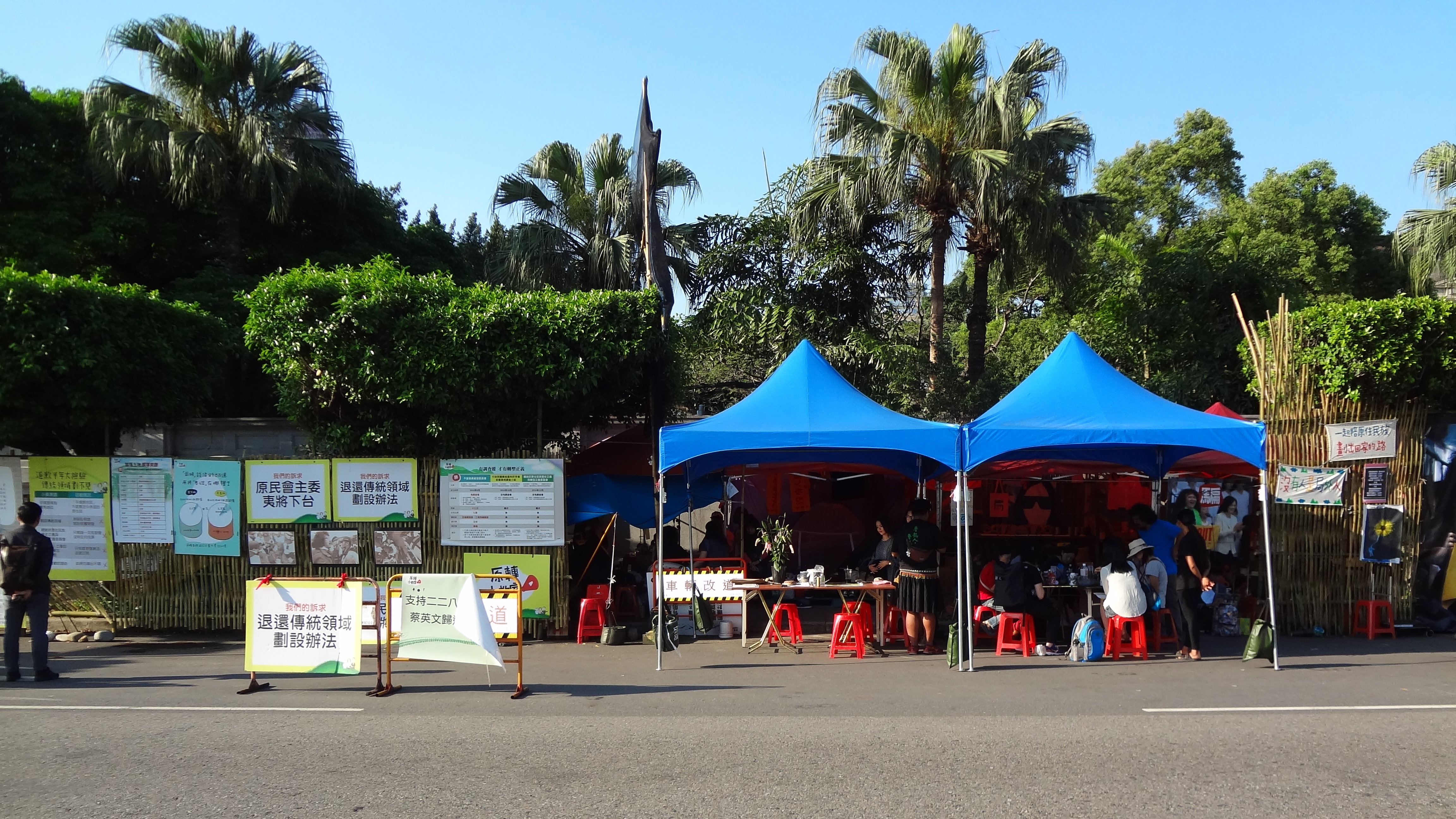
Indigenous Ketagalan Boulevard Protest
"No one is an outsider." The slogan, spray-painted on banners and chanted through megaphones, carried across Ketagalan Boulevard in the winter of 2017 as Taiwanese indigenous activists pitched tents on the asphalt strip leading to the Presidential Office Building. What began as a protest against a government regulation on traditional land territories grew into one of Taiwan's most visible indigenous rights movements in a generation, drawing together aboriginal musicians, student activists, environmentalists, and an English pop star along the way.
The Broken Promise of 1.8 Million Hectares
The spark arrived on February 14, 2017, when the Council of Indigenous Peoples announced its "Regulations for Demarcating Indigenous Traditional Territories." The rules should have been a milestone. Instead, they became a betrayal. A 2007 government survey had identified roughly 1.8 million hectares as indigenous traditional territory. But when the regulations were formally proclaimed on February 18, they excluded all private land, slashing the recognized territory to approximately 800,000 hectares. For Taiwan's indigenous peoples, who make up about two percent of the island's population and whose ancestors inhabited the land long before Han Chinese settlement, the gap between promise and policy felt deliberate. Activist Panai Kusui, an Amis and Puyuma singer known across Taiwan for her music, joined her husband Nabu Husungan Istanda and documentary filmmaker Mayaw Biho in establishing a protest encampment directly on the boulevard.
A Boulevard Built for Defiance
Ketagalan Boulevard is no ordinary street. Renamed in 1996 to honor the Ketagalan people who originally inhabited the Taipei basin, it runs 400 meters from the Presidential Office Building to the East Gate, and has served as Taiwan's foremost stage for political protest since the country's democratic transition. The irony of indigenous activists camping on a road named for an indigenous people, protesting a government that had renamed it as a gesture of respect, was not lost on anyone. For over a hundred days, the encampment held. Then, on June 3, 2017, police dismantled the site. The activists did not go home. They relocated to the Taipei Metro National Taiwan University Hospital Station and continued their vigil.
Sunflowers and Cement Mines
The protest drew allies from unexpected corners. Lin Fei-fan, a leader of the 2014 Sunflower Student Movement that had occupied Taiwan's legislature over a trade pact with China, joined the encampment on its first day. On February 28 -- Peace Memorial Day, commemorating the 1947 massacre that remains a wound in Taiwan's national memory -- Lin marched with indigenous protesters to 228 Peace Memorial Park and published an essay declaring he would "stand with Taiwan's indigenous peoples." By summer, the movement had found common cause with an even larger coalition. Thousands gathered between the Executive Yuan and the Presidential Office Building to protest Asia Cement's twenty-year extension of mining rights in Hualien County, granted without an environmental impact assessment. The death of documentary filmmaker Chi Po-lin while filming a sequel to his acclaimed 2013 film "Beyond Beauty: Taiwan From Above" intensified public anger when his final footage appeared to show the company expanding operations it claimed to have reduced.
Songs on the Asphalt
Twenty-three days into the encampment, English singer Joss Stone arrived on Ketagalan Boulevard as part of her Total World Tour. She sat with Panai Kusui on the protest site, learned one of Panai's songs, and sang it alongside her. The resulting video, brief but widely shared, introduced the protest to an international audience that might never have encountered it otherwise. The collaboration captured something essential about the movement: its ability to bridge worlds. Indigenous and environmental activists found shared purpose. Student organizers from the Sunflower movement lent their experience and networks. A friendship between the indigenous land rights camp and the anti-mining protesters, as Nabu described it, grew from the common accusation that the government was failing to protect aboriginal land from exploitation. What started as a dispute over hectares became a broader reckoning with how Taiwan honors -- or fails to honor -- the people who were there first.
An Unfinished Story
The Indigenous Ketagalan Boulevard protest did not end with a single victory or a definitive defeat. The regulations that triggered it remained in force, the gap between 800,000 and 1.8 million hectares unresolved. But the movement shifted the terrain of the conversation. It made indigenous land rights visible to a broader Taiwanese public, forced uncomfortable questions about the limits of the government's reconciliation agenda under President Tsai Ing-wen, and demonstrated that the island's indigenous communities could build coalitions that transcended their relatively small numbers. The tents may have been cleared from the boulevard, but the demand they represented -- for recognition of territory, for consultation before decisions are made, for indigenous peoples to be treated as stakeholders rather than afterthoughts -- continues to shape Taiwan's evolving relationship with its first inhabitants.
From the Air
Located at 25.039N, 121.515E in central Taipei's Zhongzheng District. The protest site on Ketagalan Boulevard sits between the Presidential Office Building and the East Gate, visible as a wide ceremonial avenue from lower altitudes. Nearby Taipei Songshan Airport (RCSS) serves domestic flights; Taiwan Taoyuan International Airport (RCTP) is approximately 35 km to the west. The boulevard is identifiable from the air by the distinctive red-brick Presidential Office Building at its western terminus.