Inner Mongolia
China's only launch site for crewed space missions sits in the western reaches of Inner Mongolia, in the Alxa League's Ejin Banner -- the same desert where, in 1930, Swedish-led archaeologists unearthed 10,000 Han dynasty wooden tablets inscribed two thousand years ago. That juxtaposition captures Inner Mongolia's essence: a region so vast it spans three of China's geographic divisions, so historically layered that space capsules descend by parachute onto land where Genghis Khan's descendants once rode.
A Region Shaped Like a Crescent Moon
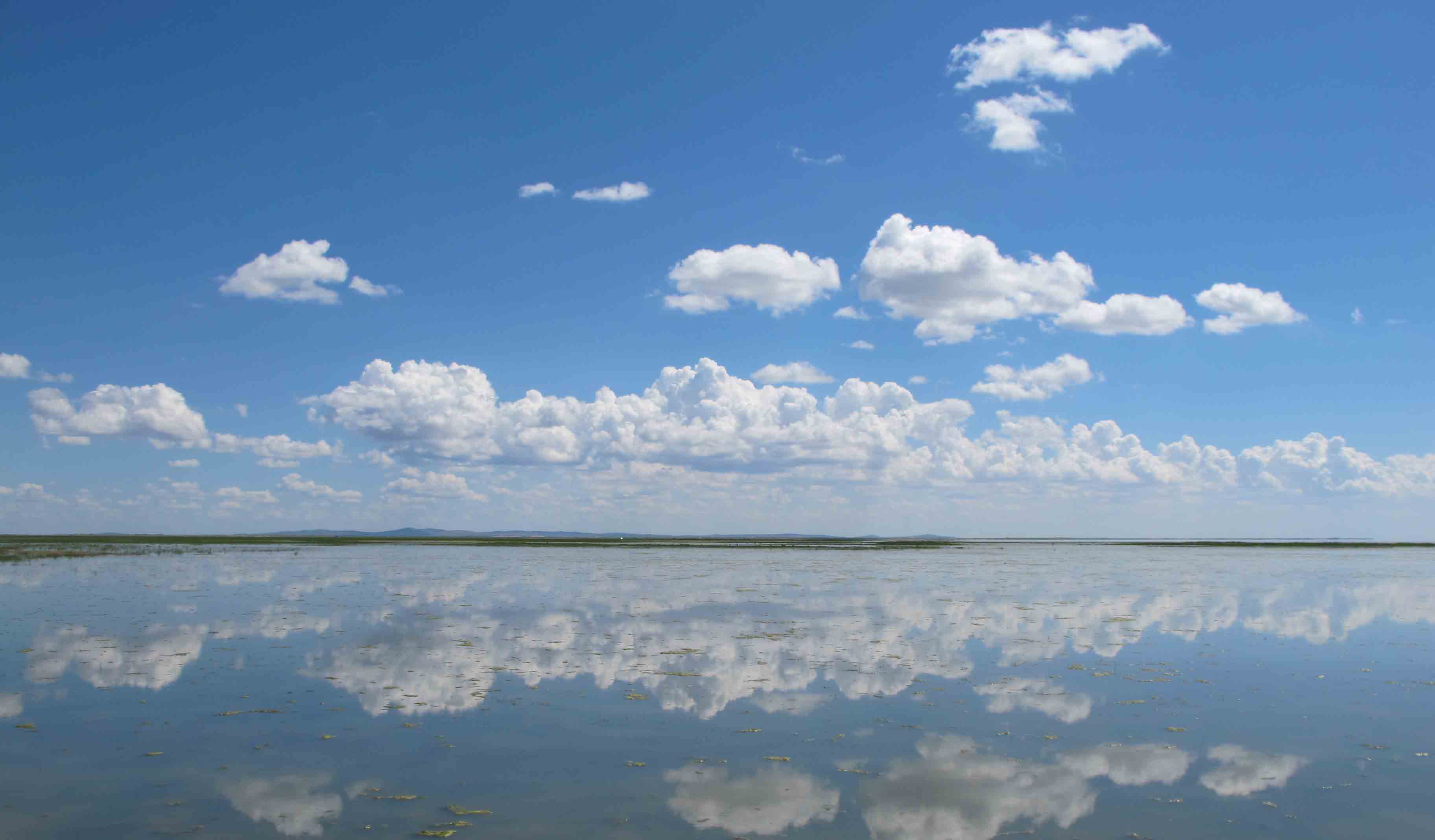
Inner Mongolia stretches 2,400 kilometers from the forests of the Greater Khingan Mountains in the northeast to the Gobi Desert in the southwest, making it China's third-largest administrative subdivision at roughly 1.2 million square kilometers. The elongated shape borders eight Chinese provinces and shares international frontiers with Mongolia and Russia. Most of the region is a plateau averaging 1,200 meters in elevation, covered by loess and sand deposits accumulated over millennia. In the northeast, Manchurian elm, birch, and Mongolian oak populate cooler forests where discontinuous permafrost persists near Hailar. Moving southwest, the landscape transitions through the vast grasslands that have defined Mongol culture for centuries, then into the arid steppes and desert dunes of the Alxa region, where annual rainfall barely registers.
Empires Rise and Fall on the Steppe
The contest for Inner Mongolia's grasslands is among the oldest recurring themes in Chinese history. The Xiongnu, Xianbei, Khitan, Jurchen, and Mongol peoples each controlled portions of the region before the Mongol unification under Genghis Khan in 1206. His grandson Kublai Khan built his summer capital, Shangdu -- the Xanadu of Coleridge's poem -- in what is now Zhenglan Banner. When the Ming dynasty overthrew the Yuan in 1368, it rebuilt the Great Wall roughly along what is today Inner Mongolia's southern border. The Qing dynasty took a different approach: after the Manchus conquered the region in the 1630s, they divided it into a system of banners and leagues, married Manchu princesses to Mongol nobles, and prohibited Han Chinese settlement to maintain the Mongols as a separate, loyal buffer population. That policy crumbled in the 18th century as famine refugees from northern China streamed into the grasslands, and by the 1780s, hundreds of thousands of hectares had been converted to farmland.
Grasslands and Smokestacks
Modern Inner Mongolia runs on contradictions. Its vast grasslands -- the rolling steppe that has symbolized Mongol identity for centuries -- coexist uneasily with one of China's largest mining industries. Inner Mongolia holds more than a quarter of the world's coal reserves, and its rare-earth mineral deposits in Baotou supply critical materials for electronics and green energy technology worldwide. GDP per capita ranks eighth among China's provinces, driven by energy, metallurgy, and chemicals. Companies like Yili and Mengniu, both based here, have become China's dominant dairy brands, transforming the pastoral economy of milk and livestock into industrial-scale production. But growth has exacted costs: cities in the region rank among China's most polluted, desertification claims more grassland each year, and the Hunshandake Sandland -- where sand dunes expanded from 2 percent to 33 percent of the landscape between the 1960s and 2000 -- testifies to the ecological pressures that rapid development brings.
Two Scripts, Two Worlds
Of Inner Mongolia's approximately 25 million residents, about 78 percent are Han Chinese and 17 percent are ethnic Mongol. The Mongol population of over 4 million people uses the traditional Mongolian script -- vertical columns read from left to right -- distinct from the Cyrillic alphabet used in the nation of Mongolia to the north. By law, all street signs and government documents must be bilingual. Three Mongolian-language television channels broadcast across the region. Yet the practical reality is more complicated. Mongolian-language education has experienced cycles of revival and decline since the founding of the People's Republic, and the 2020 announcement that Chinese would gradually replace Mongolian as the language of instruction in several school subjects sparked protests across ethnic Mongol communities. Many urban Mongols speak Mandarin fluently while maintaining their ethnic identity; intermarriage rates between Mongols and Han Chinese are remarkably high compared to other minority regions. The culture persists in different forms -- in the dairy traditions, in the grassland festivals, in the Naadam celebrations of wrestling, archery, and horse racing that draw participants from across the steppe.
From the Air
Inner Mongolia stretches from approximately 37N to 53N latitude and 97E to 126E longitude, spanning an enormous swath of northern China. The capital Hohhot (ZBHH) sits at approximately 40.85N, 111.82E. Major airports include Hohhot Baita International (ZBHH), Baotou Erliban (ZBOW), and Ordos Ejin Horo (ZBDS). From altitude, the region transitions from forested mountains in the northeast through vast grasslands to desert in the southwest. The Jiuquan Satellite Launch Center (ZBYZ) is located in western Alxa League.