Inokashira Park: The Emperor's Gift and the Breakup Curse
Local wisdom in western Tokyo is clear on one point: ride the swan boats on Inokashira Pond with your sweetheart and the relationship is finished. The goddess Benzaiten, enshrined in a small temple at the water's edge, is said to grow jealous of happy couples. Despite this warning -- or perhaps because of it -- the pedal boats are perpetually occupied on weekends, couples testing fate against a backdrop of cherry blossoms in spring and migrating waterfowl in winter. The superstition is one of Tokyo's most enduring, and the park that sustains it has been drawing crowds since 1917, when it opened as a gift from the Emperor to the people.
An Imperial Gift Takes Root
The land that would become Inokashira Park was given to the city of Tokyo in 1913. On May 1, 1917, it opened under the official name Inokashira Onshi Koen -- Inokashira Imperial Grant Park -- signifying a direct gift from the Emperor to the general public. The park straddles two cities, Musashino and Mitaka, covering 383,773 square meters of western Tokyo. At its heart lies Inokashira Pond, a long, narrow body of water stretching from northwest to southeast, splitting into two branches at its upper end. From the southeastern tip, the Kanda River flows outward on its journey through central Tokyo. The pond's springs were established during the Edo period, making this site one of the historic sources of one of Tokyo's most important waterways.
A Canopy of Blossoms and Wings
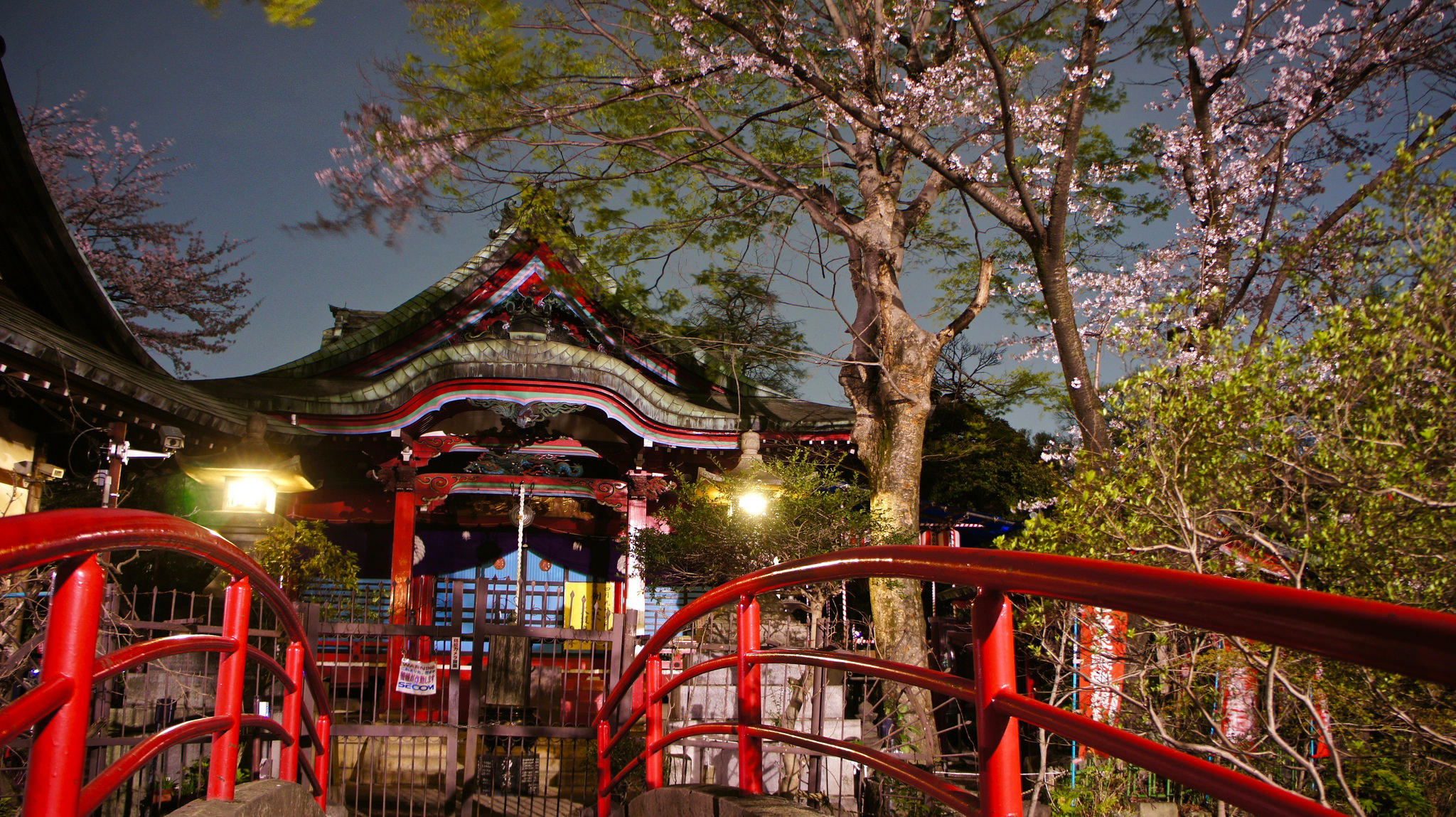
Spring transforms the park into one of Tokyo's premier hanami destinations. From the Nanai Bridge, which crosses the pond near its center, the branches of cherry trees extend from both shorelines and bloom so densely that their pale canopy all but covers the water's surface. The blossoms contrast with the sky and pond in layers of pink and blue. Before the cherries arrive, a plum grove on the park's western side offers its own quieter display. Summer brings deep green shade to the Gotenyama thicket on the park's western edge. In autumn, the leaves of the park's more than 11,000 tall trees turn, and fallen foliage buries the walking paths. Winter brings migrating birds that transform Inokashira Pond into a wintering ground, giving the park a lively character even in the coldest months.
Where Ghibli Meets Benzaiten
The park's attractions range from the sacred to the fantastical. A small temple dedicated to Benzaiten, the Buddhist goddess of music, eloquence, and water, sits at the pond's edge. Nearby, a Kanzeon statue watches over visitors. On weekends, the pathways fill with vendors, street musicians, and performers who transform the park into an open-air market and stage. A petting zoo and small aquarium add to the mix. But the park's most famous neighbor sits at its southwest corner: the Ghibli Museum, dedicated to the beloved animation studio behind films like My Neighbor Totoro and Spirited Away. The museum, surrounded by the park's greenery, draws visitors from around the world to a corner of western Tokyo that might otherwise be known only to locals.
Five Minutes from Kichijoji
The path from Kichijoji Station to the park runs through a corridor of shops aimed at young people, a five-minute walk that transitions from commercial bustle to forested calm. From the park's opposite end, Inokashira-koen Station on the Keio Inokashira Line sits barely a minute's walk from the water, with small paths and open spaces threading between station and pond. The park hosts annual events including the Kichijoji Music Festival each April, with brass bands and chorus groups performing during Golden Week, and the Kichijoji Anime Wonderland each October, featuring concerts, outdoor film screenings, and merchandise stalls. The park that began as an emperor's gift to the people has become one of western Tokyo's most democratic spaces -- a place where anime fans, musicians, temple visitors, and superstitious couples all converge around a single, ancient pond.
From the Air
Located at 35.701N, 139.574E in western Tokyo, straddling Musashino and Mitaka cities. From altitude, the park appears as an elongated green space centered on the narrow Inokashira Pond, with the Kanda River flowing southeast from its lower end. The Ghibli Museum is visible at the southwest corner. Best viewed at 2,000-4,000 feet AGL. Tokyo Chofu Airport (RJTF) is approximately 3 nautical miles south-southwest. Tokyo Haneda International Airport (RJTT) is approximately 15 nautical miles southeast. The park contrasts with the surrounding residential density of western Tokyo's suburbs.