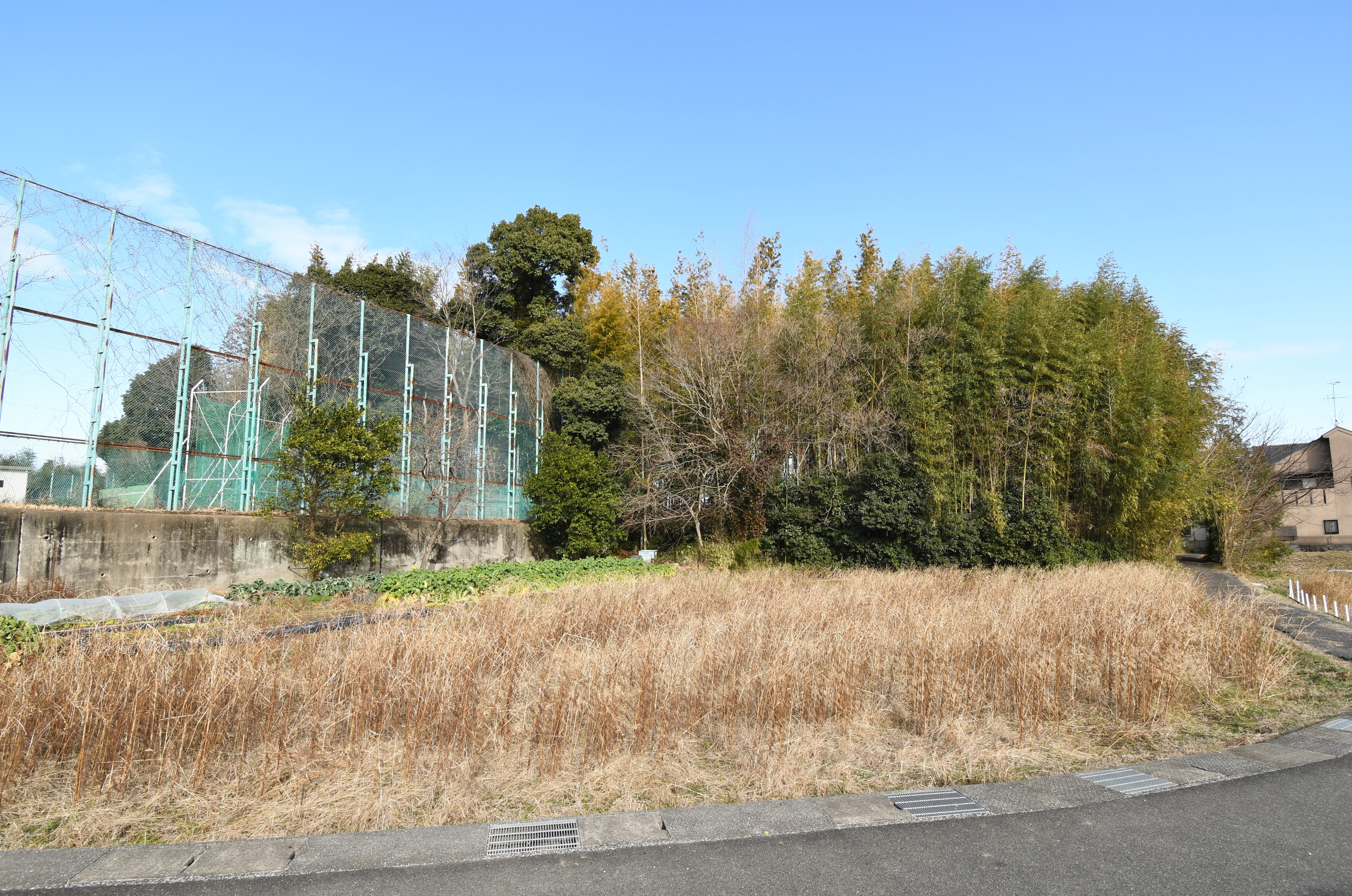
Inouchi Inarizuka Kofun: A Tomb Between Traditions
Two burial methods, side by side, in the same mound. At the rear, a horizontal-entry stone chamber -- a technology sweeping across sixth-century Japan from the Korean peninsula, representing the future of elite tomb construction. At the front, a nailless wooden coffin placed directly in the earth, a method stretching back generations, representing the deep traditions of the Katsura River valley. The Inouchi Inarizuka Kofun, a 46-meter keyhole-shaped burial mound in the Inouchi neighborhood of Nagaokakyo, Kyoto, holds both. That duality is what makes this modest tomb -- small by kofun standards, unremarkable from the air -- one of the most revealing archaeological sites in the Kansai region. Whoever was buried here had enough power to command a stone chamber and enough reverence for tradition to keep the old coffin style. They were hedging their bets between two worlds.
The Shape on the Hillside
From above, the Inouchi Inarizuka Kofun traces the classic keyhole shape: one circular end at the rear, one rectangular end at the front, oriented to the south. At 46 meters in total length, it is modest compared to the giants of the Kofun period, but it is no minor construction. The rectangular front portion rises 3.5 meters high and spans 29.5 meters wide. The circular rear portion reaches 4 meters high with a diameter of 29.5 meters. A moat once surrounded the whole structure. Unlike many kofun of similar rank, the mound carries no traces of fukiishi roofing stones or haniwa clay figures -- just piled earth, simple and unadorned. The site was designated a National Historic Site of Japan in 2016, recognized as part of the Otokuni Kofun Cluster, a group of burial mounds scattered across the southwestern outskirts of Kyoto that collectively illuminate the power structures of the late Kofun period.
Two Chambers, Two Eras
The stone burial chamber at the rear of the mound is the headline. Measuring 10.1 meters in total length, with a main chamber 4.6 meters long and 2.2 meters wide connected to a 5.5-meter passageway, it is one of the oldest horizontal-entry stone chambers on the right bank of the Katsura River. The walls are built from large stones -- the base blocks measuring 1.5 meters across and over a meter tall, with smaller stones stacked three levels high on the sides and four on the back wall. The upper portion was removed at some point, likely during the construction of Nagaoka-kyo, the short-lived capital that Emperor Kanmu established in 784 before abandoning it for Kyoto. Ritual pottery found in a disturbance pit suggests the chamber was deliberately broken open to harvest building stone. In the rectangular front of the mound, a separate burial used a traditional nailless wooden coffin -- a combination coffin measuring roughly 1.7 to 1.8 meters long and half a meter wide. This older burial method, placed alongside the newer stone technology, suggests the tomb's occupants honored both innovation and inheritance.
Gold, Bronze, and the Treasures Within
Archaeological excavations have yielded a rich inventory of grave goods from both chambers. The stone chamber at the rear produced gilt bronze horse equipment and gold sword fittings -- markers of elite military status -- alongside accessories, weapons, armor, agricultural tools, Sue ware ceramics, and Haji ware pottery. The wooden coffin in the front portion held its own collection of accessories, weapons, and Sue ware. The breadth of the offerings points to a figure of significant local authority, someone embedded in the military and agricultural power networks of the early sixth century. The artifacts are now designated as Nagaokakyo City Tangible Cultural Properties. The tomb dates to the early sixth century, placing it in the final phase of the Kofun period, when burial practices across Japan were shifting rapidly under continental influence.
A Neighbor, A Contrast
Just to the south, in neighboring Muko, stands the Mozume Kurumazuka Kofun. The two tombs were built around the same time and share the distinction of having some of the oldest horizontal stone burial chambers in the area. But they diverge in a revealing way. The Mozume Kurumazuka Kofun adopted the house-shaped stone sarcophagus, a thoroughly continental innovation that signaled allegiance to the newest currents of power. The Inouchi Inarizuka Kofun kept the nailless wooden coffin. Archaeologists interpret this contrast as evidence of two different local power bases along the Katsura River: one embracing change, the other holding to tradition while selectively adopting new technology. The Inouchi burial site, about 2.4 kilometers west of Nishi-Muko Station on the Hankyu Kyoto Line, sits quietly in a residential neighborhood -- a monument to the careful conservatism of a leader who knew which new ideas to accept and which old loyalties to keep.
From the Air
Located at 34.94°N, 135.69°E in the Inouchi neighborhood of Nagaokakyo, on the southwestern edge of the Kyoto basin between Kyoto and Osaka. The keyhole mound is small at 46 meters and difficult to distinguish from altitude without knowing its exact position. The Katsura River runs nearby to the east and serves as a useful landmark. Osaka International Airport (Itami, RJOO) is approximately 12 nautical miles to the southwest. Kansai International Airport (RJBB) is about 45 nautical miles to the south. The area between Kyoto and Osaka is densely urban; the scattered green spaces marking kofun sites are the most visible archaeological features from the air.