Intel
The name was almost Moore Noyce. Gordon Moore and Robert Noyce considered it briefly when they founded their semiconductor company in 1968 -- then realized it sounded like "more noise," a disastrous name for an electronics firm. They settled on Intel, short for Integrated Electronics, and bought the trademark from a hotel chain. From that rented office in Mountain View, California, two Fairchild Semiconductor defectors and their third employee, a Hungarian refugee named Andy Grove, built the company that would define the microprocessor age.
The Traitorous Pedigree
Moore and Noyce belonged to the "traitorous eight" -- the group of engineers who left William Shockley's semiconductor laboratory in 1957 to found Fairchild Semiconductor, an act of corporate rebellion that seeded Silicon Valley's culture of job-hopping and startup creation. A decade later, they did it again. Intel incorporated on July 18, 1968, with Moore and Noyce each buying 245,000 shares at a dollar apiece, and investor Arthur Rock offering $2.5 million in convertible debentures. Two years later, the company went public on NASDAQ, raising $6.8 million. The founders had aimed at the semiconductor memory market, betting that silicon chips would replace magnetic-core memory. Their first product, the 3101 static RAM chip, shipped in 1969. They were right about the future, but they had not yet imagined the product that would make their fortune.
The Chip That Changed Everything
In 1971, Intel engineers Marcian Hoff, Federico Faggin, Stanley Mazor, and Masatoshi Shima created the Intel 4004, the world's first commercially available microprocessor. Originally designed for a Japanese calculator company called Busicom, the 4004 packed 2,300 transistors onto a single chip and could execute 60,000 operations per second. Intel initially saw it as a niche product. The microprocessor did not become the company's core business until the mid-1980s, when IBM chose the Intel 8088 for its personal computer and an entire industry organized itself around Intel's architecture. By 1983, Japanese competitors had gutted the DRAM market that sustained Intel's early years. Gordon Moore, then CEO, made the pivotal decision to abandon memory chips and bet everything on microprocessors -- a gamble that would pay off spectacularly.
Wintel and the Pentium Era
Through the 1990s, Intel and Microsoft formed the partnership journalists called "Wintel," and it dominated personal computing so thoroughly that competitors barely registered. Intel's Pentium processors became household names, aided by the "Intel Inside" marketing campaign launched in 1991, which convinced consumers to care about what chip was inside their beige box. The campaign was born of necessity: by the late 1980s, AMD and other clone makers were undercutting Intel on price, and Intel could not trademark a number (the 486). Branding the processor gave Intel something no competitor could copy. The five-note D-D-G-D-A jingle, composed by Walter Werzowa of the Austrian sampling band Edelweiss, debuted in 1994 alongside the Pentium launch and became one of the most recognized sonic logos in advertising history. That same year, a math professor named Thomas Nicely discovered that certain Pentium chips gave wrong answers to floating-point division problems. Intel's initial dismissal of the flaw, followed by a $475 million recall, transformed the company from an obscure supplier into a name every computer user knew.
The Long Contest for Dominance
Intel controlled more than 85 percent of the market for 32-bit x86 processors at its peak, a dominance that attracted antitrust scrutiny across three continents. The European Commission, Korean Fair Trade Commission, and Japanese regulators all investigated. In 2009, Intel agreed to pay AMD $1.25 billion and grant a perpetual patent cross-license to settle competition claims. The company's tactics were aggressive -- but so was the competition. A case of industrial espionage in 1995 saw Bill Gaede, a former employee of both Intel and AMD, arrested for videotaping Intel chip designs at the company's Arizona plant and mailing the footage to AMD, which promptly turned him in. Since the late 2010s, AMD's resurgence under CEO Lisa Su has steadily eroded Intel's lead in both consumer and server processors, and by 2024 Intel was posting a $16.6 billion loss and watching its stock fall 60 percent under CEO Pat Gelsinger, who was ousted that December.
Silicon Valley's Anchor
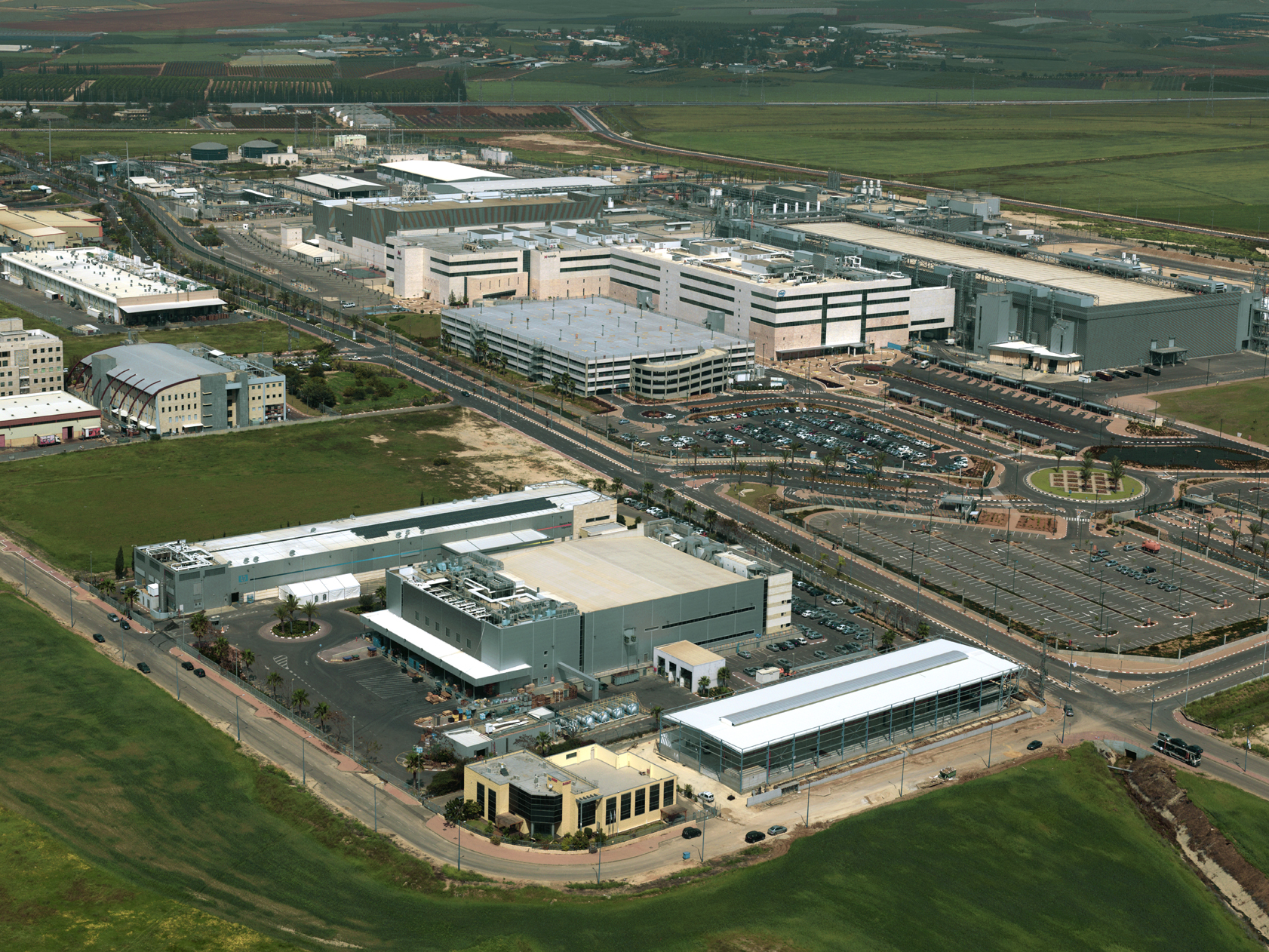
Intel's Santa Clara headquarters sits at the geographic and symbolic heart of Silicon Valley. The company's history mirrors the region's arc: garage-era founding, explosive growth, global ambition, and the constant threat of disruption from the next startup down the road. Intel opened its first international factory in Malaysia in 1972, and today operates fabrication plants and development centers across Israel, Ireland, China, India, and Costa Rica. The company employs tens of thousands of people worldwide. Its museum, open free to the public at the Santa Clara campus, displays artifacts from that journey -- silicon ingots, early chip designs, the original IBM PC. Moore's Law, Gordon Moore's 1965 observation that transistor density doubles roughly every two years, guided the entire semiconductor industry for half a century. Whether Intel can continue to embody that relentless pace of innovation remains an open question.
From the Air
Located at 37.39N, 121.96W in Santa Clara, California, at the Intel corporate headquarters campus along Mission College Boulevard. The campus is identifiable by its cluster of blue-glass office buildings near the intersection of US-101 and Great America Parkway. Nearest airports: San Jose International (KSJC, 3nm S), Moffett Federal Airfield (KNUQ, 4nm NW), Palo Alto (KPAO, 8nm NW). Best viewed at 3,000-5,000 feet AGL to appreciate the density of tech campuses that define Silicon Valley's landscape.