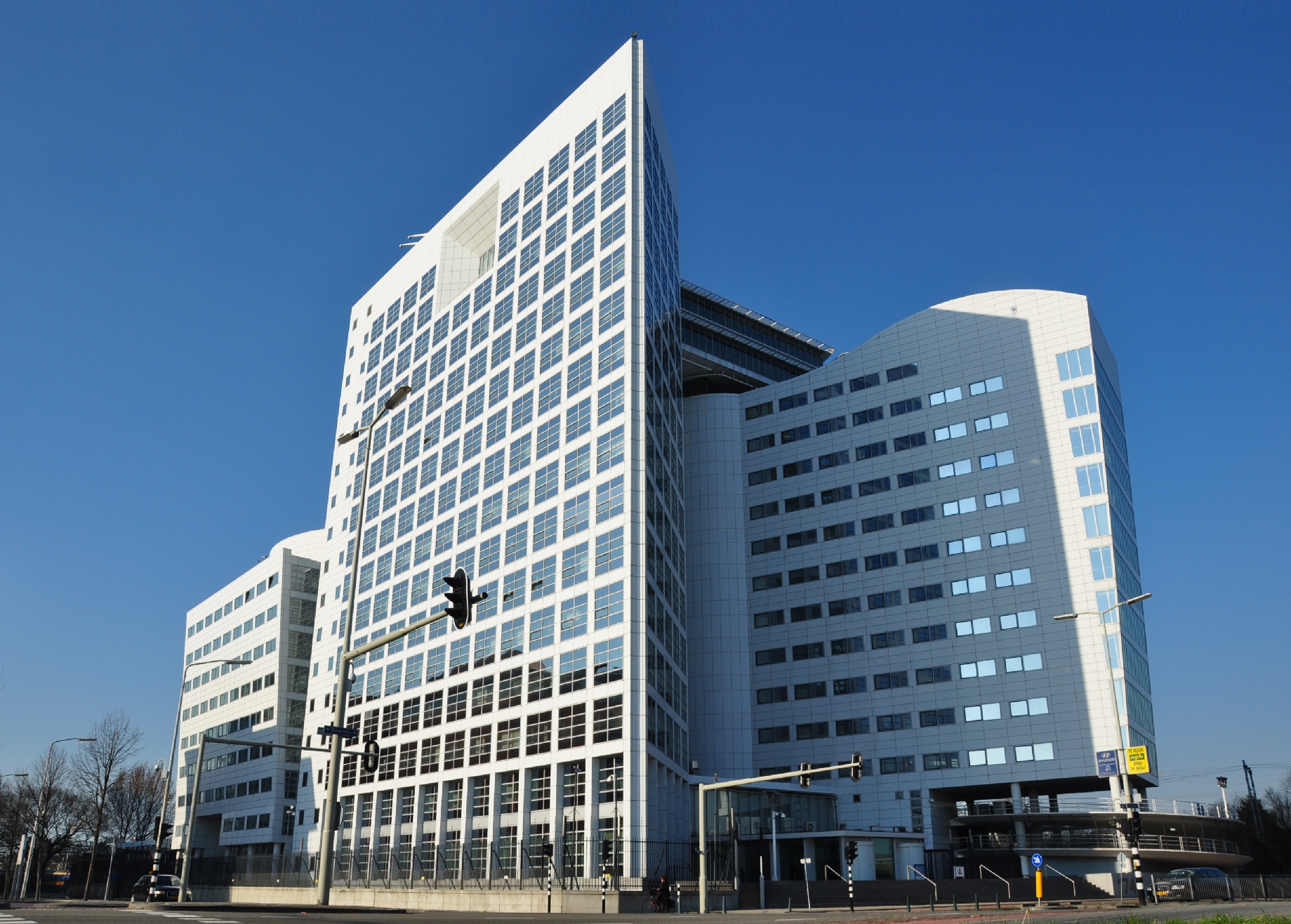
International Criminal Court
Benjamin Ferencz was twenty-seven years old when he stood at Nuremberg in 1947 and prosecuted twenty-two SS Einsatzgruppen commanders for the murder of more than a million people. He won every case. For the rest of his long life - he lived to a hundred and three - he campaigned for one idea: that what had been built in haste at Nuremberg should be made permanent, so that no future Ferencz would have to invent a court from nothing while the bodies were still warm. On July 1, 2002, in The Hague, the court he had argued for finally came into being. The International Criminal Court is what a hundred and three years of advocacy looks like when it lasts long enough to win.
A Century of Trying
The idea is older than most living institutions. After the First World War, the Allies proposed trying Kaiser Wilhelm II for the crime of aggression; the Netherlands gave him asylum and he died in exile. In 1937, under the League of Nations, thirteen states signed a convention to create a permanent international court to try acts of terrorism. None of them ratified it. The Nuremberg and Tokyo tribunals after the Second World War were ad hoc - prosecuting the defeated, on the victors' authority, with all the political compromises that arrangement implied. In 1948 the UN General Assembly first recognised the need for something permanent and asked the International Law Commission to draft a statute. By the early 1950s, two drafts existed. The Cold War buried them both. For forty years the idea sat on a shelf, defended mainly by Ferencz and a handful of other lawyers who refused to let it die.
Rome, 1998
It took the conscience-shocks of the 1990s to make the idea politically possible again. The Yugoslav Wars produced the ICTY in 1993; the Rwandan genocide produced the ICTR in 1994. Both were ad hoc creations of the UN Security Council, both demonstrably worked, and both made the absence of a standing court look like negligence. In June 1998, delegates from 160 countries gathered in Rome for a five-week conference. On July 17 they adopted the Rome Statute by a vote of 120 to seven, with 21 abstentions. The seven 'no' votes - China, Iraq, Israel, Libya, Qatar, the United States, and Yemen - foreshadowed the political fight to come. Sixty ratifications were needed before the court could open its doors. They arrived faster than anyone expected. On July 1, 2002, the Rome Statute came into force. The court was real.
What It Is For
The ICC exists to try individuals - not states, not armies, but people - for the four most serious crimes recognised by international law: genocide, crimes against humanity, war crimes, and the crime of aggression. It is intended as a court of last resort. If a country's own courts are willing and able to prosecute its own war criminals, the ICC stays out. If they cannot or will not, the ICC can step in. Jurisdiction reaches a case three ways: the country involved is a state party to the Rome Statute; the accused is a national of one; or the UN Security Council refers the situation. As of 2024 there are 125 states parties. Notably absent are China, India, Russia, and the United States. The court's first conviction, in 2012, was the Congolese militia leader Thomas Lubanga Dyilo, found guilty of conscripting children as soldiers in the Ituri district of the DRC. Among the victims were children as young as nine, taken from their families and forced into combat - some of whom, decades later, would testify against him from the witness stand.
The Hague Building
The ICC's permanent home opened in 2015 on the dunes between The Hague and Scheveningen, on land that used to be the headquarters of the Dutch Royal Military Police. The architect, Schmidt Hammer Lassen, designed six glass-and-stone towers rising from a planted landscape, the courtrooms set behind layers of security but visible from public viewing galleries. Inside, more than nine hundred staff from roughly a hundred countries work in English and French. Eighteen judges, elected by the Assembly of States Parties, sit in three chambers - Pre-Trial, Trial, and Appeals. The Office of the Prosecutor investigates and brings cases. The Registry runs everything else, including the detention unit at Scheveningen where defendants await trial. Tomoko Akane of Japan was elected President of the Court in 2024.
The Argument the Court Lives Inside
The ICC is loved and hated for the same reason: it claims to put leaders, including sitting heads of state, on the same footing as ordinary criminals when they order ordinary cruelty at scale. Its supporters call this the unfinished work of Nuremberg. Its detractors call it a Western court, biased against African defendants, naive about the realpolitik of war. Both claims have evidence behind them. What is harder to deny is what the court is for the people it serves: survivors of mass atrocities who, for almost all of human history, had no one to turn to outside their own borders, and within those borders had often only the killers in uniform. Whatever the ICC's flaws, it exists. It was not inevitable. People built it slowly, over generations, against indifference and obstruction - and the building itself, in the dunes north of The Hague, is the most concrete reminder that some ideas can outlast their critics if they are patient enough.
From the Air
The Hague, Netherlands. Coordinates 52.1056 N, 4.3178 E. The ICC sits north of the city centre, on Oude Waalsdorperweg between the dune forest and the suburb of Scheveningen, distinctive from the air for its cluster of six glass-faced towers rising from green grounds. Nearest airports: Rotterdam The Hague (EHRD) 17 km south, Amsterdam Schiphol (EHAM) 40 km northeast. The North Sea coastline is two kilometres west; the Peace Palace lies a kilometre south.