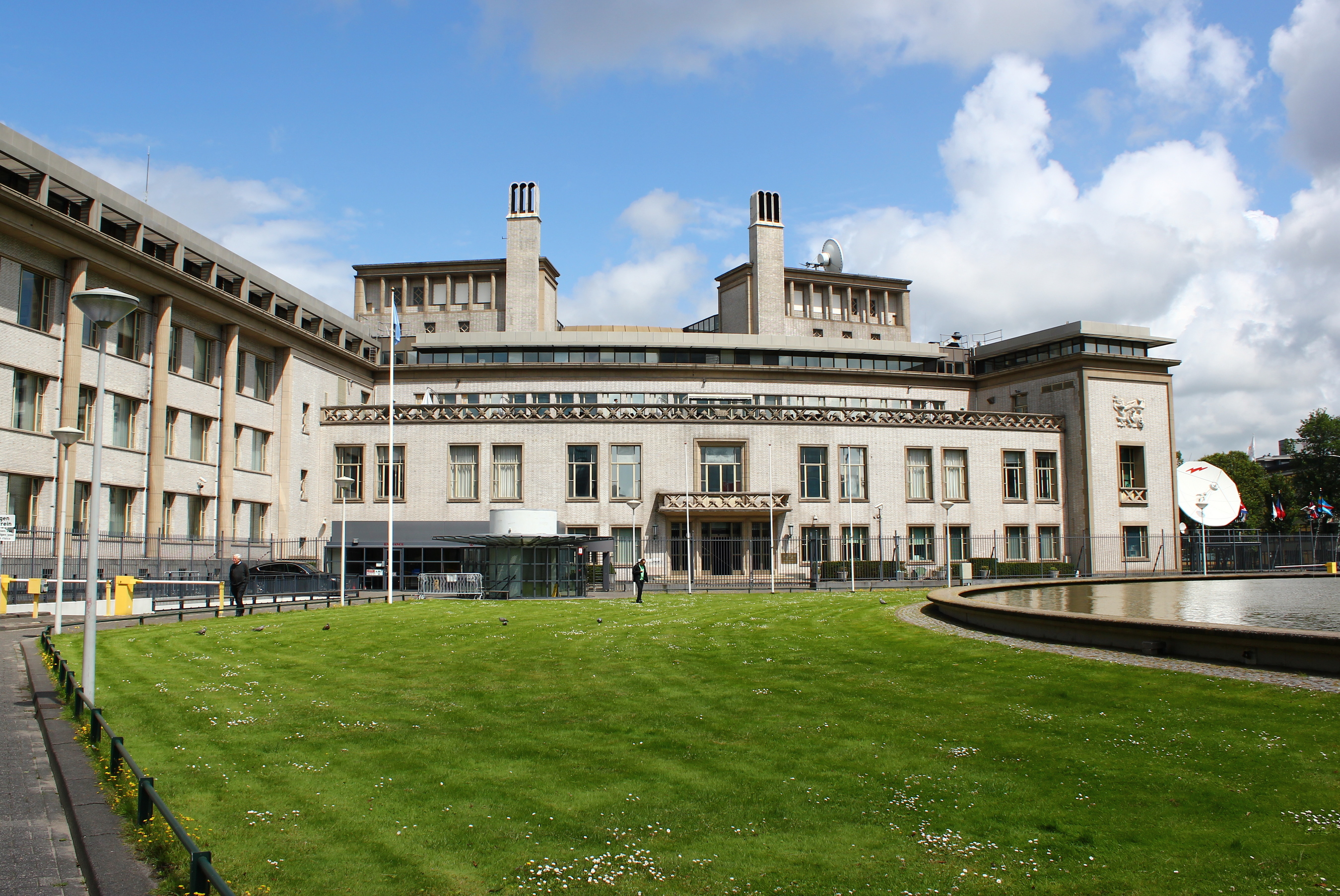
International Criminal Tribunal for the former Yugoslavia
Between 11 and 16 July 1995, Bosnian Serb forces under the command of General Ratko Mladić separated the men and boys from the women in the town of Srebrenica - a place the United Nations had declared a 'safe area' - and executed more than eight thousand of them in fields, warehouses, and schoolyards. Twenty-two years later, on 22 November 2017, Mladić rose in a courtroom in The Hague and was convicted of genocide. The room where it happened was small, fluorescent-lit, almost office-like. The institution that put him there was the first international war crimes court convened anywhere on earth since Nuremberg, and the first ever set up while the killing it would judge was still going on.
A Court Built During a War
By February 1993 the war in Bosnia and Herzegovina had been running for nearly a year. The reports coming out of Prijedor, of detention camps at Omarska and Trnopolje and Keraterm, were impossible to ignore. German Foreign Minister Klaus Kinkel proposed that the United Nations create something nobody had created in half a century: a working international criminal court, in real time, while the war it was supposed to judge was still going. UN Security Council Resolution 808 of 22 February 1993 decided the tribunal would exist. Resolution 827, on 25 May, made it official. The court was given four categories of jurisdiction over crimes committed on the territory of former Yugoslavia since 1991: grave breaches of the Geneva Conventions, violations of the laws or customs of war, genocide, and crimes against humanity. Its maximum sentence was life imprisonment. It had, at first, neither building nor staff nor a single defendant in custody. It started anyway.
Tadić, Erdemović, and the First Voices
The first man tried at the ICTY was Duško Tadić, a Bosnian Serb from Prijedor arrested by German police in Munich in 1994 for his actions in the detention camps. He pleaded not guilty in April 1995. The trial that followed established, slowly and methodically, the legal facts of what had been done at Omarska - the beatings, the murders, the sexual violence. The ICTY's first guilty plea came soon after from Dražen Erdemović, a young Bosnian Croat soldier in the Bosnian Serb Army who had been ordered to participate in the executions at Srebrenica. He estimated he had personally shot dozens of unarmed men. He told the court he would have been killed himself had he refused. Hearing him was the first time, on the public record, that anyone described the killings at Srebrenica from inside the firing line. The court's mission was, in part, simply to let people like Erdemović - and the survivors who would follow him - speak.
Indicting a President
Slobodan Milošević, the President of Serbia and later of the Federal Republic of Yugoslavia, was indicted in May 1999 - the first sitting head of state ever indicted by an international criminal tribunal. He was charged for crimes in Kosovo, and later for crimes in Croatia and Bosnia, including genocide for the events at Srebrenica. After his fall from power he was transferred to The Hague in 2001 and conducted his own defence, turning every cross-examination into political theatre. He died in his cell in 2006, before judgment, leaving the historical questions his trial had been intended to settle suspended. Radovan Karadžić, the wartime President of the Republika Srpska, evaded arrest for thirteen years - hiding in plain sight in Belgrade as an alternative-medicine practitioner with a long white beard - before being caught in 2008 and ultimately convicted in 2016 of genocide and crimes against humanity. Ratko Mladić was caught in a Serbian farmhouse in 2011. The final fugitive, Goran Hadžić, was arrested in July 2011.
161 Names
In all, the ICTY indicted 161 people. Of those, 89 were convicted and sentenced; 18 were acquitted; 13 had cases referred back to courts in Bosnia, Croatia, and Serbia; the rest had charges withdrawn or died before judgment. The indictees ran from soldiers and prison-camp guards to generals and police commanders to prime ministers and presidents. Crimes prosecuted included the siege of Sarajevo, the ethnic cleansing of the Drina valley, the destruction of Vukovar, the massacres in Kosovo. The court's most-cited self-assessment, published in 2004, set out five accomplishments: shifting from impunity to accountability, establishing the facts on the record, giving voice to thousands of victims, developing international criminal law, and strengthening the rule of law in the successor states. The court was also criticised, sometimes fairly. It was accused of selective prosecution, of declining to indict NATO officials for the 1999 bombing campaign, of being slow, of being expensive, of housing defendants in cells comfortable enough that some called the detention unit at Scheveningen the 'Hague Hilton.'
What the Tribunal Left Behind
On 22 November 2017, the Trial Chamber convicted Ratko Mladić of genocide, crimes against humanity, and war crimes. A week later, on 29 November, the Appeals Chamber upheld the convictions in the Prlić appeal - and one of the defendants, Slobodan Praljak, drank cyanide in open court as the verdict was read. The ICTY had its final hearing. On 31 December 2017 it formally closed. Its residual functions passed to the International Residual Mechanism for Criminal Tribunals. What it left behind was a public record so detailed - witness statements, forensic exhumation reports, command-structure analyses - that the events of the Yugoslav Wars are among the best-documented atrocities in human history. For the families of the missing from Srebrenica and elsewhere, the documentation matters. It is not justice. It is what comes closest, when justice arrives too late, but arrives all the same.
From the Air
The Hague, Netherlands. Coordinates 52.0679 N, 4.3535 E. The ICTY operated from a low brown office complex at Churchillplein, near the eastern edge of central The Hague; defendants were held at the United Nations Detention Unit within the Scheveningen prison about 3 km north. Nearest airports: Rotterdam The Hague (EHRD) 15 km south, Amsterdam Schiphol (EHAM) 40 km northeast. The building is unremarkable from the air - which was, in many ways, the point.