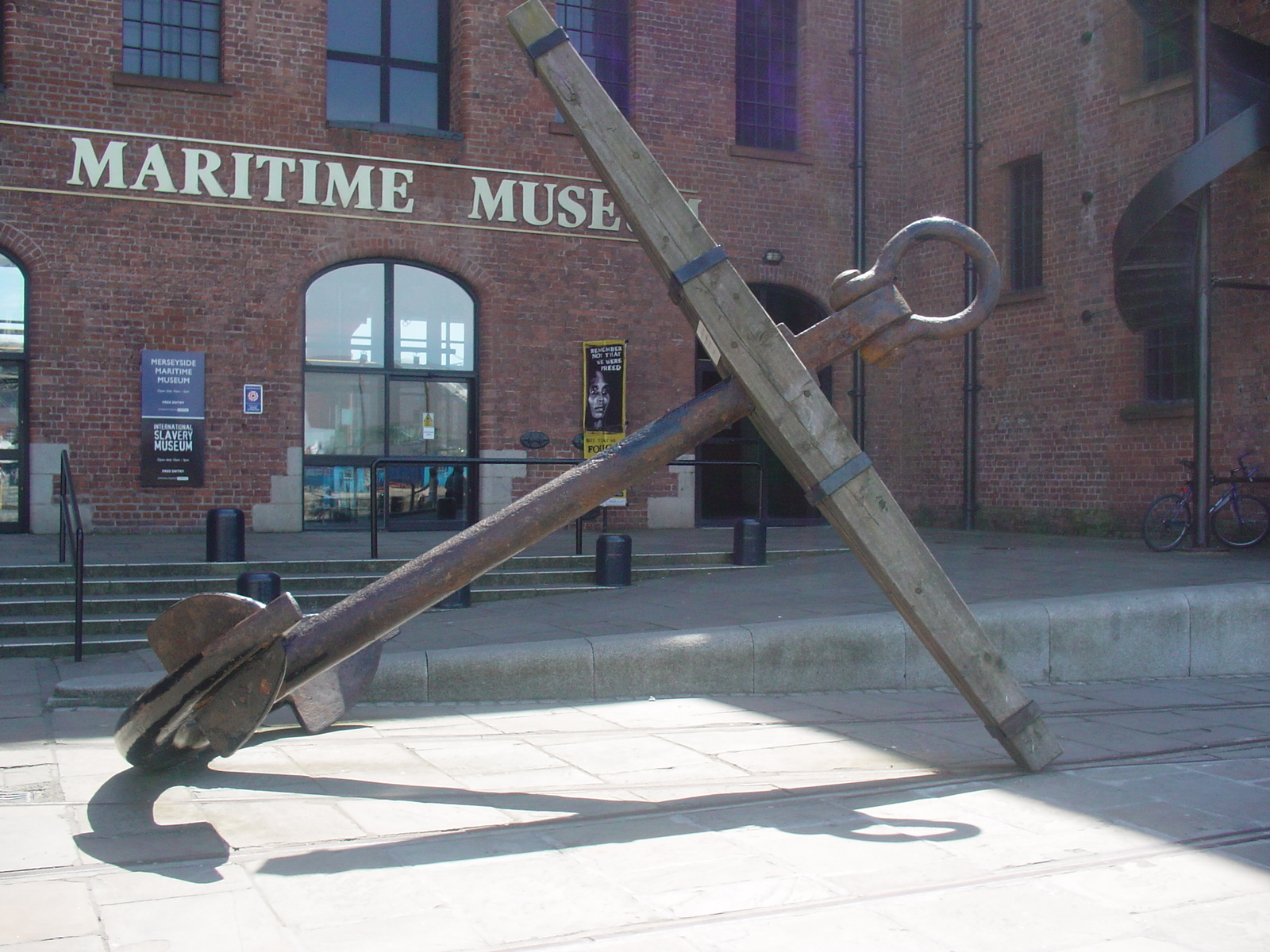
International Slavery Museum
The address matters. Liverpool's International Slavery Museum occupies the third floor of the Merseyside Maritime Museum at Albert Dock, the very waterfront from which slave trading vessels departed for the coast of West Africa. By the late eighteenth century, Liverpool had overtaken Bristol and London to become Europe's leading slave trading port, its merchants financing roughly eighty percent of Britain's trade in enslaved people and a significant share of the entire transatlantic traffic. The museum does not let the city forget.
Where Commerce Met Cruelty
Between 1695 and 1807, Liverpool ships made over five thousand slaving voyages, transporting an estimated 1.5 million enslaved Africans to the Americas. The profits built Georgian terraces, funded civic institutions, and enriched families whose names still mark the city's streets. The museum's three main galleries trace this arc without flinching: life in West Africa before enslavement, the Middle Passage and its horrors, and the long, continuing fight for freedom and equality. One gallery features approximately four hundred annotated songs connected to the experience of slavery and the music of Africa and its diaspora, a reminder that culture survived what commerce tried to destroy.
A Museum Born from Persistence
The path to a dedicated museum was decades long. A Transatlantic Slavery gallery first opened within the Maritime Museum in 1994, championed by activists including Dorothy Kuya, who had campaigned for such a space since 1992. By the early 2000s, the gallery's international reputation and surging visitor numbers made clear that something larger was needed. The museum opened on 23 August 2007, chosen deliberately as the International Day for the Remembrance of the Slave Trade and its Abolition, marking the anniversary of the uprising in Saint-Domingue that would lead to Haitian independence. The year itself carried weight: 2007 was the bicentenary of the Slave Trade Act of 1807, which abolished the trade within the British Empire, though not the institution of slavery itself.
Objects That Speak
Among the museum's most significant acquisitions is a painting titled "Am Not I A Man and a Brother," dating from around 1800. Based on a design commissioned by the Committee for the Abolition of the Slave Trade and popularized on Josiah Wedgwood's pottery, the image is considered one of the earliest examples of a logo created for a political cause. The museum was awarded fifty thousand pounds in 2018 to purchase and restore the work. It is a deceptively simple image: a kneeling figure in chains, asking a question that should never have required asking. That it resonated across two centuries speaks both to its power and to the persistence of the injustice it addressed.
Unfinished Business
The museum does not confine slavery to the past. Its galleries address modern-day slavery, racism, and discrimination, drawing explicit connections between historical exploitation and contemporary inequalities. In 2024, a major renovation was announced that will incorporate the adjacent Dr Martin Luther King Jr building, linking the two structures with an iron and glass bridge. The museum closed for this transformation at the start of 2025, with plans to reopen in 2029 as an expanded institution. The renovation reflects a growing understanding that telling this story requires more space, not less, and that the conversation it demands is far from over.
From the Air
Located at 53.401N, 2.993W at Albert Dock on Liverpool's waterfront. The dock complex is clearly visible from the air along the Mersey. Nearest airport: Liverpool John Lennon Airport (EGGP), approximately 7nm southeast. View from 2,000-3,000ft for best perspective of the dock basin and waterfront context.