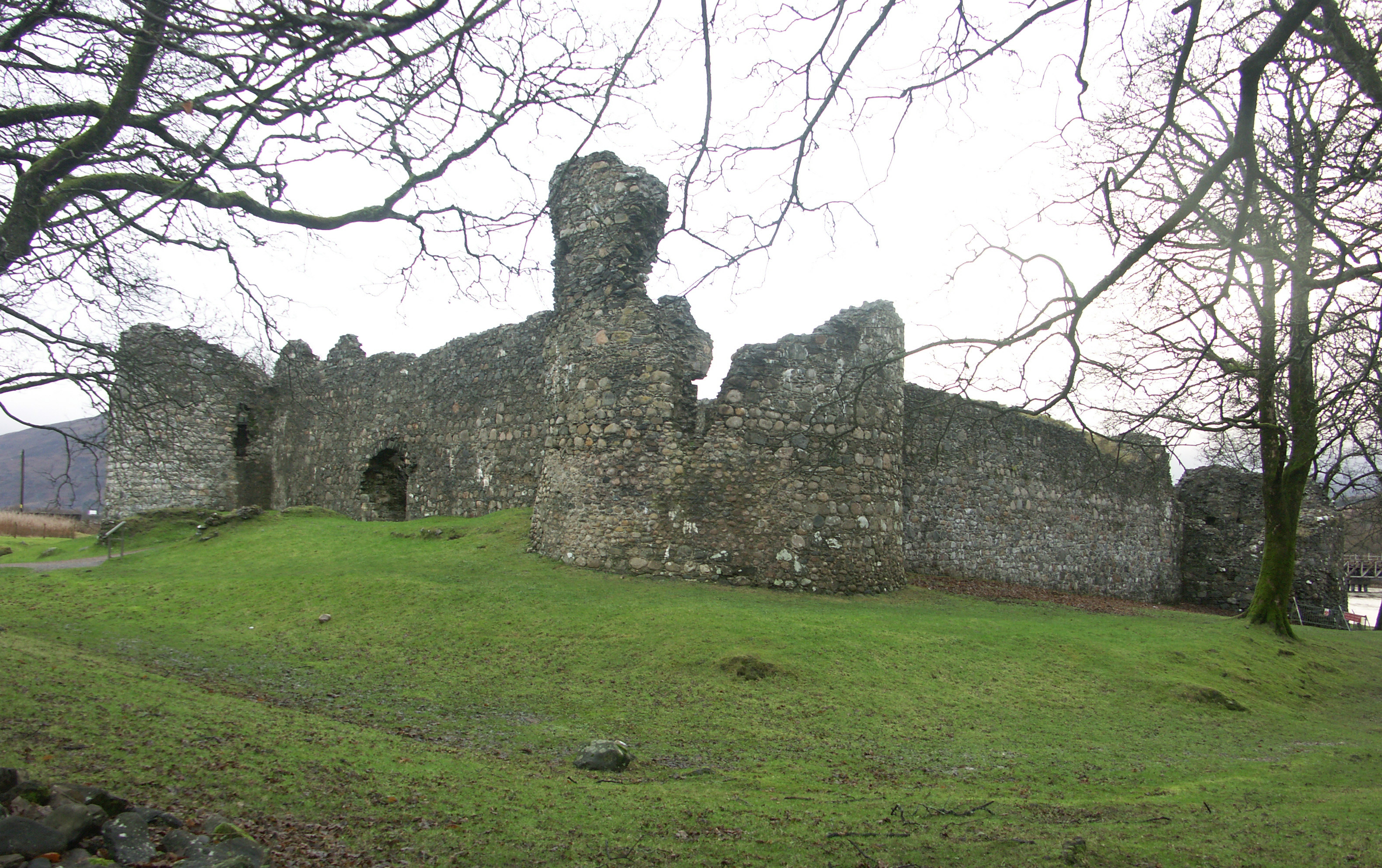
Inverlochy Castle
Three battles were fought within sight of Inverlochy Castle, which may explain why it is a ruin. Built around 1270 by John 'the Black' Comyn, Lord of Badenoch and Lochaber, the castle anchored Comyn power at the southern end of the Great Glen for barely a generation before Robert the Bruce captured and burned it in 1307. It has stood unroofed ever since -- seven centuries of Highland weather pouring through walls that were already ancient when Montrose routed the Campbells beneath them in 1645.
Comyn Stone, Pictish Ground
The castle may stand on the site of an earlier Pictish fortification and settlement. The historian Hector Boece, writing in the early sixteenth century, recorded a 'city' at this location that was destroyed by Vikings -- a claim impossible to verify but not implausible, given the strategic value of the spot where the River Lochy meets Loch Linnhe at the foot of the Great Glen. John Comyn built his castle here around 1270-1280, establishing a quadrangular curtain-wall enclosure with four corner towers. The largest, known as the Comyn Tower, measures 6.1 meters across the interior and served as the castle's donjon. The three smaller towers are 14 feet across, and all four contain stairways curving up within the thickness of the walls. As chief of Clan Comyn, John commanded one of the most powerful families in Scotland -- until Bruce upended the political order.
Burned, Abandoned, and Fought Over
After Robert the Bruce seized the Scottish throne in 1306, he moved swiftly against the Comyns, who had supported his rival John Balliol. He captured Inverlochy and burned it in 1307, dispossessing the Comyns and leaving the castle unoccupied. It never recovered its roof. In 1431, Donald Balloch's Highland force destroyed a royalist army near the castle walls, killing the Earl of Caithness and over a thousand men. Two centuries later, on 2 February 1645, the Marquess of Montrose arrived after his legendary winter flank march through the mountains and routed the Marquess of Argyll's Campbell army in one of the most decisive engagements of the Wars of the Three Kingdoms. The castle itself played no military role in either battle -- by then it was already a shell -- but it gave both engagements their name. Today the ruin is a scheduled monument in the care of Historic Environment Scotland, its curtain walls still standing to near-full height, its towers still curving stairways into empty air.
From the Air
Inverlochy Castle at 56.8323N, 5.0823W is a rectangular ruin near the River Lochy, approximately 2 nm northeast of Fort William town center. The castle's quadrangular walls and corner towers are visible from low altitude. Best viewed at 1,500-2,500 ft. Fort William heliport is nearby. Loch Linnhe and the Great Glen provide strong orientation.