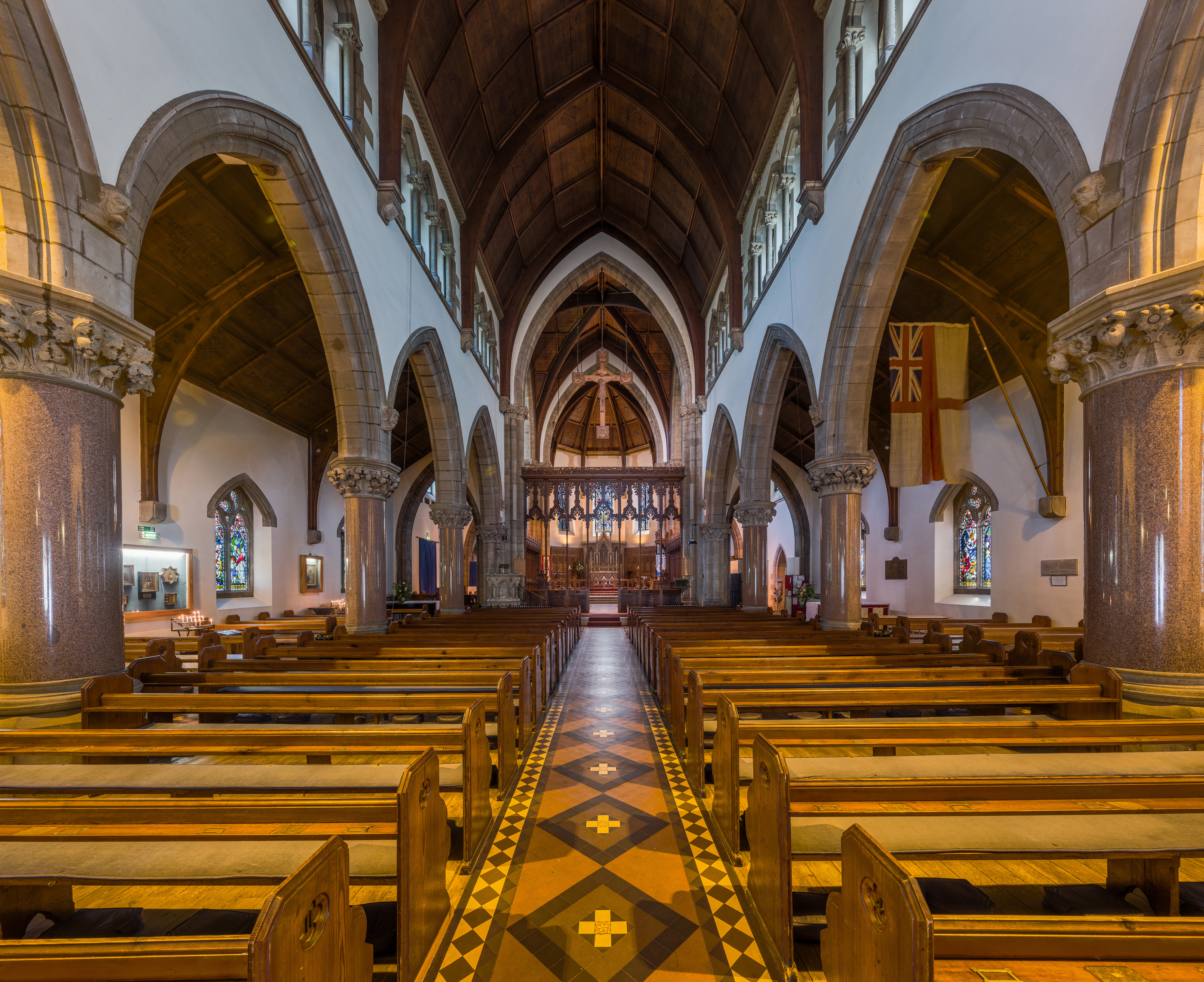
Inverness Cathedral
Alexander Ross designed Inverness Cathedral with twin spires. The money ran out before they could be built. The cathedral that opened in 1869 -- the first new cathedral of the Scottish Episcopal Church, and the first new Protestant cathedral constructed in Britain since the Reformation -- has stood with flat-topped towers ever since, its silhouette a monument to ambition that slightly exceeded its budget. The absence of the spires has become so familiar that proposals to complete them now meet resistance from those who consider the truncated towers part of the building's character. Architecture, like history, sometimes defines itself by what it failed to finish.
A Cathedral for the Highlands
The foundation stone was laid on 19 September 1866 by the Archbishop of Canterbury, an ecumenical gesture that reflected the cathedral's significance beyond the Scottish Episcopal Church. The architect, Alexander Ross, was a local man -- born in Inverness and responsible for many of the city's Victorian buildings. He designed the cathedral in the Early English Gothic style, using pink Conon freestone for the walls and polished Peterhead granite for the interior columns. The building sits on the west bank of the River Ness, its towers visible from much of the city center. The construction cost was substantial for a Highland congregation, and it was the shortfall in funds that prevented the planned spires from being added to the towers. The cathedral was consecrated and opened for worship in 1869, just three years after the foundation ceremony.
Stone, Glass, and Bells
The interior of Inverness Cathedral is notable for its proportions and its craftsmanship. The nave columns of polished Peterhead granite create a rhythm of pale grey stone against the warmer tones of the freestone walls. The Great West Window, by the firm of John Hardman and Company of Birmingham, is the cathedral's most significant piece of decorative art. The cathedral houses the world's most northerly peal of change-ringing bells -- ten bells hung for full-circle ringing, a tradition more commonly associated with English parish churches than Scottish cathedrals. The bells were installed in the northwest tower and continue to be rung regularly. The building received Category A listing from Historic Environment Scotland in 1971, recognizing it as a structure of national architectural importance.
The Unfinished Profile
The question of the missing spires has followed Inverness Cathedral through its entire existence. Ross's original design showed tall, elegant spires rising from both towers, completing the Gothic composition and giving the cathedral a vertical emphasis that would have dominated the Inverness skyline. Without them, the towers have a blunt, unresolved quality -- handsome but visibly incomplete. Various proposals over the decades to add the spires have come to nothing, stalled by cost, conservation concerns, or simple inertia. The cathedral has adapted to its unfinished state. The flat tower tops provide a distinctive profile against the Highland sky, and the building has earned its place in the city's identity in its actual form rather than its intended one. Standing on the opposite bank of the River Ness, the cathedral's reflection in the water is one of the defining images of Inverness -- pink stone, Gothic arches, and towers that stop where the money stopped, honest in their incompleteness.
From the Air
Inverness Cathedral is located at 57.47°N, 4.23°W on the west bank of the River Ness in central Inverness. The pink sandstone building with its distinctive flat-topped towers is visible from the air near the river. Inverness Castle sits on its hilltop approximately 300 metres to the south. Nearest airport: Inverness (EGPE) approximately 7 nm to the northeast.