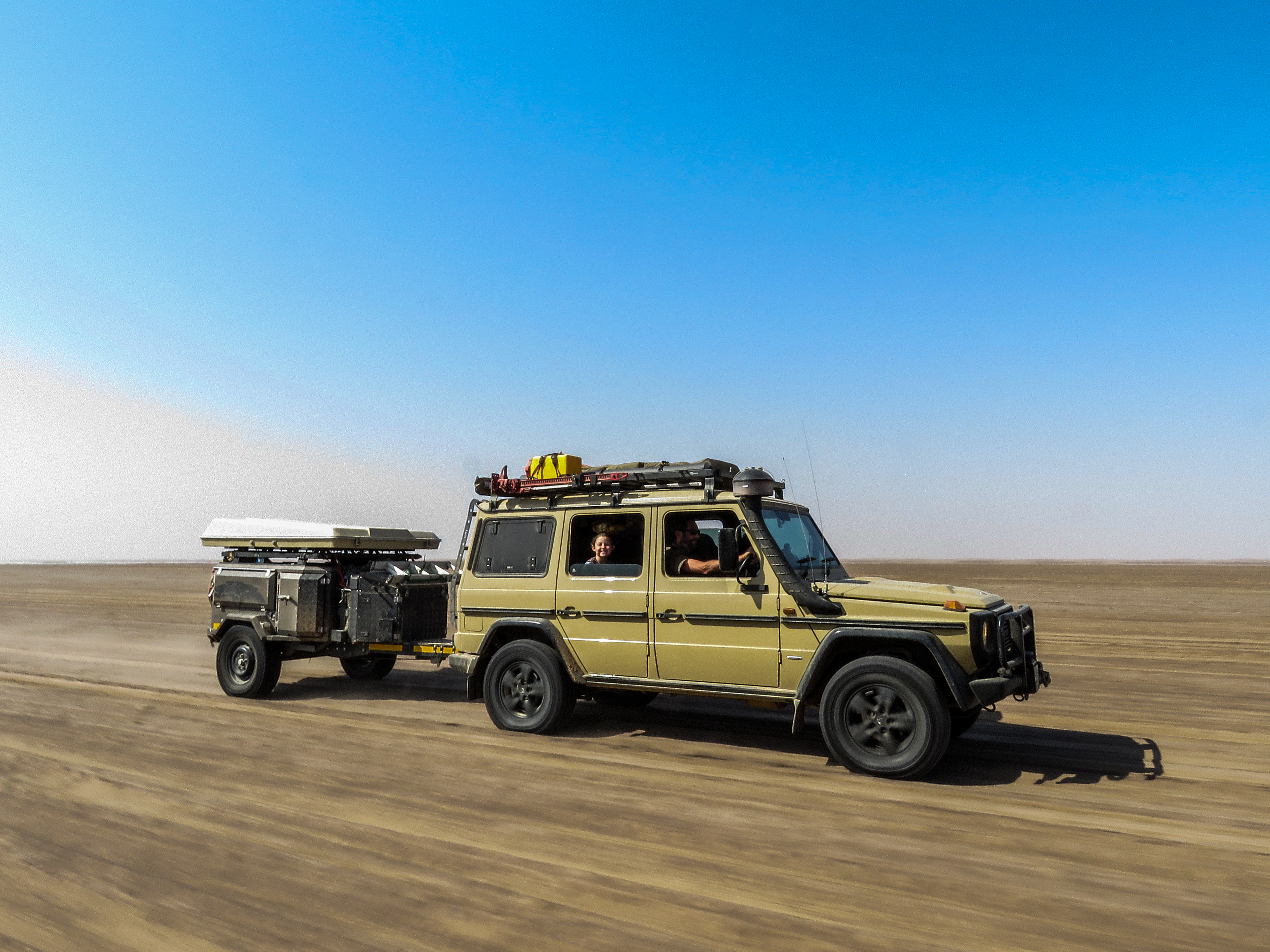
Iona National Park
There is a plant in Iona National Park that drinks fog. Welwitschia mirabilis, sometimes called a living fossil, absorbs moisture not through its roots but through its leaves, catching the sea-fog dew that rolls in from the Atlantic. Some individual specimens are more than a thousand years old. That a plant this ancient and this strange finds its primary habitat here tells you something about the landscape: Iona is not a park that conforms to expectations. It is the oldest protected area in Angola, proclaimed as a reserve in 1937 and upgraded to a national park in 1964. It covers roughly 15,150 square kilometers of southwestern Angola's Namibe Province -- an area of shifting dunes, vast stony plains, and rough escarpment cliffs that together form one of the most austere and beautiful landscapes in southern Africa.
Where the Desert Meets the Sea
Iona's geography is defined by its boundaries: the Atlantic Ocean to the west, an escarpment marking the interior plateau to the east, the intermittent Curoca River to the north, and the permanent Cunene River to the south. Rainfall ranges from a bare 100 millimeters along the coast to 300 millimeters or more at the eastern edge. The park sits about 200 kilometers south of the city of Namibe and is contiguous with Namibia's Skeleton Coast National Park, which itself connects to the Namib-Naukluft National Park. Together, the three protected areas form a continuous block covering some 50,000 square kilometers of Namib Desert coastline and adjacent dunes -- one of the largest conservation corridors on the continent. From the air, the landscape shifts from the blues and grays of the cold Atlantic through a belt of coastal fog to the ochre and tan of the dune fields.
Scars of War
Angola's civil war, which lasted from 1975 to 2002, devastated Iona along with nearly every other protected area in the country. Poaching wiped out the park's elephant and rhinoceros populations. Infrastructure -- roads, ranger stations, fencing -- was destroyed or left to decay. For decades, the park existed in name only. Recovery has been slow and deliberate. Starting around 2009, government and international projects began rebuilding infrastructure. In January 2020, Iona came under the management of African Parks, a conservation-focused NGO that works alongside the Angolan government and local communities to restore wildlife, implement law enforcement, and position the park as a destination. By 2024, the park employed 135 staff. Viable populations of zebra, oryx, and springbok had returned, along with remnant populations of cheetah, leopard, and brown hyena. In July 2023, fourteen Angolan giraffes were reintroduced -- the first giraffes in the park in decades.
Living Fossils and Desert Endemics
Iona's vegetation divides into three zones: sub-coastal steppes dominated by acacia and commiphora; coastal steppes with sub-desert species including Welwitschia; and true desert with shifting dunes where only the hardiest grasses survive. The Welwitschia is the park's botanical celebrity, a gymnosperm that produces just two leaves in its entire lifetime, leaves that split and fray but never stop growing. Its ability to harvest fog moisture makes it uniquely adapted to the hyper-arid coast. The fauna is equally distinctive. Because of Iona's isolation and climate, the park and the broader Kaokoveld Desert support endemic reptile species found nowhere else -- eight strictly endemic species among the 63 recorded in the ecoregion, including two lizards, three geckos, and three skinks. By 2022, seventy-five amphibian and reptile species had been documented.
A Park and Its People
Conservation in Iona is not simply a matter of fencing off wilderness. A 2019 study found that while local communities recognized the park's benefits, they were concerned about restrictions on their historical use of the land. This tension -- between preservation and livelihood -- is the defining challenge of Iona's future. The Iona-Skeleton Coast Transfrontier Conservation Area, established in 2018, extends the park's conservation reach across the Namibian border, using monitoring technology that spans national boundaries. African Parks works closely with communities, aiming to make tourism an economic engine that gives local people a tangible stake in the park's survival. Whether that balance can hold remains an open question, but the trajectory is encouraging: giraffes grazing where none have walked in a generation, staff trained and funded, and an ecosystem slowly stitching itself back together after decades of war.
From the Air
Located at 16.67S, 12.33E in southwestern Angola. The park stretches along the Atlantic coast and is visible from altitude as a vast expanse of desert dunes, coastal plains, and rugged escarpment. The Cunene River marks the southern border with Namibia. Nearest significant airport is Namibe Airport (FNBC), approximately 200 km to the north. The Skeleton Coast is visible to the south across the Namibian border. Best viewed at 10,000-15,000 ft AGL for the full scale of the dune fields and coastline.