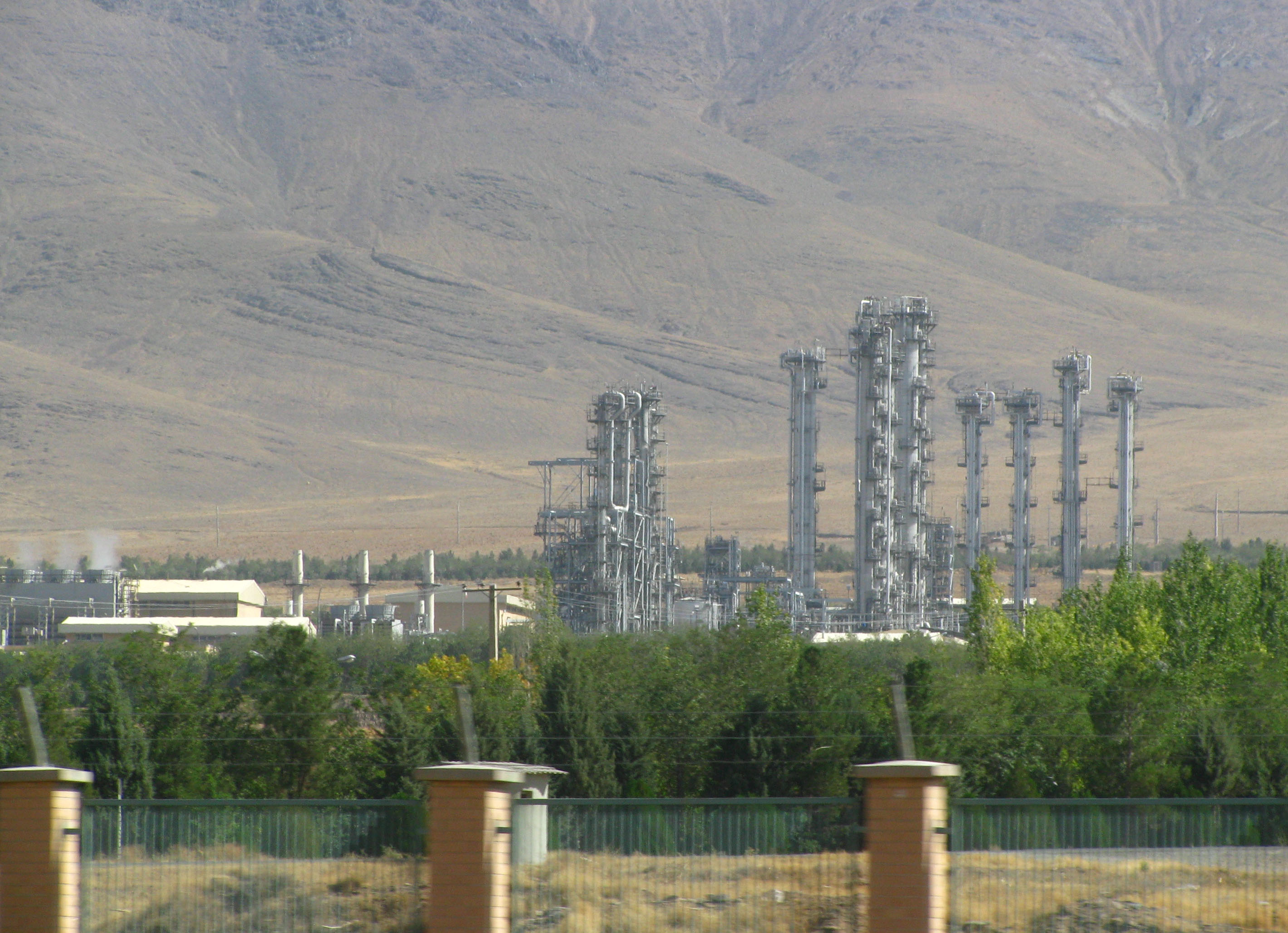
IR-40
In January 2016, Iran announced it had poured concrete into the core of its heavy water reactor near Arak. Three years later, the head of Iran's Atomic Energy Organization went on national television and said the photographs of that concrete pour had been doctored -- and that Iran had secretly purchased replacement parts. Whether bluff or revelation, the claim captured everything the IR-40 reactor had become: less a functioning nuclear facility than a vessel for competing narratives about trust, verification, and the distance between a research tool and a weapon.
From Tehran's Suburbs to the Arak Plain
The reactor's origins trace to a practical problem. By the mid-1980s, Iran's leadership wanted a nuclear power plant that could run on natural uranium, avoiding the need for enrichment to produce fuel. Heavy water would serve as both moderator and coolant. The design was 90 percent complete by 2002, but the original site near Esfahan was abandoned in favor of a location near Arak, in Markazi province. Construction began in October 2004. The existing Tehran Research Reactor, after 35 years of operation, was reaching its safety limits and had been swallowed by the expanding suburbs of the capital. The IR-40 was meant to be its successor -- a modern facility on open ground, far from the pressures of an encroaching metropolis.
The Plutonium Question
What made the IR-40 a flashpoint was not what it was designed to do but what it could do. Natural-uranium-fueled heavy water reactors were originally developed to produce weapons-grade plutonium. Analysis suggested that at full operation, the IR-40 could yield 8 to 10 kilograms of high-purity plutonium-239 annually from its spent fuel -- enough, according to the IAEA, for one to two nuclear weapons per year. Iran maintained the reactor was intended solely for research, medical isotope production, and as a prototype for the larger 360-megawatt Darkhovin Nuclear Power Plant near Ahvaz. The IAEA found no evidence of reprocessing activity at the site but could not resolve the underlying concern: the reactor's design made the capability inherent.
A Deal, a Core, and Contested Concrete
The 2015 Joint Comprehensive Plan of Action, negotiated between Iran and the P5+1 nations, addressed the IR-40 directly. Iran agreed to redesign the reactor with international assistance to minimize plutonium production, remove the existing core or calandria and fill it with concrete, and export all spent fuel within a year. In January 2016, Iran confirmed the core had been removed and filled with concrete. The facility was renamed the Khondab Heavy Water Research Reactor in 2017. Then came Ali Akbar Salehi's 2019 television interview claiming the concrete images were fabricated and spare parts had been secretly procured. The statement underscored a recurring theme in nuclear diplomacy: verification is only as strong as the willingness of all parties to accept it.
Under Fire
In June 2025, during the Iran-Israel war, Israeli forces struck the reactor complex directly. The containment building sustained damage from a direct hit, and distillation towers at the adjacent heavy water production plant were also struck. Israel had warned residents of Arak and the nearby town of Khondab to evacuate before the attack. The strike transformed the IR-40 from a diplomatic puzzle into a physical ruin. The reactor that had been argued over in Vienna conference rooms and debated in UN Security Council resolutions now bore the marks of conventional munitions. Whatever the facility's future had held -- research, redesign, or something else -- the airstrike wrote a different ending.
From the Air
Located at 34.37°N, 49.24°E on the plain southwest of Arak, Markazi province. The facility sits in relatively flat terrain with the Zagros Mountains to the west. Best viewed at 5,000-8,000 feet AGL. Nearest airport is Arak Airport (OIHR), approximately 20 km to the southeast. Note: this is a sensitive military/nuclear site. The adjacent heavy water production plant with its distinctive distillation towers is visible at lower altitudes.