Iraj Castle: The Fortress with Nothing Inside
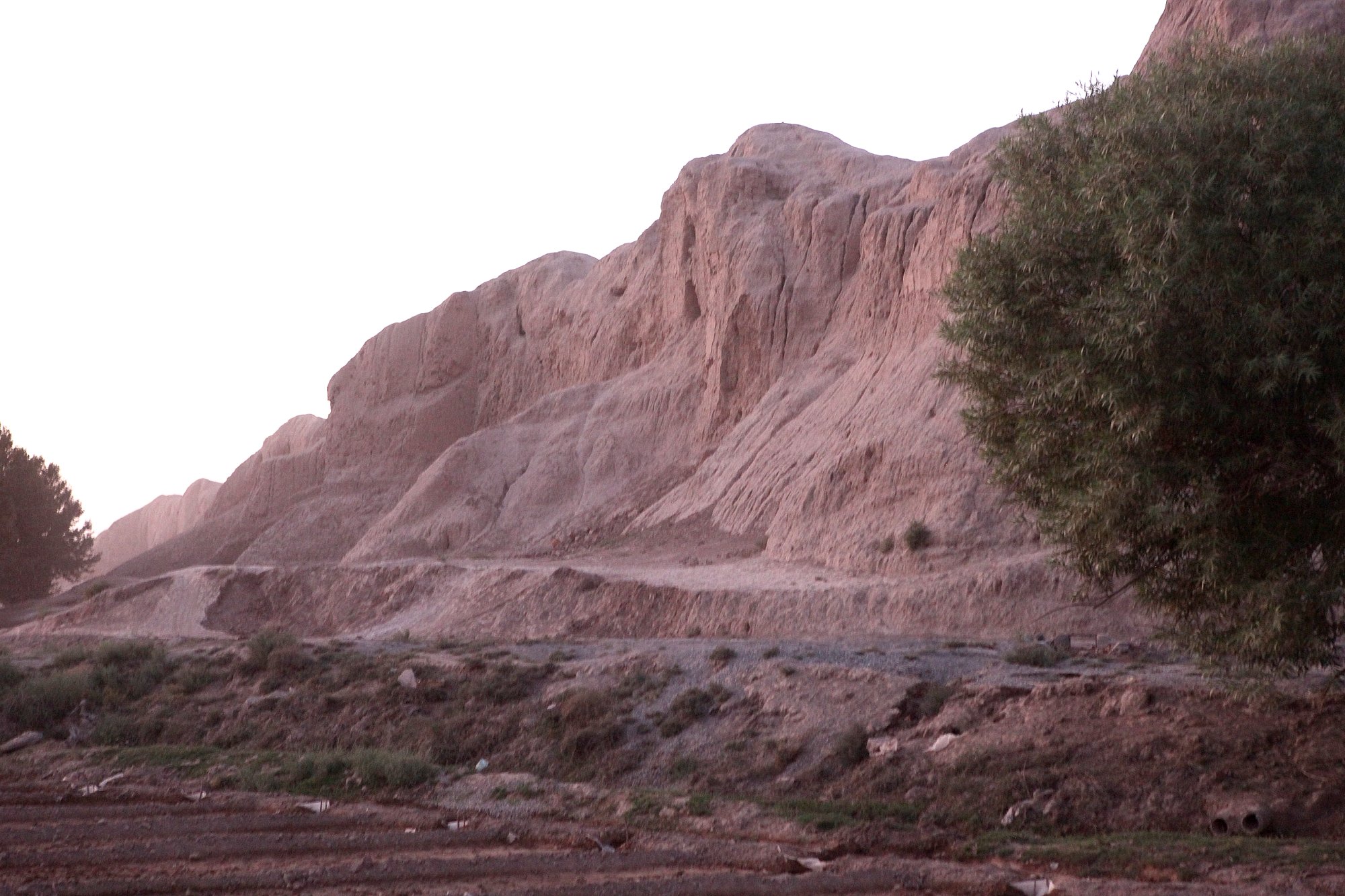
The walls are everything. Iraj Castle, near modern Asgarabad-e Abbasi on the Tehran Plain, encloses 190 hectares of open ground, an area larger than many cities of its era. But the interior is empty. No palaces, no barracks, no storehouses, no permanent structures of any kind. The Sasanian engineers who built this fortification in the 4th or 5th century AD poured their ambition into the perimeter: walls up to 25 meters high, 15 to 22 meters wide, containing 828 rooms and hundreds of monumental arches. The army did not garrison inside the fortress. The army lived inside the walls.
Architecture of the Perimeter
The structure measures roughly 175 hectares of enclosed space, ringed by walls studded with 148 densely spaced towers and pierced by four monumental gates. The rooms embedded in the walls, each about 12 square meters, could have housed between 2,000 and 6,000 people. The arches evoke the monumental style of Sasanian royal architecture. A ditch surrounded the outer wall, adding a layer of defense. From the ground, the effect is of a city turned inside out: all the infrastructure compressed into the boundary, all the open space left in the center. Scholars have debated whether the interior was used for military training, tent encampments, royal hunting, or simply as a projection of imperial prestige. The most likely answer is a military campaign base, its empty interior designed to fill temporarily with troops and equipment before operations elsewhere.
Guardians Against the Northern Steppe
Iraj Castle sits in the central region of ancient Ray, the Sasanian administrative heartland near modern Tehran. Its design mirrors several other Sasanian campaign bases, suggesting a deliberate imperial strategy of maintaining fortified staging areas along the empire's vulnerable northern frontier. The primary threat came from nomadic peoples pressing south from the Central Asian steppe. A permanent garrison occupying the walls could maintain the fortress year-round while the vast interior could absorb an arriving army before a campaign. The design was practical rather than aesthetic: get thousands of soldiers inside the walls quickly, stage operations, and move out. The permanent residents needed only the rooms in the perimeter.
Between Sacred Text and Pottery Shards
Popular belief connects Iraj Castle to the Citadel of Varena mentioned in the Vendidad, the Zoroastrian purification text. Archaeological evidence tells a less mythic story. Excavated Sasanian-era pottery, ostraca, and clay bullae confirm that the fortress was built, occupied, and abandoned entirely within the Sasanian period, roughly the 4th to 7th centuries AD. The construction likely dates to the final decades of the 4th century or the first quarter of the 5th century. No earlier or later occupations have been documented. The fortress served its purpose for a few centuries and was left to the desert when the Sasanian Empire fell to the Arab conquests in the 7th century.
Farmers in the Fortress
Today, the interior that Sasanian armies once filled with tents is filled with crops. Local farmers have plowed fields and dug irrigation canals inside the castle walls, turning what was once a military staging ground into agricultural land. This practical repurposing has complicated preservation efforts. Iran's Cultural Heritage, Handicrafts and Tourism Organization attempted to nominate Iraj Castle as a UNESCO World Heritage Site in 2008, but abandoned the effort due to what officials described as "serious shortcomings" in the site's condition, including the agricultural activity. The walls continue to erode. The towers lose definition year by year. Looters have damaged sections. Yet the sheer scale of the fortification resists complete disappearance. Even in decay, 148 towers surrounding 190 hectares of open ground command attention from the air and from the ground.
From the Air
Located at 35.34N, 51.68E on the Tehran Plain near Asgarabad-e Abbasi, southeast of Tehran and near Varamin. From the air, Iraj Castle appears as a massive rectangular enclosure with visible tower remnants along its perimeter walls, enclosing agricultural fields. The contrast between the structured perimeter and the cultivated interior is striking from altitude. Nearest major airports: Tehran Imam Khomeini International Airport (OIIE) approximately 45 km west, Tehran Mehrabad International Airport (OIII) approximately 45 km northwest. Best viewed at 3,000-6,000 feet AGL where the full 190-hectare footprint and tower spacing become apparent. The flat Tehran Plain provides no obstructions to viewing.