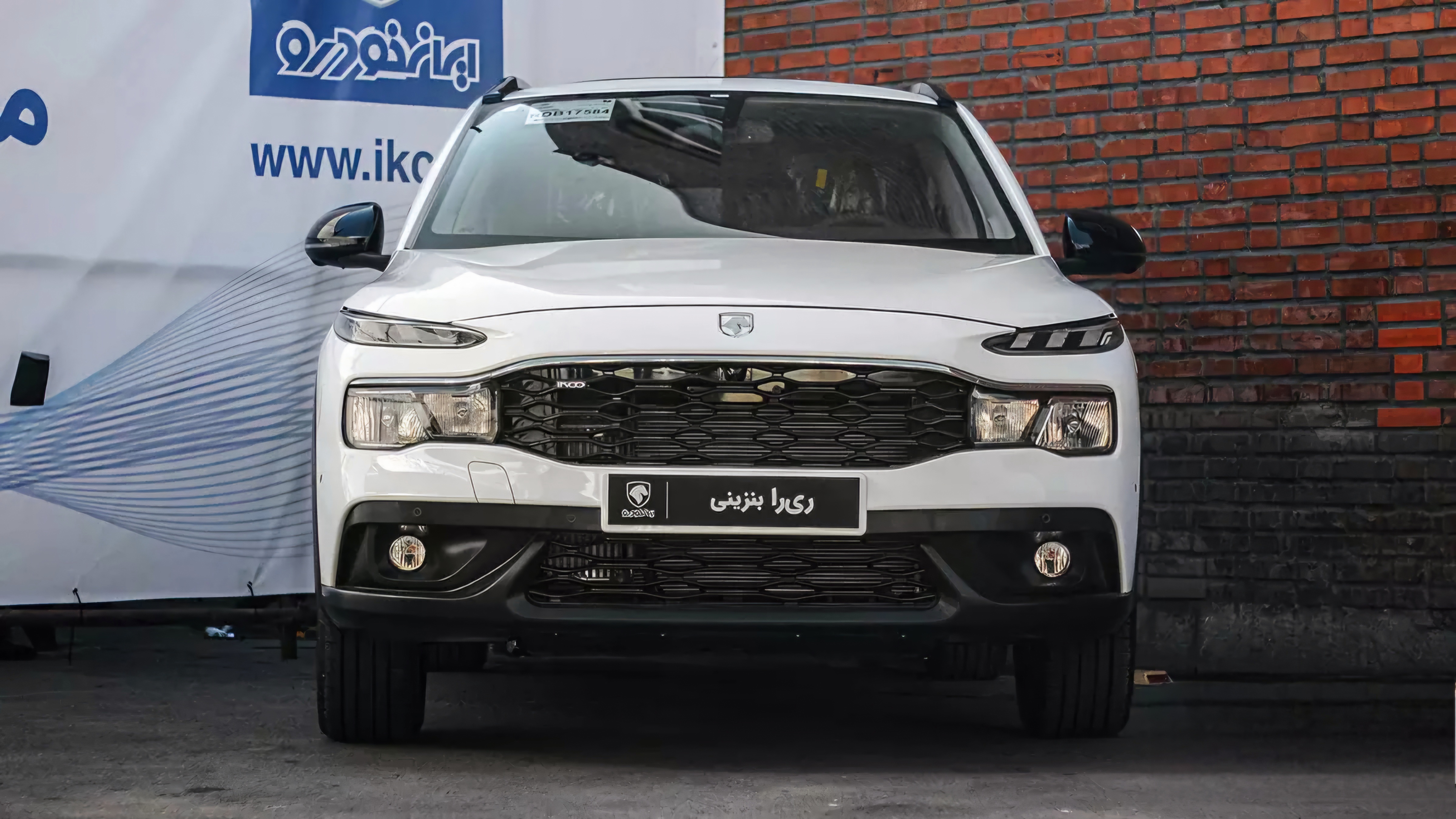
Iran Khodro
The word khodro means "automobile" in Persian, and for decades the name Iran Khodro has been nearly synonymous with the act of driving in Iran. Founded in 1962 as Iran National, the company commands roughly 65 percent of domestic vehicle production, making it not just the largest automaker in Iran but the largest in the Middle East, Central Asia, and North Africa. Its factory complex in western Tehran is one of the biggest industrial sites in the country, and the cars rolling off its lines -- whether aging Peugeot designs, locally engineered Samands, or once upon a time, Mercedes-Benz E-Classes -- tell the story of a nation perpetually caught between global ambition and enforced isolation.
The Paykan: Iran's People's Car
For more than three decades, one car defined Iranian roads. The Paykan began life as the Hillman Hunter, a product of Britain's Rootes Group and its Arrow range. Iran Khodro began manufacturing it under license, and long after the original ceased production in Britain in the mid-1970s (latterly as the Chrysler Hunter), the Paykan kept rolling out of Tehran. It became Iran's answer to the Volkswagen Beetle or the Fiat 500 -- a vehicle so ubiquitous it transcended transportation and became cultural identity. Saloon production finally ended in 2005, but a pickup version survived until 2015. By then, the Paykan had been in production for roughly forty years, outliving the political system under which it was born, the company name that first built it, and the British firm that designed it.
Partners, Sanctions, Partners Again
Iran Khodro's history reads like a seismograph of international relations. The company built deep partnerships with European manufacturers, particularly PSA Peugeot Citroen. By the 2000s, IKCO was manufacturing the Peugeot 206, 405, and Pars models, with parts imports from Peugeot running between 700 and 800 million euros per year. Iran achieved 98 percent self-sufficiency in producing Peugeot 405 parts. Then in 2012, Peugeot severed ties under international sanctions. Four years later, after the Joint Comprehensive Plan of Action, the two sides formed a 50-50 joint venture called IKAP to resume cooperation. But the pattern of engagement and withdrawal has repeated with other partners too. Renault formed a joint venture. Mercedes-Benz licensed E-Class assembly. Pininfarina signed a 70-million-euro contract in 2017 to develop four new models. Each partnership has had to navigate the unpredictable currents of sanctions, diplomacy, and geopolitical pressure.
Mercedes on the Assembly Line
For a brief period in the mid-2000s, one of the more improbable scenes in global manufacturing played out in Tehran. At Top Khodro, an Iran Khodro subsidiary, workers assembled Mercedes-Benz E-Class sedans -- the E200, E280, and E350 -- using Semi-Knocked Down kits with around 1,740 components shipped from Germany. The W211-generation luxury cars rolled off a Tehran assembly line, a far cry from the humble Paykan that had built the company's reputation. By 2006, the production line was running. Today, the assembly plant lies deserted. The Mercedes partnership did not survive the tightening sanctions regime, and the abandoned facility stands as a physical reminder of industrial ambitions that geopolitics could grant and revoke in equal measure.
The Samand and the Road Ahead
Iran Khodro's answer to dependence on foreign designs was the Samand, Iran's self-described "national car." Built on the X7 platform -- itself an upgrade of the Peugeot 405 architecture, designed in-house in 1995 -- the Samand entered production in 2001. Its Soren variant featured a partly Iranian-designed dual-fuel engine running on both compressed natural gas and petrol. The car represented a genuine step toward automotive self-sufficiency. IKCO followed with the IKP1 platform and the Tara model in 2021, continuing the push toward indigenous design. The company produced 556,442 vehicles in 2023 and targeted 600,000 for 2024. Beyond cars, IKCO's reach extends to trucks, buses, railway rolling stock through its IRICO subsidiary, and a network of twelve production sites across four continents. The company exports to Russia, Turkey, Iraq, Azerbaijan, and beyond, though volumes remain modest -- about 35,000 cars in 2009 and $60 million in exports in 2007.
A Factory as Big as the Contradictions
The Iran Khodro factory complex in western Tehran is visible from altitude: a sprawling industrial landscape of assembly halls, test tracks, and storage lots. It is both a source of national pride and a target of domestic criticism. Consumer complaints about quality are common. The company's productivity has been called among the lowest in the global auto industry. Yet IKCO remains indispensable. It employs tens of thousands, anchors an extensive domestic supply chain through subsidiaries like SAPCO and ISACO, and puts the majority of Iran's cars on the road. The factory embodies the paradox of Iranian industry: enormous in scale, constrained by circumstances, resourceful in adaptation, and perpetually one diplomatic shift away from transformation or further isolation.
From the Air
Located at 35.710N, 51.191E in western Tehran. The factory complex is a large industrial footprint visible from altitude. Mehrabad Airport (OIII) is approximately 5 km to the northeast. Imam Khomeini International Airport (OIIE) lies 35 km to the southwest. The Azadi Tower and Azadi Stadium are nearby landmarks to the east. Elevation approximately 1,200m (3,937 ft).