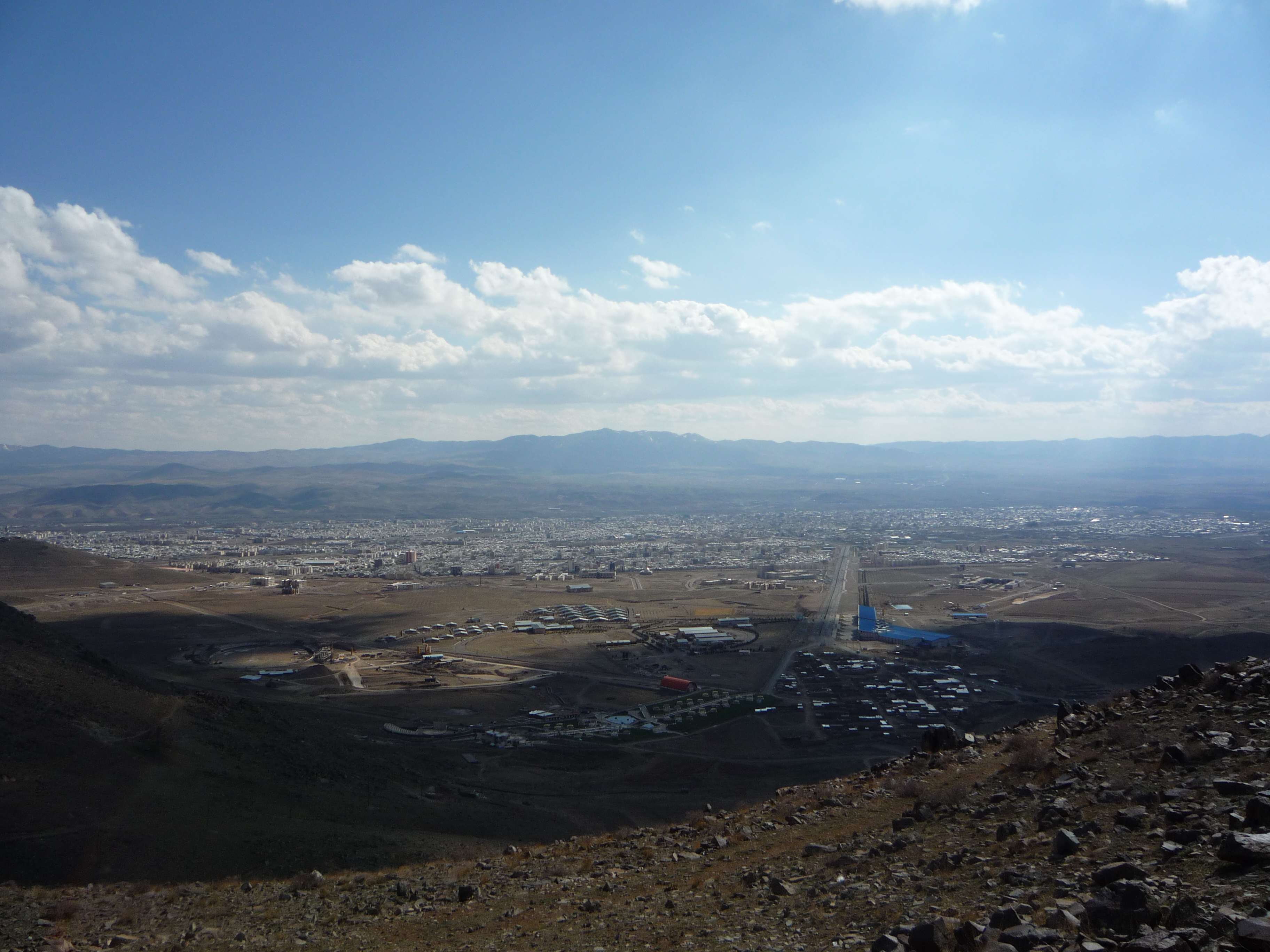
Iranian Azerbaijan
The Turkmanchay Treaty of 1828 drew a line along the Aras River and cleaved a civilization in two. On one side, the territories that would become the Republic of Azerbaijan drifted into the Russian orbit. On the other, Iranian Azerbaijan remained under Persian rule, its Azeri-speaking population growing until it outnumbered the entire nation that bears their ethnic name. Today, this northwestern corner of Iran -- spanning the provinces of East Azerbaijan, West Azerbaijan, Ardabil, and Zanjan -- is home to one of the most quietly remarkable cultural crossroads in the Middle East.
A Treaty's Long Shadow
The story of Iranian Azerbaijan cannot be told without the Aras River. For centuries, the Azeri people moved freely across these highlands, united by a Turkic language and shared traditions. Then came the Russo-Persian Wars, and in 1828 the Treaty of Turkmanchay handed Russia control of several Azeri territories in the South Caucasus. The river became a border. Families found themselves in different empires overnight. Nearly two centuries later, the consequences still shape daily life. The Azeris of Iran tend to be more conservative and religious than their counterparts in the former Soviet republic, where decades of state atheism left a different cultural imprint. Both sides speak Azerbaijani, but the Iranian dialect carries heavier Persian influences, while the northern version absorbed Russian vocabulary. They share a heritage but inhabit different worlds.
Tabriz and the Four Provinces
Tabriz dominates the region as its largest city and the capital of East Azerbaijan province. It is the biggest economic hub of northwestern Iran, a sprawling metropolis that has served as a royal capital, a revolutionary hotbed, and a center of trade for millennia. But Iranian Azerbaijan extends far beyond Tabriz. Ardabil, to the east, sits at elevation amid green highlands. Urmia, capital of West Azerbaijan, anchors the western frontier. Zanjan, the southernmost provincial capital, guards the approaches from Tehran. Between these cities, the landscape shifts from volcanic peaks to fertile valleys, from the salt flats around Lake Urmia to the forested slopes near the Caspian coast. The region is bilingual throughout -- Persian and Azeri coexist in classrooms, markets, and homes.
Sacred Stones and Fire Temples
Three Armenian monasteries -- St. Thaddeus, St. Stepanos, and the Chapel of Dzordzor -- stand together as the UNESCO World Heritage site known as the Armenian Monastic Ensembles of Iran. Dating to the 7th century, these churches testify to a Christian presence that predates Islam in the region by centuries. Nearby, the Zoroastrian fire temple of Takht-e Soleyman, also a UNESCO World Heritage site, marks an even older layer of belief. The ruins of Babak Castle perch dramatically above the Aras River Valley, associated with Babak Khorramdin, the 9th-century rebel who resisted the Abbasid Caliphate. And in the village of Kandovan, houses carved directly into volcanic rock cones recall the cave dwellings of Cappadocia in Turkey -- except that people still live in them.
The Table and the Bazaar
Iranian Azerbaijan has a food culture that reflects its position at the crossroads of Persian, Turkic, and Kurdish traditions. Bonab Kabab, named after the city of Bonab south of Tabriz, is a generous skewer seasoned with local spices. Kofte-e-Tabrizi is no ordinary meatball -- it is a substantial sphere of ground beef, rice, and herbs, sometimes as large as a fist. Lighvan cheese, a tangy feta produced in Liqvan village southeast of Tabriz, has become famous across Iran. The region is known for the warmth of its hospitality. Visitors often remark that locals insist on sharing meals, offering tea, and guiding strangers to their destinations. The bazaars of Tabriz, among the oldest covered markets in the world, remain the commercial and social heart of the region.
Between Two Worlds
Iranian Azerbaijan occupies an unusual position in the geopolitics of the Middle East. Its population maintains cultural ties to the Republic of Azerbaijan across the border, yet identifies firmly as Iranian. The border town of Jolfa faces the Nakhchivan exclave of Azerbaijan, and cross-border family connections remain common. The Aras River valley along the northern frontier offers some of Iran's most dramatic scenery -- stepped villages climbing hillsides, mountain passes with ancient tombs, and gorges where the river has cut through volcanic rock over millennia. From the air, the region's defining feature is contrast: the vast salt lake of Urmia shrinking in the west, snow-capped peaks of the Sabalan volcano rising in the east, and the patchwork of irrigated fields and orchards filling every valley between.
From the Air
Located at 37.60°N, 47.00°E in northwestern Iran. Tabriz International Airport (OITT) is the region's main airport. Lake Urmia is the most prominent visual landmark from altitude -- a vast, often reddish-brown salt lake visible from cruising altitude. Mount Sabalan (4,811 m / 15,784 ft) rises to the east near Ardabil. The Aras River valley marks the northern border with the Republic of Azerbaijan. Best viewed at 15,000-25,000 ft to appreciate the contrast between the lake basin, mountain ranges, and agricultural valleys.