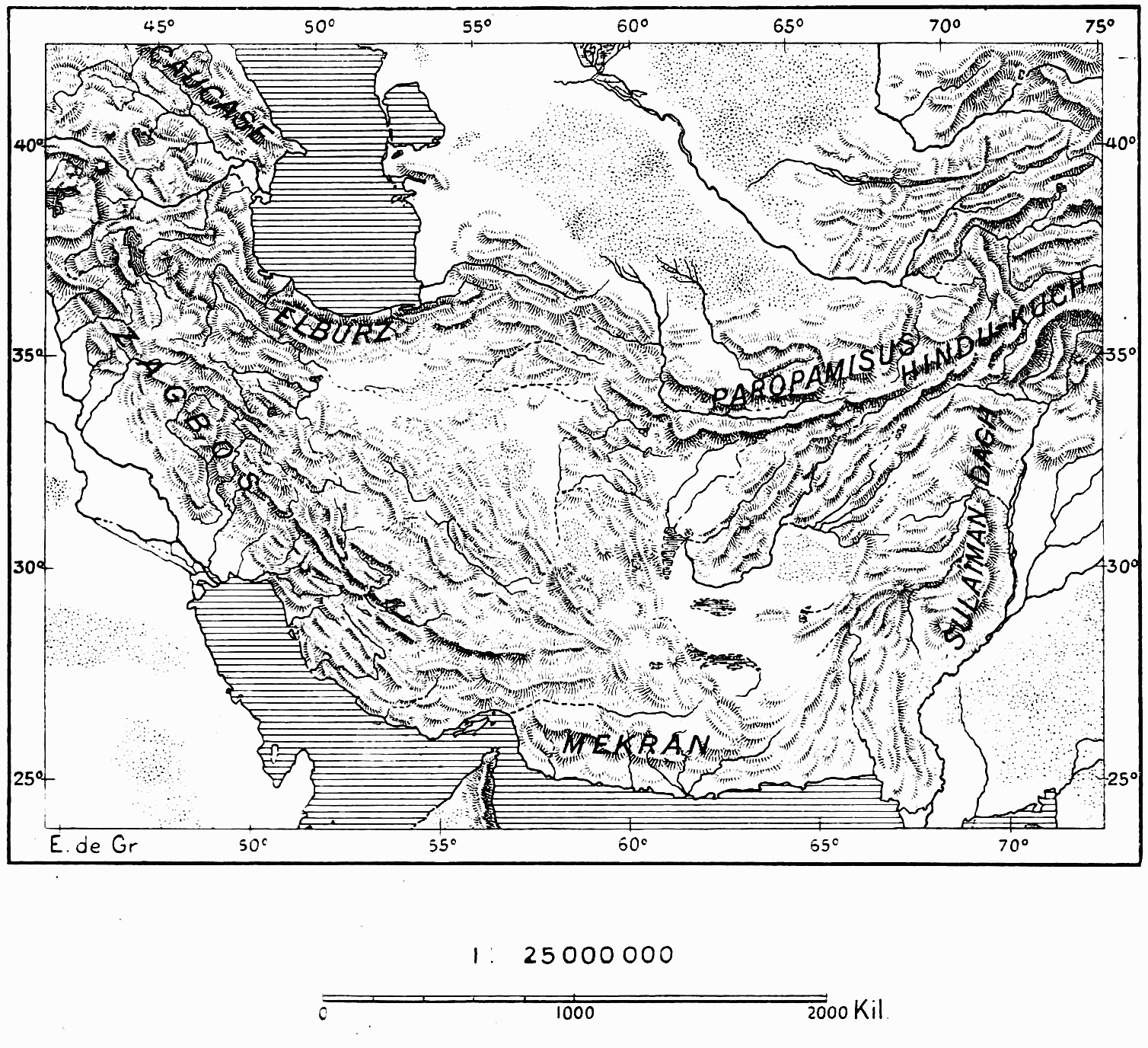
Iranian Plateau: The Crossroads Where Humanity Paused Before Populating the World
Somewhere around 70,000 years ago, bands of Homo sapiens walked out of Africa and stopped. Not permanently -- but for roughly 20,000 years, according to a 2024 study published in Nature Communications, these early humans lingered in a geographic hub spanning what is now Iran, southeastern Iraq, and northeastern Saudi Arabia. They hunted, gathered, adapted to new climates, and slowly diverged into the populations that would eventually become all non-African humanity. The Iranian Plateau, it turns out, is not just a geological feature. It is the waiting room where our species sat before populating the world.
A Plateau That Is Not Flat
Call it a plateau and you imagine something level. The Iranian Plateau is anything but. Stretching nearly 2,000 kilometers from the Caspian Sea in the northwest to the Sulaiman Mountains in the southeast, it encompasses 3.7 million square kilometers -- the entirety of Iran, all of Afghanistan, and the parts of Pakistan west of the Indus River. Its highest point, Noshaq in the Hindu Kush, reaches 7,492 meters. Its lowest, the Lut Desert east of Kerman, drops below 300 meters. Between these extremes lie the Zagros Mountains along the western edge, the Alborz range along the north with Mount Damavand at 5,610 meters, the vast emptiness of the Dasht-e Kavir salt desert in the center, and the Kopet Dag mountains along the Turkmenistan border. "Plateau" is a geological term of convenience. The reality is a fractured, folded, uplifted expanse where tectonic forces have been shoving the Arabian Plate into the Eurasian Plate for millions of years.
The Collision Zone
The Iranian Plateau exists because continents collide. The Arabian Plate, drifting northward, rams into Eurasia along the Zagros fold and thrust belt -- the suture zone visible as a wall of mountains running from Turkey to the Persian Gulf. This is the same tectonic event that built the Alps, the Himalayas, and the Caucasus, all part of the Alpine orogeny that has reshaped the planet over the past 65 million years. The plateau itself formed from Gondwanan terranes -- fragments of the ancient southern supercontinent that accreted onto the Eurasian margin as oceans closed and landmasses merged. Beneath the surface, a Precambrian basement of gneisses and granites dates back 500 to 600 million years, remnants of the Cadomian orogeny. The geology here is layered like a history book: Paleozoic foundations, Mesozoic sediments, Cenozoic volcanic eruptions, and ongoing seismic activity that reminds residents the building process has not stopped.
Empires Born on Elevated Ground
The plateau's geography made it a cradle of civilization and a corridor of empire. In the Bronze Age, the kingdom of Elam stretched across the Zagros, connecting Mesopotamian lowlands to the Iranian interior. The mysterious Aratta, known from Sumerian cuneiform texts, may have flourished somewhere on the central plateau. By the first millennium BCE, the Achaemenid Persians emerged from Fars Province to build an empire stretching from Egypt to India. The very name "Iran" derives from Middle Persian Eran, first used as a state designation during the Sasanian era. Parthians, Seljuks, Safavids -- dynasty after dynasty drew power from the plateau's position between the Mediterranean world and Central Asia. The Silk Road crossed it. Armies marched across it. Poets and scholars flourished in its cities: Nishapur, Isfahan, Shiraz. Geography shaped destiny here: the mountains provided defense, the passes provided trade routes, and the elevation provided just enough water to support agriculture in an otherwise arid land.
Leopards and Lilacs
The plateau's ecological diversity mirrors its geological complexity. Persian leopards prowl the wooded mountains. Ibex navigate cliff faces in the Zagros and Alborz. Hyenas, wild boars, gazelles, and mouflons share habitat across elevations. In Baluchistan, Asiatic black bears coexist with palm squirrels. The Caspian shore supports waterfowl; the Persian Gulf harbors 200 varieties of fish; the Caspian Sea sustains sturgeon populations that once made Iranian caviar legendary. The flora is equally varied: oak forests surround Shiraz, while poplars, willows, and elms grow where water permits. Lilac, jasmine, and roses bloom in gardens that Persian culture has celebrated for millennia. The pistachio orchards of Kerman, the pomegranate groves of Isfahan, the saffron fields of Khorasan -- agriculture on the plateau is ancient and specialized, each crop adapted to its particular altitude, soil, and water supply.
The Hub Where Humanity Diverged
The 2024 Nature Communications study that identified the Iranian Plateau as a population hub used genetic, paleoecological, and archaeological evidence to reconstruct what happened during a mysterious 20,000-year gap in human prehistory. After leaving Africa between 70,000 and 60,000 years ago, modern humans did not immediately scatter across Eurasia. Instead, they settled in a region centered on the Persian Plateau, where environmental conditions -- adequate water, game, shelter -- could support hunter-gatherer populations through climate fluctuations. Around 50,000 years ago, these "Common Eurasians" diverged into two lineages: Ancient East Eurasians, who would eventually populate East Asia and the Americas, and Ancient West Eurasians, ancestors of Europeans and people of western and southern Asia. The plateau was not a destination. It was a staging ground, a place where our species gathered strength before the next great migration. From the air, the Iranian Plateau stretches in every direction -- brown, vast, seismically alive. Somewhere below, 70,000 years ago, your ancestors paused here too.
From the Air
Centered at approximately 36.28°N, 59.05°E near Nishapur, but the Iranian Plateau extends 2,000 km from the Caspian Sea to the Sulaiman Mountains. This location falls in Razavi Khorasan Province. Nearest major airport is Mashhad International (OIMM/MHD). The plateau's terrain varies dramatically -- from below 300 meters in the Lut Desert to 7,492 meters at Noshaq in the Hindu Kush. Major mountain ranges (Zagros, Alborz, Kopet Dag) create significant terrain hazards. The Dasht-e Kavir salt desert is visible as a vast white expanse from cruising altitude. Be aware of high terrain and rapidly changing mountain weather throughout the region.