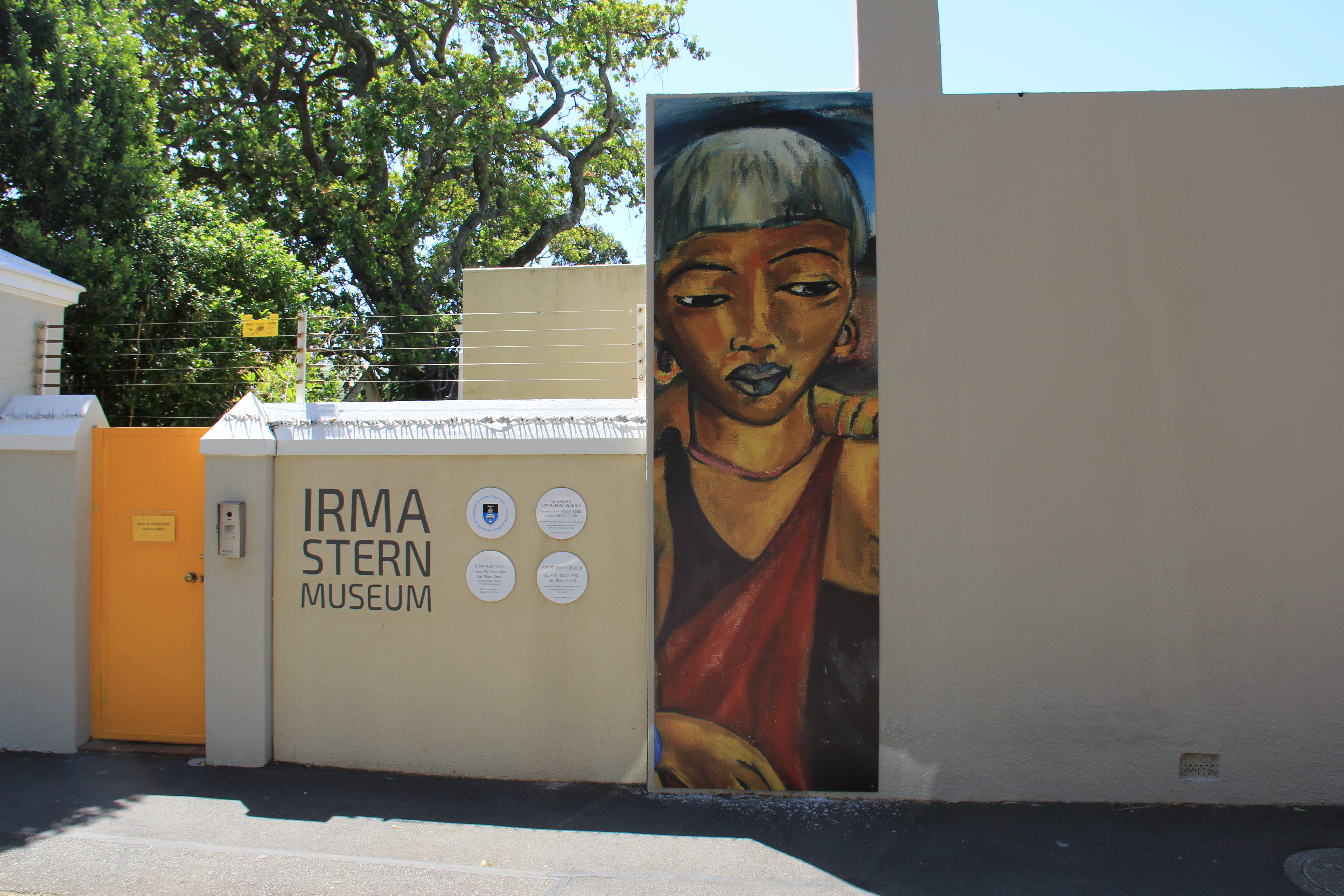
Irma Stern Museum
Her brushes are still there. So is the easel, the paint-stained rags, the worn painting coat draped as if she had just stepped out for coffee and would be back in a moment. For more than half a century, the studio at "The Firs" in Rosebank, Cape Town, preserved the working space of Irma Stern exactly as the artist left it -- a frozen moment in the life of one of South Africa's most significant painters. The Irma Stern Museum opened in July 1972 and closed on 31 October 2025, its collection now seeking a new home.
An Expressionist in Africa
Irma Stern was born in 1894 in Schweizer-Reneke, in what was then the South African Republic, to German-Jewish parents. She studied at the Weimar Academy in Germany, where Expressionism was reshaping European art, and returned to South Africa determined to apply those techniques to African subjects. Her bold colors and emotional brushwork initially scandalized Cape Town's conservative art establishment, but by the time of her death in 1966, she had become one of the country's most celebrated artists. Her paintings now fetch millions at auction. Yet during her lifetime, she was better known for her travels -- journeys through the Congo, Zanzibar, Senegal, and across Europe -- that filled her home with collected objects as vivid and eclectic as her canvases.
The Firs and Its Secret Garden
Stern bequeathed her collections to a trust fund dedicated to advancing the fine arts, and that bequest became the foundation of the museum. The house itself was part of the experience: some rooms were maintained as Stern had arranged them, while others hosted temporary exhibitions of contemporary South African artists including Jo Ractliffe in 1998, Esther Mahlangu in 2003 and 2015, and Georgina Gratrix in 2021. Outside, "The Secret Garden" -- an oasis on the University of Cape Town campus -- drew students and visitors with its mature Magnolia grandiflora, Norfolk Island pine, and wild date palms. The garden offered a different kind of art: the interplay of light through canopy, the stillness of a walled space in the middle of a busy university.
Between Continents
What made the museum more than a painter's house was the collection of objects Stern gathered across decades of travel. African masks, European antiques, and artifacts from her journeys through the continent filled the rooms alongside her own paintings, creating a kind of autobiography in objects. The museum was administered by the University of Cape Town on behalf of the Irma Stern Trust, and its dual identity -- part art gallery, part personal archive -- gave visitors the rare experience of seeing not just what an artist made, but how she lived and what she valued. The accumulated textures of her life were as revealing as any canvas.
A Door Closes
On 31 October 2025, the Irma Stern Museum closed its doors. The University of Cape Town confirmed the decision, and the collection began preparing for a transition to a new home. For fifty-three years, the museum had quietly operated in Rosebank, never becoming a major tourist destination but sustaining a loyal following among art lovers and students who valued its intimacy. The closure ended a particular kind of cultural experience -- the chance to stand in a working artist's studio and feel the accumulated presence of a creative life. Stern's paintings will survive in galleries and private collections, but the specific alchemy of seeing them in the rooms where she lived and worked, surrounded by the things she chose to keep close, belongs now to memory.
From the Air
Located at 33.95°S, 18.47°E in the Rosebank suburb of Cape Town, near the University of Cape Town campus. Nearest airport: Cape Town International (FACT). The museum sits in a residential area on the eastern slopes below Devil's Peak, not individually visible from altitude but identifiable by its proximity to the UCT campus buildings. Best approached from the northeast.