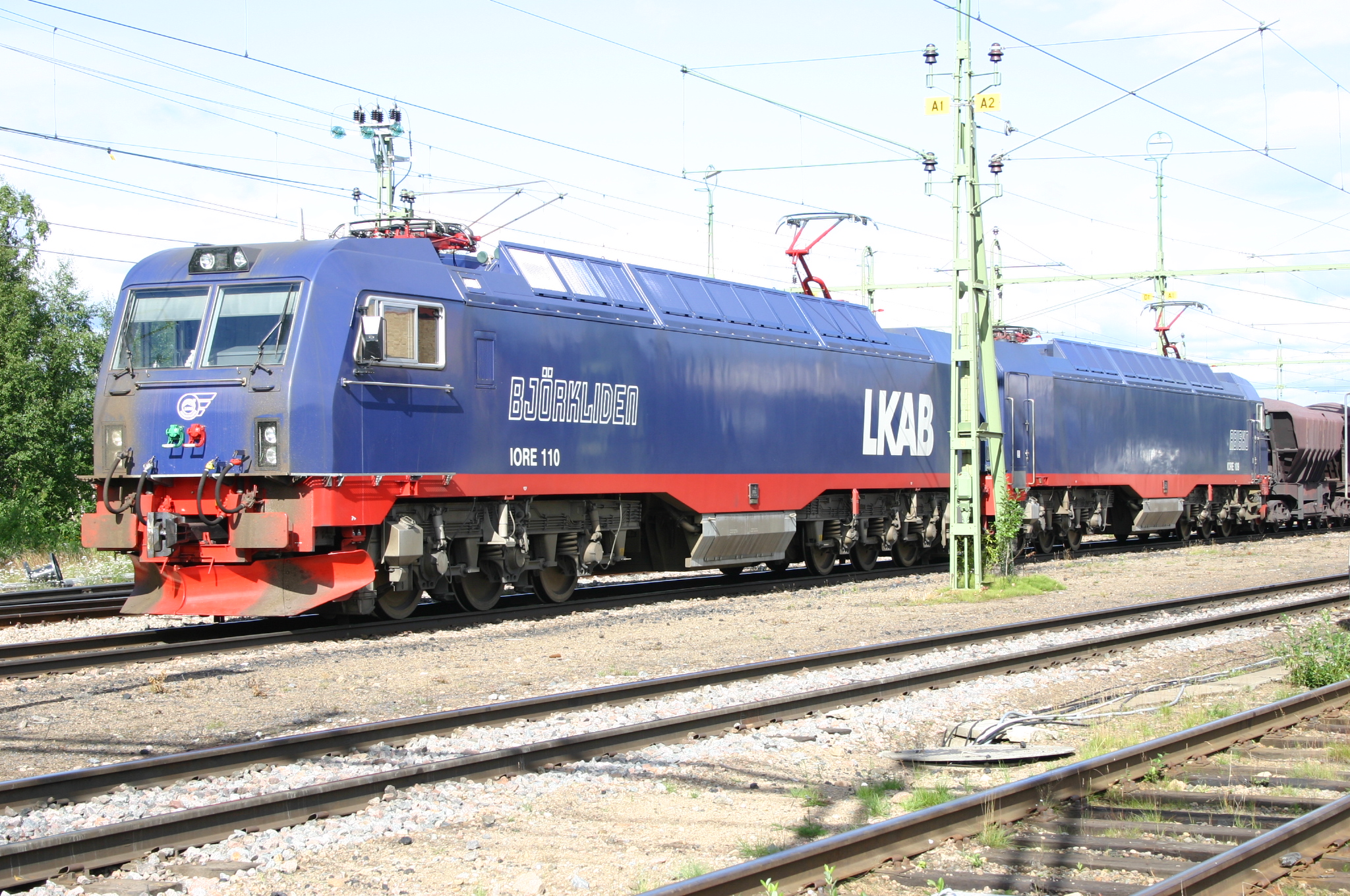
Iron Ore Line
A fully loaded iron ore train descending from the Swedish-Norwegian border toward the port at Narvik uses only a fifth of the electricity it regenerates through its brakes. The surplus power feeds back into the grid -- enough to haul the empty cars back uphill for the return trip. This elegant physics is the daily reality of the Iron Ore Line, a 398-kilometer railway threading through some of the most remote and dramatic terrain in Scandinavia. Built to move rock from the mines of Kiruna and Gallivare to the ice-free Atlantic port at Narvik and the Baltic port at Lulea, the line has operated continuously since 1888 and remains one of the heaviest-haul railways in the world.
Mountains of Iron
LKAB, Sweden's state-owned mining company, operates iron ore mines in Kiruna, Svappavaara, and Malmberget in Norrbotten County. Most of the output travels the Northern Circuit: 170 kilometers from Kiruna through the mountains to the Port of Narvik, which stays ice-free year-round thanks to the Gulf Stream. A smaller share takes the Southern Circuit, 220 kilometers east to the Port of Lulea on the Baltic Sea, where ore is shipped to regional customers or fed into SSAB's steel furnaces. Between 11 and 13 trains run each direction daily on the Northern Circuit, with five to six on the Southern. Each train, hauled by an Iore-class locomotive, stretches 68 cars long and weighs 8,600 tonnes -- among the heaviest freight trains operating anywhere in Europe.
Building Across the Arctic
The railway's origins reach back to 1847, when a concession was first granted to connect the Gallivare mines to the Gulf of Bothnia. That line was never built. A second attempt in 1882 brought in an English company that managed to lay track from Malmberget to Lulea by 1888, though the construction was substandard and the mining company ran out of money. The Swedish state nationalized the line in 1891. Extensions pushed the rails to Kiruna by 1899 and all the way through the mountains to Narvik by 1903 -- a feat that required tunneling and bridging through some of the harshest terrain in northern Europe. Electrification followed between 1915 and 1922, making it one of the earliest electrified railways in the world. The line's strategic importance became starkly clear during World War II, when Swedish iron ore shipments to Germany via Narvik were a major factor in the Allied campaign to control Norway.
A Railway Reborn
By the early 1990s, the Swedish and Norwegian state railways were losing money hauling ore, and LKAB wanted to take over operations itself. What followed was a years-long political tangle involving two governments, EU directives, labor unions, and competing visions for the line's future. LKAB finally established its subsidiary Malmtrafik, which took over operations on 1 July 1996, becoming the first private company in Europe to haul international freight trains. The transition was not smooth -- 200 workers in Narvik went on strike for a month over employment terms, and labor disputes over union affiliation and pension rights added further friction. But the operational results justified the upheaval. LKAB invested heavily in new Iore locomotives ordered from Bombardier, 750 new 100-tonne hopper cars, and track upgrades that raised the maximum axle load from 25 to 30 tonnes. Passing loops were extended to 790 meters to accommodate the longer, heavier trains.
Passenger Trains and Fish
The Iron Ore Line is not all about rock. Vy Tag operates daily overnight passenger service from Narvik to Stockholm -- an 18-hour journey that crosses the Arctic Circle and traverses some of the most scenic railway miles in Scandinavia. Regional trains connect Kiruna and Lulea. Perhaps most unexpectedly, CargoNet runs the Arctic Rail Express, a container service making the 1,950-kilometer journey from Oslo to Narvik in 27 hours, hauling food northbound and fish southbound. The Norwegian part of the line outside Narvik holds the distinction of being the northernmost railway in all of Western Europe, at 68.45 degrees north. In December 2023, a fully laden ore train derailed near Vassijaure; the line was repaired and reopened in February 2024, only for another derailment to occur at nearly the same spot a week later, prompting an investigation into possible sabotage.
From the Air
The Iron Ore Line runs 398 km from Riksgransen on the Norwegian border to Boden in Sweden, with an extension via the Ofoten Line to Narvik, Norway. The full route from Narvik to Lulea is 473 km. The railway is clearly visible from the air as it traces the north shore of Lake Tornetrask near Abisko (68.35°N, 18.94°E), then passes through Kiruna and continues southeast to Gallivare and Boden. Key visual references include Kiruna's iron ore mine, the port facilities at Narvik, Lake Tornetrask, and the Abisko area. Nearest airports: Kiruna (ESNQ), Gallivare (ESNG), Narvik/Harstad (ENEV), Lulea (ESPA). The railway passes through mountainous terrain between Kiruna and Narvik; maintain safe altitude.