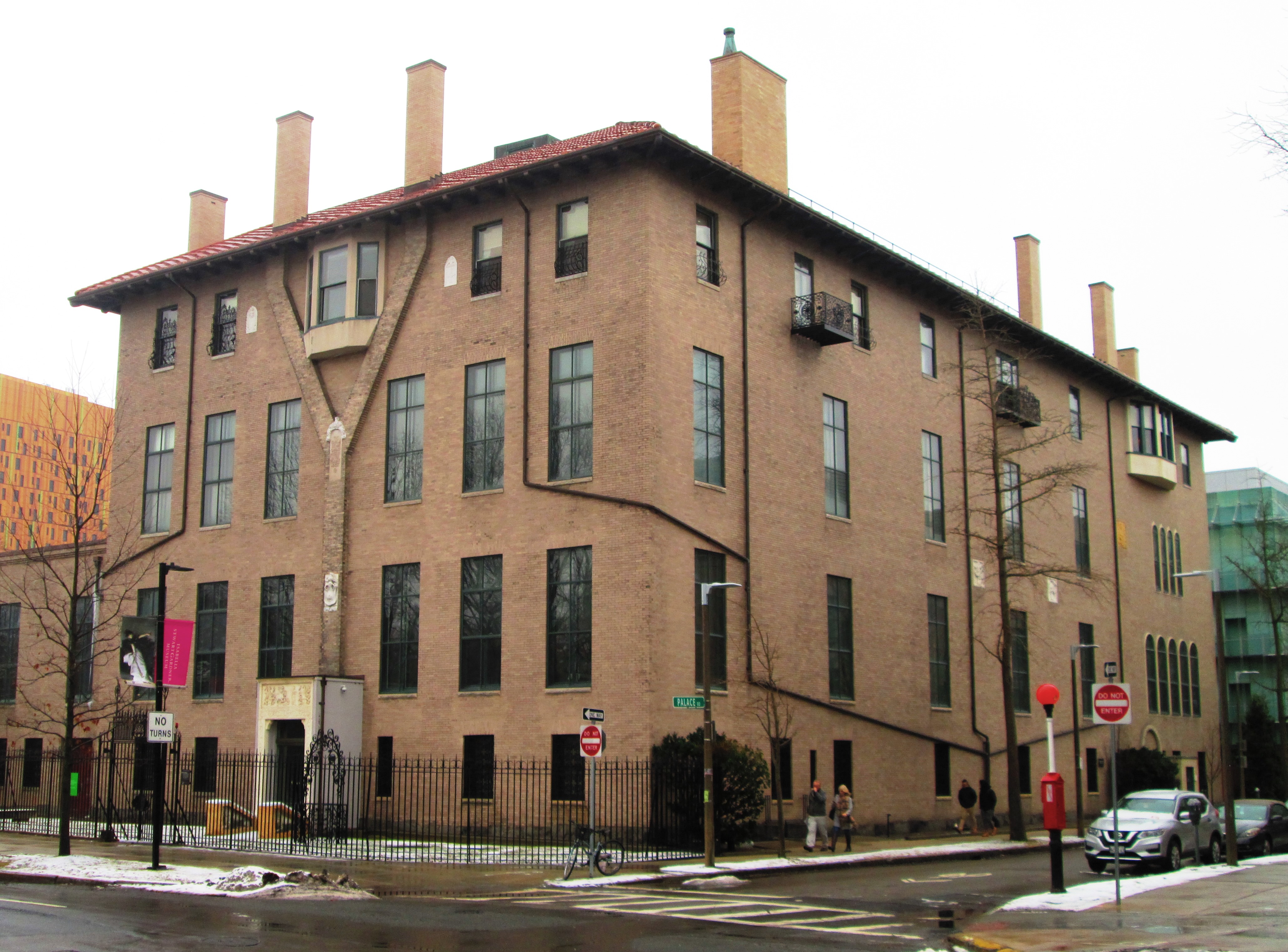
Isabella Stewart Gardner Museum Theft
Thirteen empty frames still hang on the walls of the Isabella Stewart Gardner Museum in Boston. They have hung there since the early hours of March 18, 1990, when two men dressed as police officers talked their way past a night guard, handcuffed both watchmen to pipes in the basement, and walked out 81 minutes later with half a billion dollars' worth of art tucked under their arms. A Vermeer, three Rembrandts, five Degas sketches, a Manet, a Flinck, an ancient Chinese bronze, and a Napoleonic eagle finial -- all gone. More than three decades later, not a single piece has been recovered. The museum's $10 million reward, the largest ever offered by a private institution, remains unclaimed.
St. Patrick's Night
The timing was deliberate. Boston on the night of March 17, 1990, was awash in St. Patrick's Day revelry, the streets packed with partygoers who would think nothing of seeing police officers out on patrol. Shortly after midnight, witnesses near the museum spotted two men in a hatchback on Palace Road, dressed in what appeared to be police uniforms. At 1:24 a.m., they rang the museum's side buzzer and told night guard Rick Abath they were responding to a disturbance call. Abath, twenty-three years old and earning barely above minimum wage, could see their uniforms on the closed-circuit monitor. He let them in. Within minutes, both guards were handcuffed, blindfolded with duct tape, and led to the basement. The thieves never asked for directions -- they already knew where they were going.
Eighty-One Minutes in the Dutch Room
The infrared motion detectors recorded the thieves' first steps in the second-floor Dutch Room at 1:48 a.m., thirteen minutes after securing the guards -- time apparently spent ensuring no silent alarm had reached police. They moved with purpose but not precision. They ripped Rembrandt's The Storm on the Sea of Galilee, his only seascape, from the wall and hurled it onto the marble floor, shattering the glass frame before cutting the canvas from its stretcher with a blade. Vermeer's The Concert, one of only thirty-six known paintings by the Dutch master and today valued at roughly $250 million, received the same treatment. Puzzlingly, the thieves removed a large Rembrandt self-portrait but left it leaning against a cabinet, apparently too heavy to carry since it was painted on wood rather than canvas. They took a postage-stamp-sized Rembrandt etching instead. In the Short Gallery they grabbed five Degas sketches and an eagle finial from a Napoleonic flagpole, abandoning the flag itself when the screws proved stubborn. The last painting taken, Manet's Chez Tortoni, vanished from the Blue Room under circumstances that remain unexplained: the motion detectors never recorded anyone entering that gallery during the heist.
A Museum Built on a Will
The theft exposed vulnerabilities that had been an open secret for years. Isabella Stewart Gardner, the formidable Boston collector who built the museum to house her treasures, died in 1924 leaving a will that stipulated nothing in her collection could ever be moved or altered. That decree, meant to preserve her artistic vision, also handcuffed the institution's ability to modernize. By the 1980s the museum had no climate control, no insurance policy, and a security system consisting of exterior cameras and a single panic button at the front desk. Guards earned barely above minimum wage. When the FBI uncovered a plot by Boston criminals to rob the museum in 1982, sixty motion detectors were installed, but the board rejected proposals for interior cameras as too costly. An independent security review in 1988 recommended improvements that were never approved. The empty frames that now mark where masterpieces once hung fulfill Gardner's will in the most haunting way possible -- nothing has been moved.
Gangsters, Ghosts, and Dead Ends
The investigation became a labyrinth of Boston's criminal underworld. The FBI focused on the Merlino gang from Dorchester, whose associates had cased the museum as early as 1981. In 2013, the Bureau announced with "a high degree of confidence" that they had identified the thieves, and by 2015 stated both men were dead. The leading suspects -- George Reissfelder and Leonard DiMuzio, associates of mobster Carmello Merlino -- took their secrets with them; Reissfelder died in 1991, and Turner spent years in prison for an unrelated heist attempt without ever cooperating. Another theory centers on Bobby Donati, a gangster murdered in 1991, who allegedly organized the robbery to negotiate his boss Vincent Ferrara's release from prison. Donati and his friend Robert Guarente were spotted at a social club in Revere shortly before the theft with a bag of police uniforms. A 1994 anonymous letter to the museum offered to return the art for $2.6 million and immunity; after the museum printed a coded acceptance in The Boston Globe, the writer grew fearful and vanished. In 1997, an antiques dealer showed a journalist what appeared to be the Rembrandt seascape in a Brooklyn warehouse, but a subsequent FBI raid found the space empty.
The Frames That Wait
Walk through the Gardner Museum today and the theft is not something you read about on a plaque -- it confronts you. The ornate gold frames hang where they always have, now surrounding nothing but silk-covered walls. The museum has never replaced the stolen works and never will, honoring both Gardner's will and a quiet hope that the art will someday return. The $10 million reward, doubled from $5 million in 2017, remains the largest bounty ever offered by a private institution. Vermeer's The Concert alone may be the most valuable stolen object on earth. The Storm on the Sea of Galilee remains Rembrandt's only known seascape. Every lead has gone cold, every suspect has either died or stayed silent. Somewhere, thirteen works of art that defined centuries of European painting either survive in a hidden collection or have already been destroyed by time and neglect. The empty frames keep asking the question that no one has been able to answer.
From the Air
The Isabella Stewart Gardner Museum sits at 42.338N, 71.099W in Boston's Fenway-Kenmore neighborhood, adjacent to the Back Bay Fens. From the air, the museum's distinctive Venetian-palazzo courtyard is visible near the Museum of Fine Arts. Best viewed at 2,000-3,000 feet AGL. Nearest airport: KBOS (Boston Logan International), 4nm east. The Charlestown neighborhood, Dorchester, and South Boston -- all locations tied to the investigation -- are visible in the broader Boston panorama.