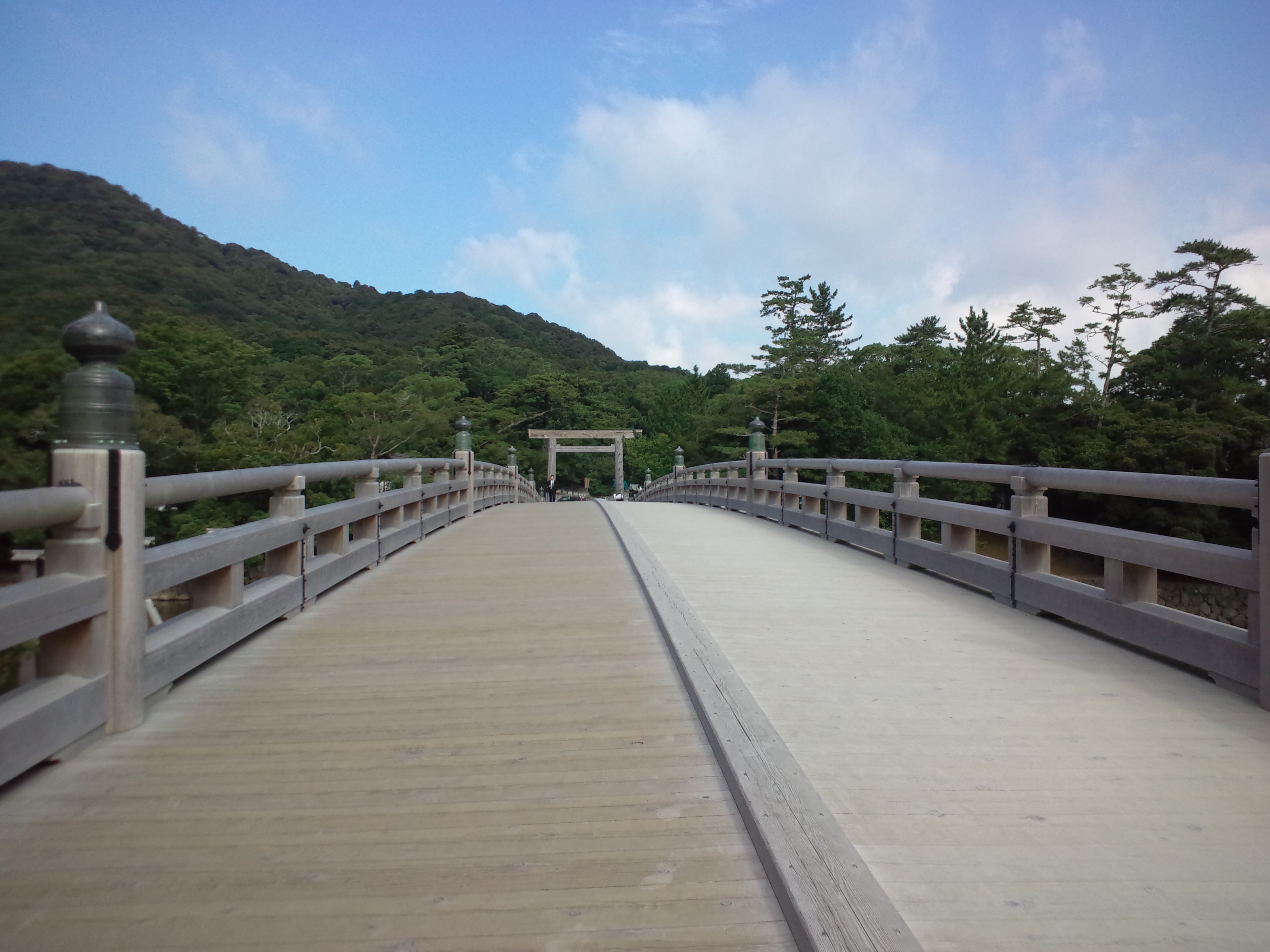
Ise Grand Shrine
Every 20 years, carpenters dismantle Japan's holiest building and build it again from scratch on an adjacent plot of land. They have been doing this since the 7th century. The shrine they rebuild is Ise Grand Shrine, a sprawling complex of 125 individual shrines spread across the forested hills of Ise City in Mie Prefecture, and the spiritual heart of Shinto. Inside the innermost sanctuary of the Naiku -- the Inner Shrine -- rests the Yata no Kagami, a sacred mirror that is one of the Three Imperial Regalia of Japan. No one outside the imperial family and the highest-ranking priests has seen it in centuries. Yet six million pilgrims travel here each year, drawn by the same impulse that pulled five million visitors in 1830 alone: the belief that to walk beneath the ancient cryptomeria trees along the Isuzu River and cross the Uji Bridge is to step closer to the divine.
Eternity Through Demolition
The practice is called Shikinen Sengu, and it is one of the most remarkable architectural traditions on Earth. Every two decades, the Inner Shrine, the Outer Shrine, 14 auxiliary buildings, the Uji Bridge, and the torii gates are all torn down and rebuilt on alternating sites next to the originals. The entire process takes roughly 17 years from planning to completion: the early years are devoted to organization, sourcing timber, and training craftsmen, while the final eight years focus on physical construction. The philosophy behind it is tokowaka -- eternal renewal. By perpetually rebuilding, the shrine is always new and always ancient at the same time. The tradition also serves a practical purpose: it transmits construction techniques across generations, ensuring that the distinctive Yuitsu-shinmei-zukuri architectural style -- characterized by unpainted cypress wood, a raised floor, and forked finials -- is never lost to time. The next scheduled rebuilding of the Naiku is due in 2033.
The Sun Goddess and Her Mirror
Ise Grand Shrine exists because of a princess and a promise. According to tradition, nearly 2,000 years ago Emperor Suinin tasked his daughter, Yamatohime-no-mikoto, with finding a permanent home for Amaterasu, the sun goddess and supreme deity of Shinto. After wandering for years, the princess reached the banks of the Isuzu River, where Amaterasu spoke to her: this was the place. The Inner Shrine, or Naiku, was established to house the Yata no Kagami, the sacred mirror that Amaterasu had given to her grandson Ninigi when he descended to rule the earth. That mirror, along with a sword and a jewel, forms the Imperial Regalia of Japan -- the physical symbols of the emperor's divine authority. The Outer Shrine, or Geku, located four kilometers to the north, is dedicated to Toyouke-hime, the goddess of food, and was established later to provide sacred offerings to Amaterasu.
Five Million Pilgrims in a Single Year
Ise pilgrimage became a national obsession during the Edo period. Travel to the shrine was one of the few forms of long-distance journey permitted to commoners under the Tokugawa shogunate, and networks of mutual aid societies formed to help fund trips. The numbers grew exponentially: by 1830, five million pilgrims visited in a single year -- a staggering figure for pre-industrial Japan. Travel guidebooks were published, complete with woodblock prints of the shrine grounds that served as both navigation aids and souvenirs. The tradition called Shiraisshiki invited local residents into the sacred inner precincts each August to place white stones around the sanctuary. Villagers dragged wooden carriages laden with the stones up the Isuzu River, each participant wearing a colorful happi coat representing their community. The pilgrimage was understood as an act of purification: by walking the grounds, visitors believed they secured blessings for both this life and the next.
Sacred Rhythms, Still Observed
The ceremonial calendar at Ise follows the agricultural year with a precision that dates back centuries. The Kinen-sai in spring offers prayers for a bountiful harvest. The Kazahinomisai, held in both May and August, asks for fair weather and sufficient rain. The most important annual event is the Kanname-sai in October, when an imperial envoy carries rice harvested by the Emperor himself to the shrine, along with offerings of five-colored silk cloth called heihaku. Beyond these seasonal rites, daily food offerings are presented to the shrine's kami every morning and evening without exception. Ceremonies mark the new year, the founding of Japan, the birthdays of past and present emperors, purification rituals for priests and court musicians, and even the quality of the year's sake fermentation. A member of the imperial family serves as the supreme priestess. For a place that is perpetually demolished and rebuilt, Ise Grand Shrine is the most enduring institution in Japan.
From the Air
Located at 34.455N, 136.726E in Ise City, Mie Prefecture, on the eastern coast of the Kii Peninsula. The shrine complex is spread across forested hills along the Isuzu River, with the Inner Shrine (Naiku) and Outer Shrine (Geku) separated by about 4 kilometers. The dense cryptomeria forest surrounding the shrines is visible from altitude as a dark green canopy distinct from surrounding development. Ise Bay lies to the northeast. Nearest airports: Tsu Airfield (RJAN) approximately 35nm northwest, Chubu Centrair International Airport (RJGG) approximately 80nm northeast. The Shima Peninsula and Ise-Shima National Park extend to the south and east.