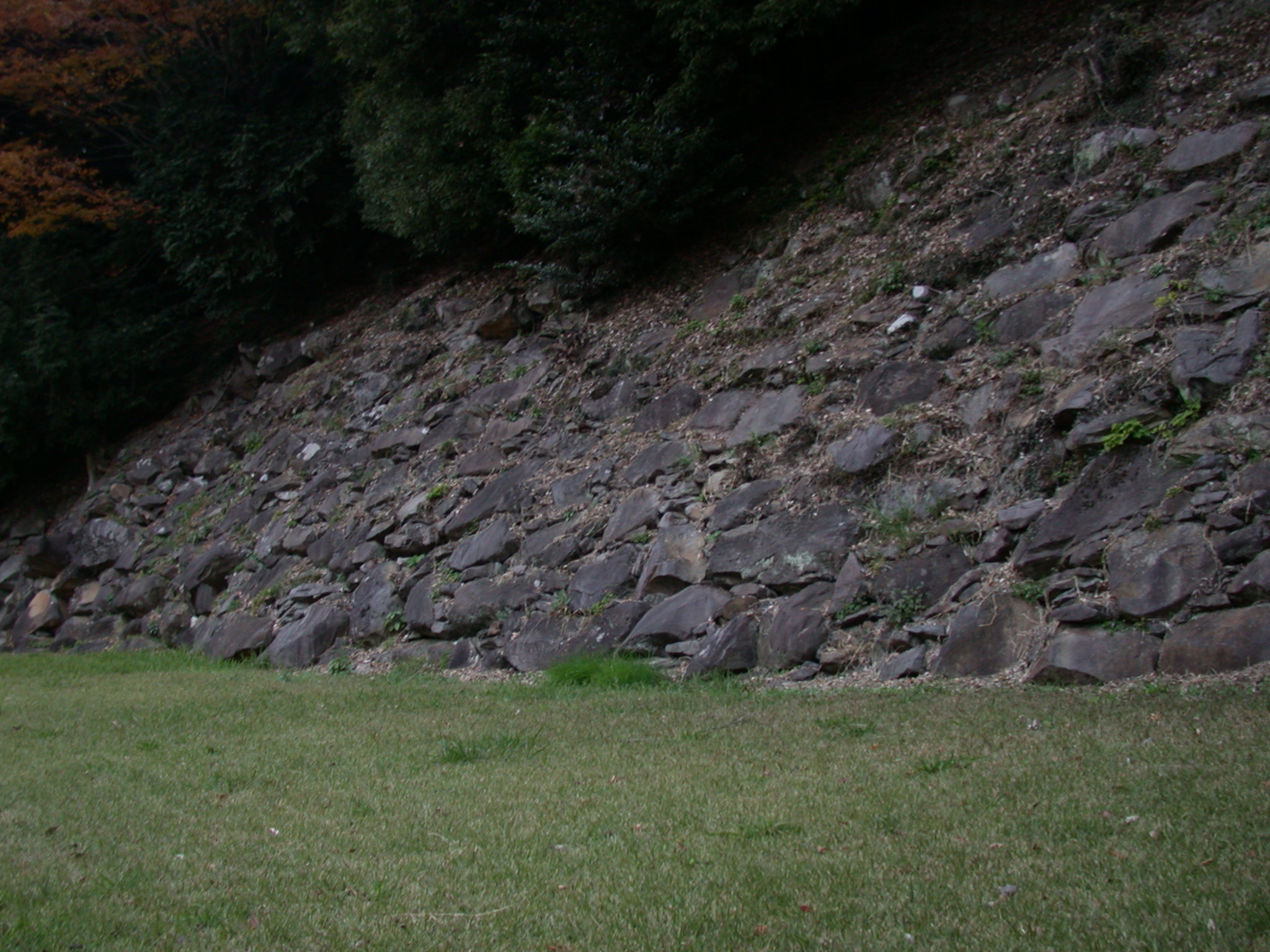
Ishigakiyama Ichiya Castle
One morning in the summer of 1590, the defenders of Odawara Castle looked west and saw the impossible: a fully fortified castle, complete with massive stone walls and a central keep, standing on a hilltop where there had been nothing but forest the day before. The Hojo clan's will to resist shattered almost immediately. Nine days later, they surrendered. The castle had not, of course, appeared overnight. It had taken 80 days and tens of thousands of workers to build. But the illusion was the whole point. Ishigakiyama Ichiya Castle, the 'One-Night Castle,' stands as perhaps history's greatest feat of psychological warfare through architecture, and its ruins on the hill called Kasagakeyama remain a designated National Historic Site.
The Unifier's Final Campaign
By 1590, Toyotomi Hideyoshi had conquered nearly all of Japan. Only the Late Hojo clan, entrenched behind the formidable walls of Odawara Castle, refused to submit. Hideyoshi assembled an army of roughly 200,000 troops, an overwhelming force against the Hojo's estimated 50,000 defenders. But Odawara Castle was one of the most heavily fortified positions in Japan, and a direct assault would have been enormously costly. Hideyoshi, who had risen from peasant origins to become Japan's supreme warlord, understood that breaking the enemy's mind could be cheaper than breaking their walls. He settled in for a siege, and while his troops surrounded Odawara, he set a far more cunning plan in motion three kilometers to the west.
The Art of the Invisible Fortress
Hideyoshi selected Kasagakeyama, a wooded hill that overlooked all of Odawara's defenses, as the site for his masterpiece. Workers and stonemasons, many brought from Kyushu with experience building the great castles of Azuchi and Osaka, labored in the dense forest for 80 days. They constructed massive ishigaki stone walls, multiple fortified compounds including the Honmaru main enclosure and Ninomaru secondary enclosure, and a tenshu central keep. The entire construction was hidden behind the trees. Then, on a single night, the forest was felled. When dawn broke, the Hojo defenders found themselves staring at what appeared to be a castle that had materialized from thin air. The psychological impact was devastating. A lord who could conjure castles overnight was not a lord who could be outlasted behind walls. Nine days later, the Hojo formally surrendered, ending the last major resistance to Hideyoshi's unification of Japan.
Where Warlords Met
Ishigakiyama served another historic purpose during the siege. It was here that Hideyoshi held his first meeting with Date Masamune, the fearsome 'One-Eyed Dragon' of northern Japan. Masamune had delayed answering Hideyoshi's summons and arrived late to the siege, an act of defiance that could easily have cost him his life. The meeting at Ishigakiyama was charged with tension. Masamune reportedly appeared wearing a white death robe to show he was prepared to die. Hideyoshi, ever the strategist, chose to accept his submission rather than destroy him. The encounter between these two legendary figures, one who built castles to wage psychological war and another who dressed for his own execution to demonstrate fearlessness, is one of the most dramatic scenes of the Sengoku period.
Stones That Remember
After the siege, Ishigakiyama was abandoned. It had served its purpose as a temporary fortification, never intended to become a permanent stronghold. But the massive stone walls that Hideyoshi's workers built have endured more than four centuries. The ruins were designated a National Historic Site in 1959, and today visitors can walk among the remaining ishigaki walls of the Honmaru and Minamikuruwa compounds, their fitted stones still holding firm against gravity and time. From the hilltop, the view that Hideyoshi chose for maximum psychological impact remains stunning: the entire Odawara plain spreads below, with Odawara Castle visible in the distance and Sagami Bay glittering beyond. The walk from Hayakawa Station takes about 50 minutes uphill, following a winding road through mandarin orange groves, a peaceful approach to a place built for intimidation.
From the Air
Ishigakiyama Ichiya Castle is located at 35.235N, 139.128E on a hilltop three kilometers west of Odawara Castle in Kanagawa Prefecture. The castle ruins sit on Kasagakeyama hill, visible as a forested prominence overlooking the Odawara coastal plain and Sagami Bay. Recommended viewing altitude: 2,000-3,000 feet to appreciate the strategic hilltop position relative to Odawara Castle below. Nearest airports: RJTO (Oshima, 70 km SE), RJTT (Tokyo Haneda, 70 km NE). The Odawara urban area and coastline provide clear visual reference. The Hakone mountain range rises to the west.