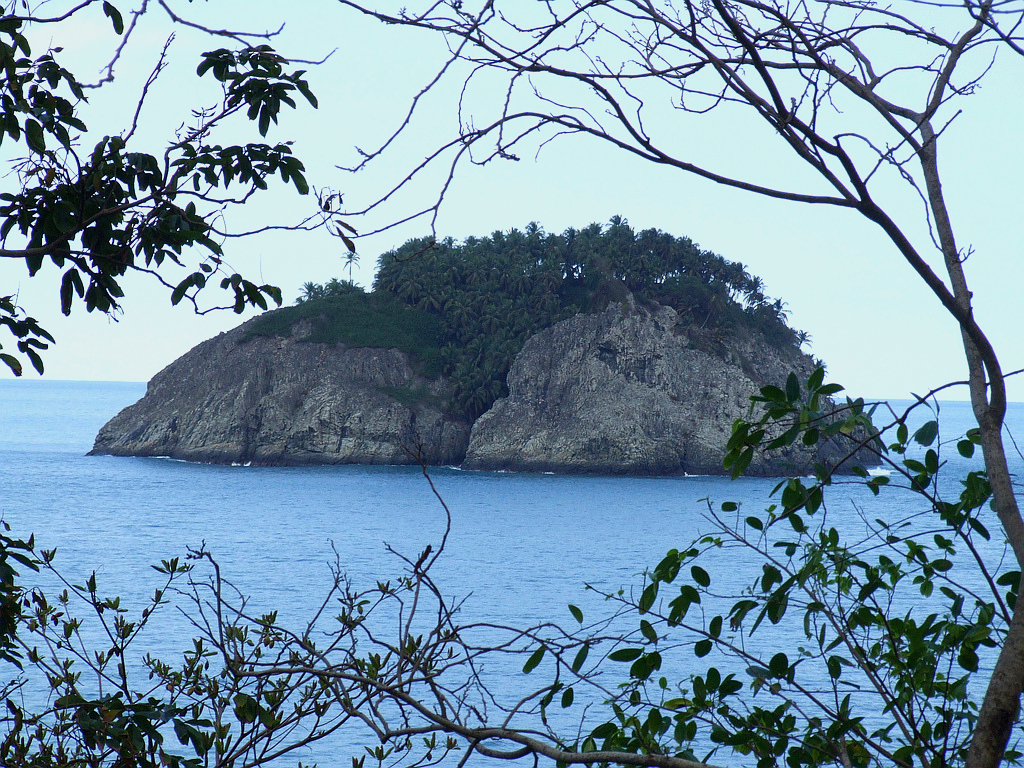
Island of Príncipe Biosphere Reserve
Fewer than 7,000 people share Principe with sea turtles, seabirds, and a patch of primary rainforest that has never been cut. Designated a UNESCO Biosphere Reserve in 2012, this small island in the Gulf of Guinea off the west coast of Africa achieved something remarkable: the entire emerged landmass, its surrounding islets, and the marine waters around them were placed under a single conservation framework. When São Tomé island received its own biosphere designation in 2025, the twin-island nation of São Tomé and Principe became the first country on Earth with its entire territory recognized as biosphere reserve.
Two Halves of One Island
Principe divides neatly into geological halves. The northern portion rolls gently, a landscape of plains dotted with lentic lake systems and agricultural lowlands where cocoa, coffee, and copra have been cultivated since the Portuguese colonial era. The southern half rises abruptly into a mountain range composed of phonolite peaks reaching between 500 and 948 meters, their slopes cloaked in primary rainforest that has remained essentially intact since before human settlement. This split in terrain creates two distinct microclimates on a single small island -- the gentler north supporting farming communities and the rugged south harboring ecosystems that have evolved in near-isolation. Rivers cascade down the massif through deep valleys, feeding the lowland plains below in a hydrological cycle that connects the island's wild interior to its cultivated margins.
A Hotspot Within a Hotspot
The biosphere reserve covers 71,592 hectares, most of it marine. The core protected area encompasses over 17,000 hectares, split roughly between ocean and land, with buffer and transition zones radiating outward. What makes these numbers remarkable is the biodiversity packed within them. Principe sits within the West African tropical forest biodiversity hotspot, and its long isolation in the Gulf of Guinea has produced high rates of endemism across vascular plants, molluscs, insects, birds, reptiles, and bats. Species found here exist nowhere else. The surrounding waters are equally significant -- coral reefs ring portions of the island, sea turtles nest on its beaches, seabird colonies inhabit the offshore islets, and cetaceans pass through the deeper waters. The Tinhosas islands, two uninhabited rocks included in the reserve, host one of the largest seabird colonies in the tropical Atlantic.
Cacharamba and Palm Wine
All 6,737 residents of the reserve live in the transition zone, since the islets of Bom Bom, Bone do Joquei, Mosteiros, and Pedra da Gale are uninhabited. Life on Principe revolves around fishing and farming -- subsistence activities that produce surplus for trade in the local market but little for export. Agricultural products are consumed mostly in their primary form, though a few processed specialties persist: dried fish prepared on open racks, fried bananas sold at roadside stalls, palm wine tapped from the trees, and cacharamba, a local sugar cane rum distilled in small batches. The capital of Santo Antonio anchors the island's modest commercial life, while the Bom Bom resort area represents nearly the entirety of Principe's tourism infrastructure. It is an economy scaled to the land -- small, seasonal, and deeply connected to what the island and its waters provide.
Conservation as National Identity
The biosphere designation was not imposed from outside. Principe's regional government manages the reserve, and the 2012 UNESCO recognition formalized protections that islanders had long practiced out of necessity. On an island this small, the relationship between human activity and ecological health is not abstract -- overfish the reef and dinner disappears, clear the forest and the rivers dry up. The reserve's three-zone structure reflects this pragmatism: the core area preserves the most sensitive habitats entirely, the buffer zone permits limited sustainable use, and the transition zone accommodates the communities that depend on the land. Whether this model can withstand the pressures of a growing tourism industry and the oil development occurring in nearby waters remains the central question for Principe's future. For now, the island exists in a state that much of the world has lost -- a place where the natural systems that sustain human life are still visible, still functional, and still respected.
From the Air
Located at 1.58N, 7.38E in the Gulf of Guinea, approximately 150 km northeast of São Tomé island. The nearest airport is Principe Airport (FPPR) near Santo Antonio. From altitude, Principe appears as a small green island with a dramatic mountainous southern half and flatter northern agricultural zone, surrounded by deep blue water. The Tinhosas islets are visible as rocky outcrops to the south. Best viewed at 8,000-15,000 feet to see the contrast between the forested mountains and the coastal settlements.