Isle Brevelle
In 1801, a formerly enslaved man named Nicolas Augustin Metoyer sailed to France with his father to visit the elder man's homeland. Walking through French villages, Augustin noticed how community life revolved around the church at the center of each town. He carried that vision back across the Atlantic to a strip of Louisiana land between the Cane River and Bayou Brevelle -- a place the early inhabitants called Cote Joyeuse, the Joyous Coast. In 1803, Augustin and his fellow Creoles built their own church with their own money on their own land. That church, St. Augustine, became the heart of Isle Brevelle, a community that has blended French, Spanish, African, and Native American cultures for nearly three centuries. Today, with over 60 significant cultural and historic sites spread across 18,000 acres, Isle Brevelle is considered the birthplace of Creole culture in Louisiana.
The Explorer's Son and the Caddo Translator
Isle Brevelle takes its name from Jean Baptiste Brevelle II, its earliest settler, whose story embodies the cultural blending that would define the community. His father, Jean Baptiste Brevelle, was a Parisian-born trader, explorer, and soldier stationed at Fort St. Jean Baptiste des Natchitoches. His mother, Anne Marie des Cadeaux, was an Adai Caddo Native American woman. The younger Brevelle's baptism, recorded on May 20, 1736, appears in the oldest Catholic registry in the Louisiana colony. In 1765, David Pain, the subdelegate at Natchitoches, granted Jean Baptiste Brevelle II the island in recognition of his service to both the French and Spanish crowns as a Caddo translator and explorer who had traveled through what is now Arkansas, Oklahoma, Texas, and New Mexico. From the very beginning, Isle Brevelle was a place where European, African, and Native American worlds converged.
The Grandfather of the Joyous Coast
Nicolas Augustin Metoyer, born into slavery in 1768, is remembered as the "grandfather" of the Isle Brevelle community. His mother was Marie Therese Coincoin, a remarkable woman who went from enslavement to becoming a planter and businesswoman. Augustin was not freed until 1792, at the age of 24. His journey to France in 1801 with his father Claude Thomas Pierre Metoyer transformed his vision for the community. Upon returning, he organized the construction of the first church in 1803. His brother Louis, founder of nearby Melrose Plantation -- now a National Historic Landmark -- is credited as the chapel's designer and builder. In the church's early years, families rented specific pews with name boxes attached, granting exclusive use even when the building was full. On July 19, 1829, the church was blessed by Father J. B. Blanc under the title of St. Augustine, the patron saint of its founder.
A Parish Born of Creole Faith
On March 11, 1856, Bishop Auguste Martin, the first Bishop of the Roman Catholic Diocese of Natchitoches, elevated the mission of St. Augustine from a dependent chapel to a full parish. His brother, Father Francois Martin, became its first resident pastor. The financial backbone came from Creole families -- the Metoyers, Brevelles, Guidrys, Balthazars, and Roques -- who funded St. Augustine's expansion into four mission churches: St. Charles Chapel at Bermuda, St. Joseph's at Bayou Derbonne, and two St. Anne chapels. By 1859, the parish school enrolled 120 to 130 girls. The Civil War devastated the community, and enrollment plummeted; by December 1863 the convent closed and the nuns returned home. In 1913, the Holy Ghost Fathers took charge of the parish and remained until 1990. The current church building was dedicated on February 15, 1917. The community's descendants also founded St. Genevieve Catholic Church at Brouillette, a small Creole settlement 80 miles southeast on the Red River.
Hollywood on the Bayou
Isle Brevelle's striking landscape and historic architecture have drawn filmmakers for decades. In 1959, John Ford brought John Wayne and William Holden to the isle to film portions of The Horse Soldiers, a Civil War adventure that used the plantation houses as backdrops. Thirty years later, the church where Augustin Metoyer realized his French village vision became Shelby's wedding venue in Steel Magnolias, the 1989 film starring Sally Field, Dolly Parton, and Julia Roberts. The 1982 romantic drama Cane River was filmed at St. Augustine Church and lost for decades before being rediscovered and redistributed in 2020. Self-taught folk artist Clementine Hunter, who lived at Melrose Plantation within Isle Brevelle from the late 1800s until her death in 1988, became the subject of the 2017 documentary Clementine Hunter's World, filmed along the same banks of the Cane River that inspired her vivid paintings of Southern life.
Where the Cultures Rest Together
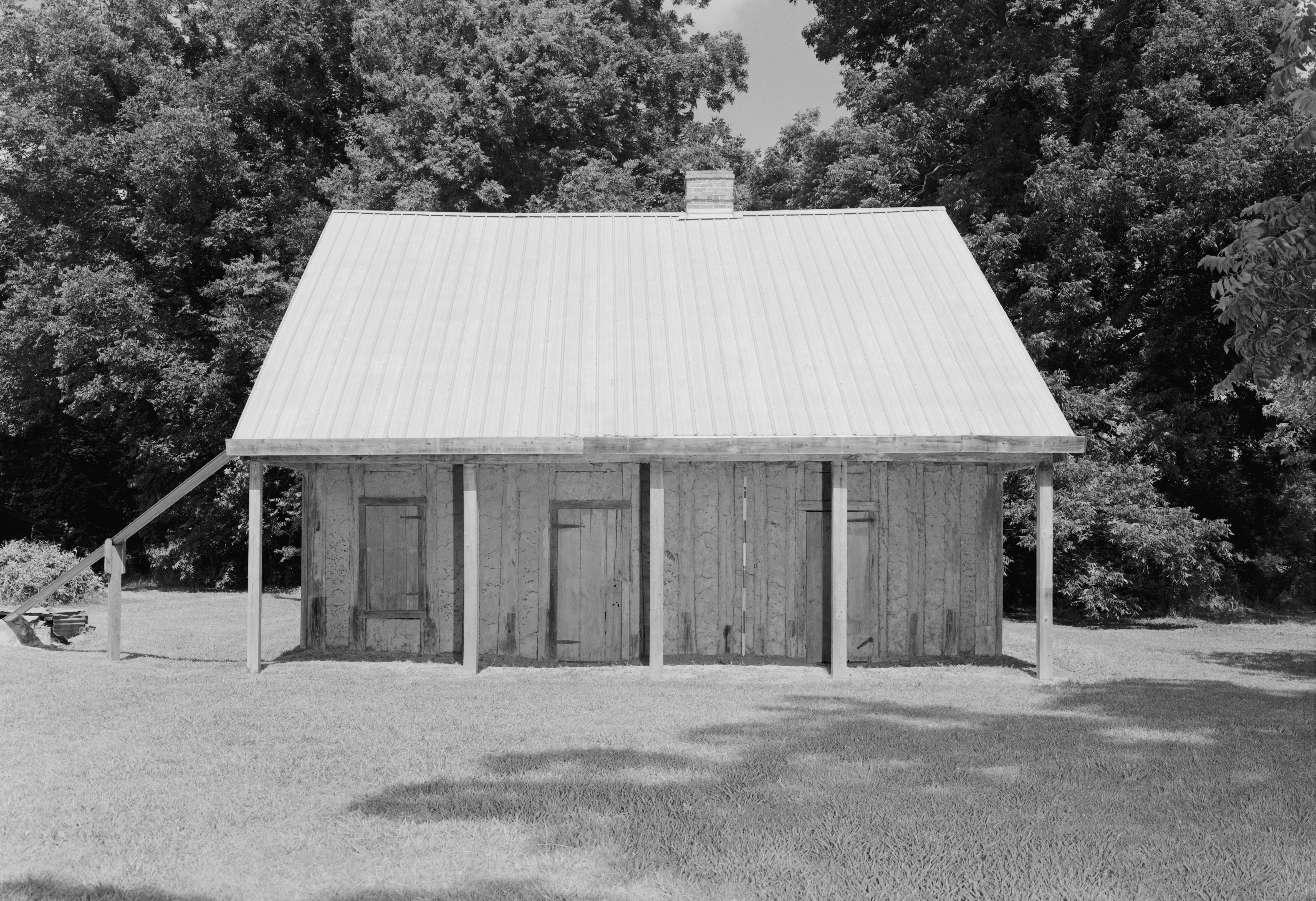
The cemeteries and burial sites scattered across Isle Brevelle tell the community's story in stone, earth, and wrought iron. Natchitoches and Adai Native Americans are buried near Bayou Brevelle at the old Brevelle Plantation and at the St. Augustine Catholic Cemetery. Enslaved people who died at Bermuda Plantation rest in a cemetery on Prud'homme property, some of their graves marked with wrought iron crosses forged by Bermuda's blacksmith, Solomon Williams. The literary world has tried to capture this layered heritage -- from Elizabeth Shown Mills' historical novel Isle of Canes, which traces multiple generations of a Creole family, to Philip Gould's photography book Natchitoches and Louisiana's Timeless Cane River, which celebrates the music, food, folklore, and architecture of Isle Brevelle. Today the Cane River National Historical Area designates the Isle Brevelle Trail to highlight what it calls the birthplace of Creole culture -- a place where French traders, Caddo translators, enslaved Africans, and their descendants built something no single culture could have created alone.
From the Air
Located at 31.644N, 93.029W in Natchitoches Parish, Louisiana. From altitude, Isle Brevelle's 18,000 acres are visible between the Cane River (appearing as a long, narrow oxbow lake) to the west and Bayou Brevelle to the east. The landscape is flat agricultural land with clusters of historic plantation structures visible among the fields -- Melrose Plantation, Oakland Plantation, and Magnolia Plantation are all within or adjacent to the community. St. Augustine Church, the spiritual center of the community since 1803, sits prominently among the scattered structures. Nearest airport is Natchitoches Regional (KIER), approximately 10 miles north. Alexandria International (KAEX) is about 55 miles southeast. Shreveport Regional (KSHV) lies roughly 75 miles north-northwest. Best viewed at 1,500-2,500 feet AGL to see the community's layout between the two waterways.