Isshi Incident
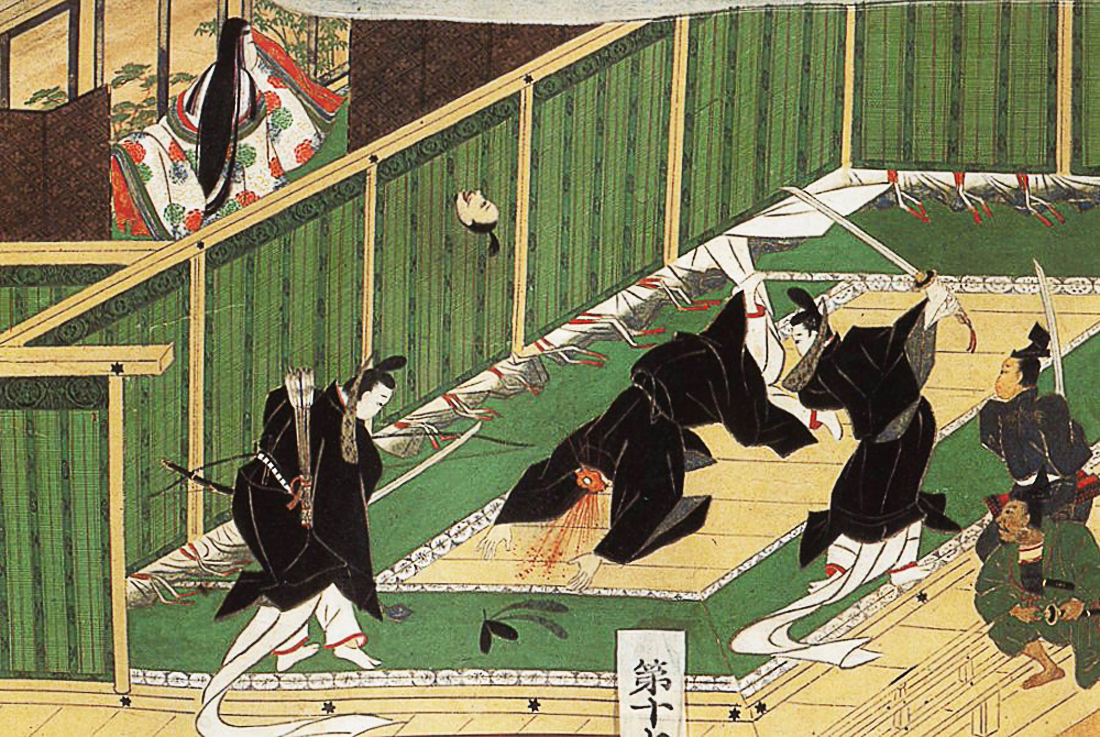
The four assassins froze. They had been bribed, armed, and positioned inside the palace hall where a diplomatic ceremony was underway, Korean envoys presenting memorials to Empress Kogyoku. Their target sat nearby: Soga no Iruka, the most powerful man in Japan, whose family had dominated the court for decades. But when the moment came, the four men could not move. So Prince Naka no Oe -- the man who had orchestrated every detail of the plot, from the hidden spear to the sealed palace gates -- rushed Iruka himself and cut open his head and shoulder. It was July 10, 645, and the blow that landed in the empress's own throne room would trigger the most transformative political reform in Japanese history.
The Soga Stranglehold
To understand the violence of that July morning, you have to understand what the Soga clan had become. For generations, the Soga had accumulated power that eclipsed the throne itself. Soga no Umako, Iruka's grandfather, had served as Great Minister and was widely believed to have orchestrated the assassination of Emperor Sushun in 592. His son Soga no Emishi inherited the position and continued expanding the family's influence. By the time Iruka took the reins, the Soga controlled court appointments, commanded military forces, and treated the imperial family as figureheads. Prince Naka no Oe, who would later reign as Emperor Tenji, watched this usurpation from close range. His ally was Nakatomi no Kamatari -- later known as Fujiwara no Kamatari, founder of the Fujiwara clan that would itself dominate Japanese politics for centuries. Together they hatched a plan that had to succeed on the first attempt. There would be no second chance.
Blood Before the Throne
The conspirators chose their moment with precision: a court ceremony requiring Iruka's presence, with Korean envoys providing the ceremonial pretext. Ishikawa no Maro was reading the memorials aloud to Empress Kogyoku while Naka no Oe waited, a spear hidden nearby. The palace gates had been closed. Guards had been paid off. When the four armed men failed to strike, the prince did not hesitate. His blade caught Iruka across the head and shoulder. Wounded but alive, Iruka fell before the empress and protested his innocence, begging for an investigation. Kogyoku, stunned by violence unfolding in her own presence, withdrew to consider the matter. It was then that the four guards finally found their nerve and finished the killing. The empress had witnessed a political murder in her own court -- an act so shocking that its repercussions extended far beyond the Soga family.
Fire, Loss, and Abdication
The aftermath unfolded swiftly and catastrophically. When word reached Soga no Emishi that his son was dead, he set fire to his own residence and perished in the blaze. The fire consumed more than one man's life: stored within the Soga compound were manuscript copies of the Tennoki -- an early chronicle of imperial history -- along with other irreplaceable treasures the clan had taken for safekeeping. A courtier named Fune no Fubitoesaka managed to grab the burning Kokki, a companion chronicle, from the flames and later presented it to Prince Naka no Oe, but no known copies survive today. The destruction of these manuscripts represents one of the great losses in Japanese historical documentation. Empress Kogyoku, shaken by having witnessed a political assassination in her own hall, determined to abdicate. Prince Furuhito no Oe defused a succession crisis by declaring he would take Buddhist vows rather than claim the throne. Kogyoku stepped down in favor of her brother, who became Emperor Kotoku.
The Taika Reform
The Isshi Incident takes its name from the zodiacal designation of the year 645, and that year marks a turning point in Japanese governance. With the Soga eliminated, Prince Naka no Oe and Fujiwara no Kamatari moved quickly to reshape the state. The Taika Reform that followed centralized power under the emperor, established new systems of land distribution and taxation, and reorganized provincial administration along Chinese models. It was Japan's first systematic attempt to build a centralized bureaucratic state. Emperor Kotoku reigned from 645 to 654, but after his death, Kogyoku returned to the throne under the name Saimei, ruling from 655 to 661. Finally, Prince Naka no Oe himself took the throne as Emperor Tenji, reigning from 661 to 672. The man who had picked up a sword when his hired assassins failed became the architect of a new Japan.
Echoes in the Asuka Valley
The Isshi Incident unfolded in the Asuka region of what is now Nara Prefecture, where the imperial court was based during the 7th century. The gentle hills and rice paddies of the Asuka valley hold layer upon layer of this era's history -- tombs, palace foundations, and temple ruins scattered across a landscape that has remained remarkably rural. A passage in the Nihon Shoki describing the aftermath includes a mysterious detail that has puzzled scholars for centuries: a courtier reportedly exclaimed that Iruka had been "killed by a Korean." Whether this referred to the Korean envoys present, suggested foreign involvement in the conspiracy, or carried some other meaning entirely remains debated. What is not debated is the result. A single act of violence in a single court ceremony broke the power of Japan's dominant clan, destroyed irreplaceable historical records, forced an empress to abdicate, and set in motion reforms that defined the Japanese state for generations to come.
From the Air
Located at 34.473N, 135.821E in the Asuka valley of Nara Prefecture, Japan. The incident occurred in what was then the imperial court complex in the Asuka region, now a quiet rural landscape of rice paddies, low hills, and scattered archaeological sites. The Asuka Historical National Government Park preserves many sites from this era. Nearest airports: Kansai International Airport (RJBB) approximately 50km west, Osaka Itami Airport (RJOO) approximately 40km northwest. The broad Yamato River valley provides clear visual navigation. The site is close to other significant Asuka-period landmarks including the Ishibutai Kofun and Takamatsuzuka Tomb. Expect generally good visibility except during the June-July rainy season.