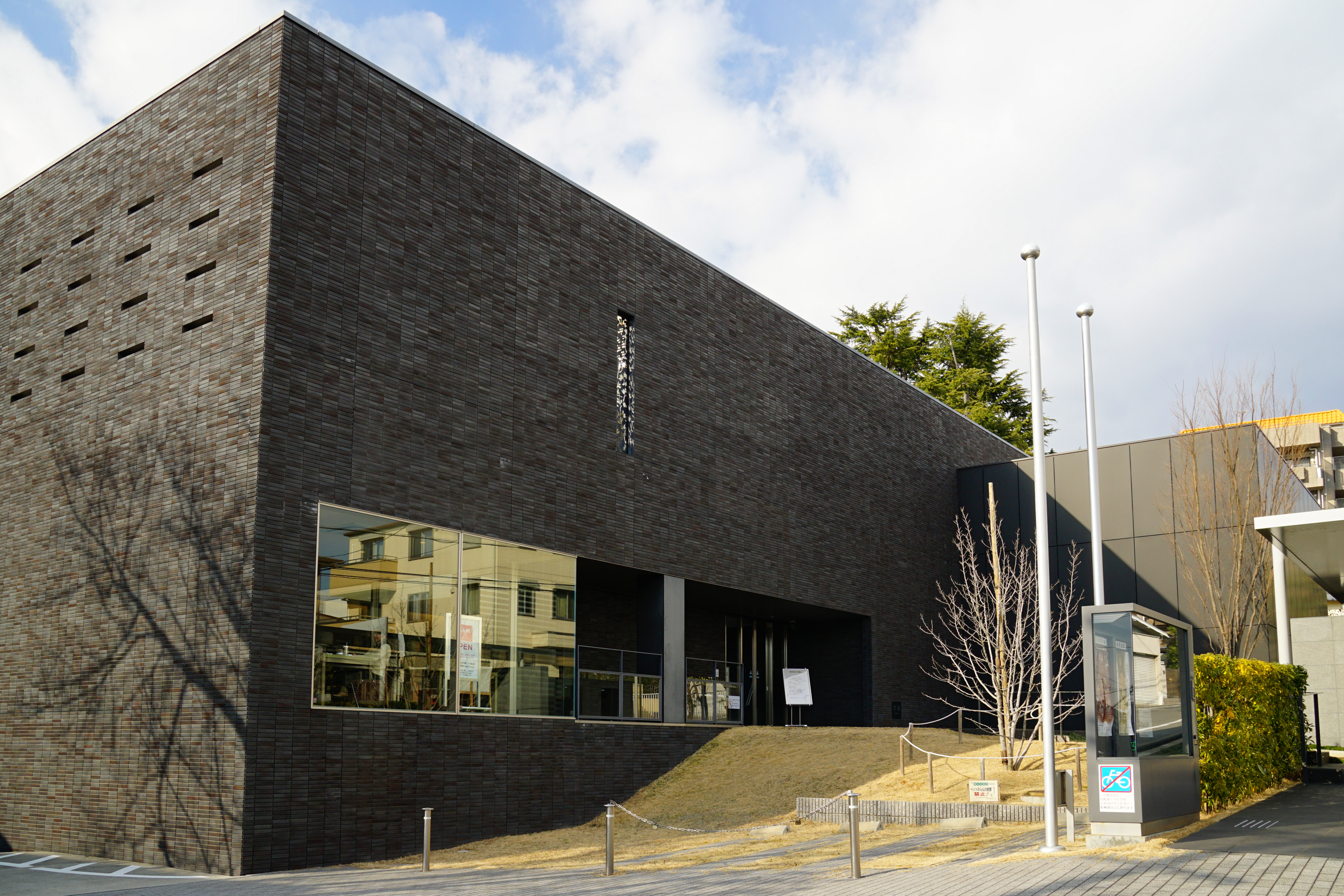
Itsuo Art Museum
The man who built the Hankyu Railway, invented Japan's first department store inside a train station, and created the all-female Takarazuka Revue had one more obsession: collecting art. Kobayashi Ichizo, who went by the pen name Itsuo, spent decades amassing paintings, calligraphy scrolls, ceramics, and tea ceremony implements with the same restless energy he brought to transforming Osaka's suburban landscape. When the Itsuo Art Museum opened in Ikeda in October 1957, just months after his death at age 84, it held some 5,500 works spanning centuries of Japanese artistic tradition, including fifteen objects designated as Important Cultural Properties and nineteen classified as Important Art Objects.
The Industrialist's Eye
Kobayashi Ichizo was born in 1873, and by the early twentieth century he was reshaping the Kansai region. He grew the Hankyu Railway into a transportation empire, then pioneered the concept of building residential communities and shopping destinations along its routes. He opened hot springs, department stores, and in 1914 launched the Takarazuka Revue, an all-female theatrical company that remains wildly popular more than a century later. But beneath the businessman's exterior lived a devoted practitioner of tea ceremony and a connoisseur of Japanese art. Under his pen name Itsuo, he composed haiku, hosted tea gatherings, and quietly built one of the finest private art collections in western Japan. His particular passion was for the works of Yosa Buson, the celebrated eighteenth-century poet and painter, and the Maruyama-Shijo school of naturalistic painting.
Treasures on Paper and Silk
The collection reaches across centuries of Japanese artistic achievement. Among its fifteen Important Cultural Properties is Buson's illustrated handscroll of Oku no Hosomichi, the haiku master Matsuo Basho's famous travel diary rendered in Buson's delicate brushwork. Painted folding screens depict the Toshiya archery contests at Kyoto's Sanjusangen-do, where samurai once tested their endurance by shooting arrows down the length of the hall's 120-meter veranda. Portraits of the Thirty-Six Poetry Immortals preserve the faces of Heian-era literary luminaries in vivid color. A portrait of Toyotomi Hideyoshi, the peasant who unified Japan, stares out from silk with the steady gaze of absolute authority. The tea ceremony collection alone numbers over one thousand pieces, ranging from delicate porcelain to rustic stoneware, each chosen by Kobayashi's exacting eye.
A Room for Tea
Kobayashi did not merely collect tea ceremony objects; he reinvented the practice itself. At the museum grounds stands Sokushin-an, a faithful replica of the chair-style tea room he designed and named Sokuan. In a culture where tea ceremony traditionally takes place on tatami mats, Kobayashi's seated-chair approach was characteristically unconventional, making the ritual accessible to guests who found kneeling uncomfortable. The museum regularly hosts tea ceremonies in this space, continuing a tradition its founder cherished. Visitors sit where Kobayashi once entertained poets, artists, and fellow industrialists, sipping matcha from bowls that carry the quiet weight of a century of careful curation.
The Quiet Hillside
The museum sits in Ikeda, a residential city in northern Osaka Prefecture where the foothills begin their rise toward the mountains. The original 1957 building gave way to a modern structure in 1997, designed to better protect and display the fragile scrolls, screens, and ceramics. Ikeda itself owes much of its character to Kobayashi's vision. The Hankyu Takarazuka Line runs through the city, and Osaka International Airport at Itami occupies land partly within Ikeda's borders. A memorial museum dedicated to Kobayashi's life stands nearby, allowing visitors to trace the arc from railway entrepreneur to art patron within a single afternoon's walk. The Itsuo Art Museum remains operated by the Hankyu Culture Foundation, ensuring that the collection Kobayashi spent a lifetime assembling continues to be shared with the public.
From the Air
Located at 34.826N, 135.431E in Ikeda, northern Osaka Prefecture. The museum sits on the hillside less than 3 km southeast of Osaka Itami Airport (RJOO). From the air, look for the urban-suburban transition zone where the Hankyu Takarazuka Line threads north from Osaka toward the mountains. Kansai International Airport (RJBB) lies approximately 45 km to the south across Osaka Bay. Best viewed at 2,000-3,000 ft AGL with the Itami airport traffic pattern as a reference.