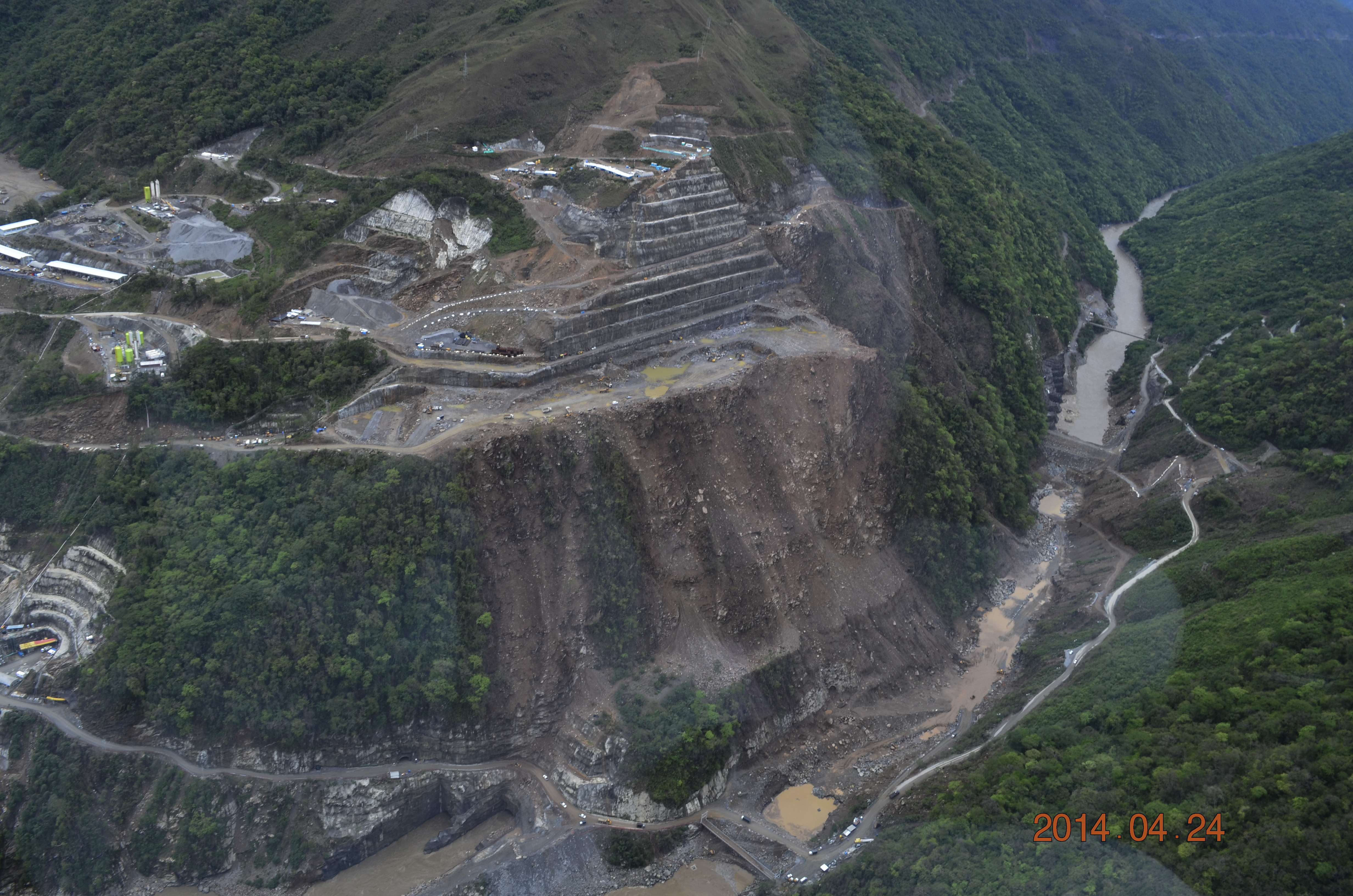
Ituango Dam
On May 25, 2018, Dr. Ordonez wrote a letter that dispensed with engineering jargon entirely: "Ituango project is dead and there is no control over it. We are sure that it is easier to fail than not to fail, and we are truly in a panic." He was describing the Hidroituango Dam, a 225-meter earth-fill embankment on the Cauca River in Colombia's Antioquia Department -- a project designed to be the largest power station in the country. Instead, for weeks that spring, it threatened to become the largest disaster.
A Thirty-Year Dream on the Cauca
The idea was older than many of the engineers who built it. A feasibility study completed in 1983 envisioned a massive hydroelectric dam on the Cauca River near the town of Ituango. But Colombia's economic crises shelved the project for over a decade, and final designs were not completed until 2008. When construction finally began in September 2011, the scale was staggering: a 225-meter embankment dam with a clay core, a reservoir 127 kilometers long covering 38 square kilometers, and a powerhouse containing eight Francis turbine-generators capable of producing 2,456 megawatts. The consortium behind it -- EPM Ituango, a partnership between Empresas Publicas de Medellin and the Antioquia government -- estimated the total cost at US$2.8 billion. Three tunnels were carved through the mountainside to divert the Cauca River around the construction site while the dam rose from the valley floor.
Ten Days That Nearly Broke the Dam
Between April 28 and May 7, 2018, three landslides struck in rapid succession, blocking the single remaining diversion tunnel. The river had nowhere to go. Water began filling the unfinished reservoir while engineers scrambled to reopen the two tunnels that had already been sealed during construction. They tried explosives. They failed. Then, on May 12, one of the sealed tunnels reopened on its own -- not gradually, but suddenly, tripling downstream flows in an instant. Approximately 25,000 people were evacuated from communities along the Cauca. Four days later, silt clogged the powerhouse intake, and water found its way into a transit gallery designed for construction vehicles. It poured over the downstream face of the dam, eroding the access road and protective riprap. EPM publicly acknowledged the risk of collapse, and workers raced to raise the dam to its design height so the emergency spillway could prevent overtopping. Heavy rainfall was forecast through the end of May.
The Human Cost Downstream
The 2018 crisis displaced thousands, but the dam's impact on surrounding communities had begun long before the landslides. Families who lived along the Cauca lost homes, livelihoods, and access to the river that had sustained them for generations. Fishermen watched their catches disappear as the river's flow was altered. Environmental groups, displaced families, and youth organizations mounted sustained opposition, arguing that the ecological consequences were severe and irreversible. In February 2019, researchers from the Universidad Nacional de Colombia published studies warning that the dam's failure remained likely unless an emergency plan was adopted. The environmental authority suspended the project for nearly two years. By November 2022, EPM conducted evacuation drills for 5,000 downstream residents -- not as a precaution for an emergency, but as preparation for normal dam operations. The distinction offered cold comfort to the people living in its shadow.
Power at What Price
Despite the crisis, the project pushed forward. The first turbine generated electricity in late 2022, producing 6,480 megawatt-hours in its first 24 hours of operation -- just over three percent of Colombia's daily electrical consumption from a single unit. By late 2023, four of the eight turbines were operational, delivering half the dam's intended capacity. Supporters point to the revenue the completed project would channel into social and infrastructure programs across Antioquia. Critics counter that the cost has been measured not just in billions of dollars but in displaced communities, environmental degradation, and the persistent question of structural safety. The Inter-American Court of Human Rights and international watchdog organizations have scrutinized the project's human rights record. Hidroituango stands as both an engineering achievement and a cautionary tale -- a monument to what happens when ambition on a continental scale collides with the forces of geology, hydrology, and the communities living in their path.
From the Air
Located at 7.13N, 75.66W on the Cauca River in Antioquia Department, Colombia. The dam site sits in a deep river valley surrounded by mountainous terrain at approximately 500 meters elevation. The nearest major airport is Enrique Olaya Herrera Airport (SKMD) in Medellin, roughly 107 km to the south. Jose Maria Cordova International Airport (SKRG) near Medellin is another option. From the air, the massive reservoir stretching 127 km along the Cauca River valley is clearly visible. The dam's 225-meter embankment and construction infrastructure are identifiable at 8,000-12,000 feet AGL. The surrounding terrain is rugged and mountainous, with limited visual references.