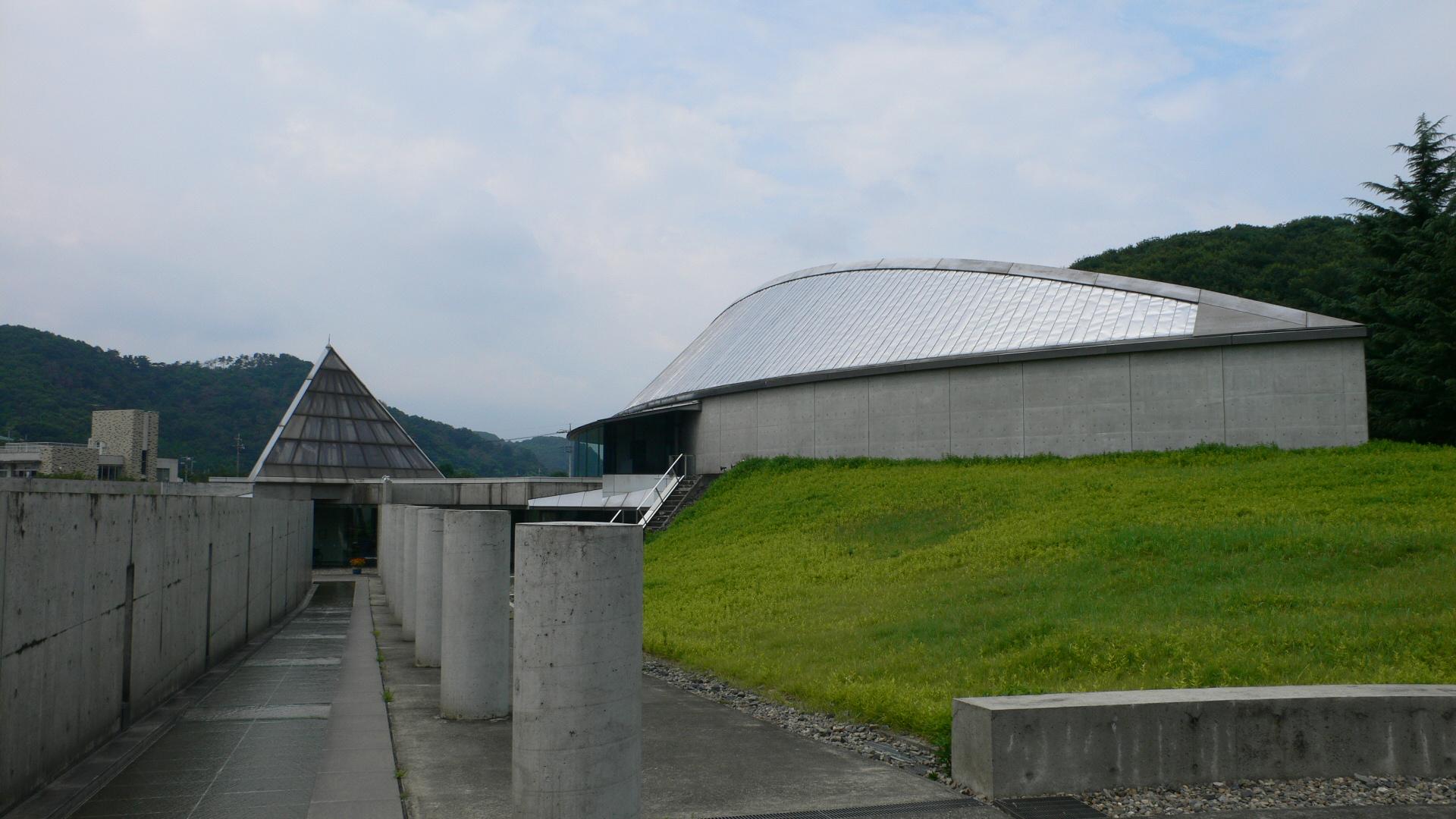
Iwajuku Site
Every day, Aizawa Tadahiro walked the same path to work, through a cutting between two low hills in rural Gunma Prefecture. He sold natto for a living, but his real passion was stone tools. In 1946, a glint of obsidian caught his eye -- not in the familiar black topsoil where Jomon-era artifacts were known to appear, but deep in the red volcanic clay beneath it, a stratum that orthodox archaeology declared empty of any human trace. That single flake of obsidian would eventually force the entire academic establishment to rewrite the prehistory of Japan.
The Amateur Against the Academy
Aizawa kept digging. Over the following months he pulled more stone tools from the red clay, including a stone arrowhead in 1949. When he brought his finds to the University of Tokyo, the professors laughed him out of the room. The prevailing academic consensus was absolute: the Jomon people were the first inhabitants of Japan, and no artifacts could exist below the black Kanto loam that marked the beginning of their era. The fact that an amateur natto vendor was challenging this orthodoxy only made the dismissal swifter. But Aizawa was not a man who yielded to credentials. He kept knocking on doors, carrying his stone tools from institution to institution, until a professor of archaeology at Meiji University agreed to visit the site and see for himself.
Three Trenches That Changed Everything
The Meiji University team designated three excavation sites along the cutting. Site A, on the north face of the hill, yielded stone tools sandwiched between two distinct layers of red volcanic soil. Site B was the spot where Aizawa had first found his obsidian flake and a stone spear. Site C, about a kilometer to the northwest, delivered the critical proof: its red clay layer was clean of stone tools, but the black Jomon layer directly above it held pottery fragments from the very earliest Jomon period. The implication was inescapable. Anything found in the red layer below had to predate even the oldest known Jomon culture. The excavation proved that humans had lived in Japan since before the 10th millennium BC -- since the waning centuries of the last Ice Age. The discipline needed a new name for what Aizawa had found: the Japanese Paleolithic period. Since Iwajuku, over 5,000 Late Paleolithic sites have been identified across the archipelago, from southern Kyushu to northern Hokkaido.
Ghosts in the Red Clay
The acidic volcanic ash that forms the red soil has dissolved nearly everything organic, leaving only stone to speak for the people who once lived here. But the stones speak volumes. Archaeologists have identified three cultural layers at Iwajuku. The deepest, Iwajuku I, dates to roughly 25,000 years ago and contained 29 tools made of chert and shale -- polished stone axes, knives, scrapers, and a wedge for splitting bone. Iwajuku II, from about 18,000 years ago, held over 180 tools crafted from a wider variety of materials including obsidian, andesite, hornfels, and agate. The obsidian was a particular surprise. It does not occur naturally anywhere in Gunma Prefecture. The nearest sources lie hundreds of kilometers away in Nagano, Tochigi, or on the island of Kozushima in the distant Izu chain -- evidence of trade networks or long-distance travel that predates the last great thaw.
Ice Age Landscape
When the toolmakers of Iwajuku I chipped their stone axes, the climate was seven to eight degrees Celsius colder than today. Subalpine forest blanketed elevations three to four hundred meters lower than its present range, and the hills around the site teemed with now-vanished megafauna. Naumann elephants browsed the valleys alongside giant deer, while brown bears, tigers, wolves, and monkeys shared the landscape. The inhabitants were almost certainly hunter-gatherers without permanent settlements, following game through a terrain that would be unrecognizable to anyone standing at the site today. The quiet suburban hills of Midori city, with their neat roads and train lines, offer no hint of the wild, frigid world that Aizawa's obsidian flake pulled back into the light.
The Museum on the Hillside
Today a museum stands near the excavation site, serving as a research center and public gallery for the discoveries that began with one man's refusal to accept the academic consensus. Some of the most significant artifacts -- designated Important Cultural Properties in 1975 -- are displayed at the Meiji University Museum in Tokyo, the institution that finally gave Aizawa a hearing. The site itself was declared a National Historic Site in 1979. It sits at an elevation of 196 meters above sea level, about 4.4 kilometers west-southwest of Kiryu Station, a modest geographic footnote for a place that fundamentally changed the understanding of when and how people first came to live on the Japanese islands.
From the Air
Located at 36.40N, 139.29E in Gunma Prefecture, northern Kanto plain. The site sits in the low hills west of the Watarase River valley near the city of Midori. From the air, look for the suburban sprawl of Kiryu and Midori cities between the flat Kanto plain to the south and the mountainous interior of Gunma to the north. Nearest airports: RJTU (Utsunomiya Airfield, JASDF) approximately 35nm east, RJAH (Ibaraki Airport) approximately 50nm east-southeast, RJTT (Tokyo Haneda) approximately 60nm south. The terrain rises steeply to the north and west into the mountains of central Honshu. Best viewed at 3,000-5,000 feet AGL on clear days.