Iwami Ginzan Silver Mine
In the early 1600s, roughly a third of all the silver in the world came from Japan -- and much of that silver came from a network of tunnels bored into the mountains of Shimane Prefecture. The Iwami Ginzan was Japan's largest silver mine, active for almost four hundred years from its discovery in 1526 to its closing in 1923. At peak production, the mine yielded approximately 38 tons of silver per year, its output flowing into coins, into trade with China and Portugal, and into the coffers of whichever warlord could seize and hold this extraordinarily valuable piece of ground.
The Merchant's Discovery
A Japanese merchant named Kamiya Jutei discovered and developed the mine in 1526, recognizing the silver-bearing potential of the mountains near the Sea of Japan coast. Jutei introduced a Korean refining technique called the Haifukiho method, which used lead to extract silver from ore more efficiently than existing Japanese practices. The technology transformed Iwami Ginzan from a promising deposit into a major producer, and word of its wealth spread quickly through a Japan convulsed by civil war. The mine became a prize that warlords fought over with armies, each understanding that whoever controlled Iwami Ginzan controlled a substantial share of the global silver supply. The violence ended only when Tokugawa Ieyasu consolidated power after the Battle of Sekigahara in 1600 and brought the mine under the Tokugawa Shogunate's direct control.
Silver Roads to the Sea
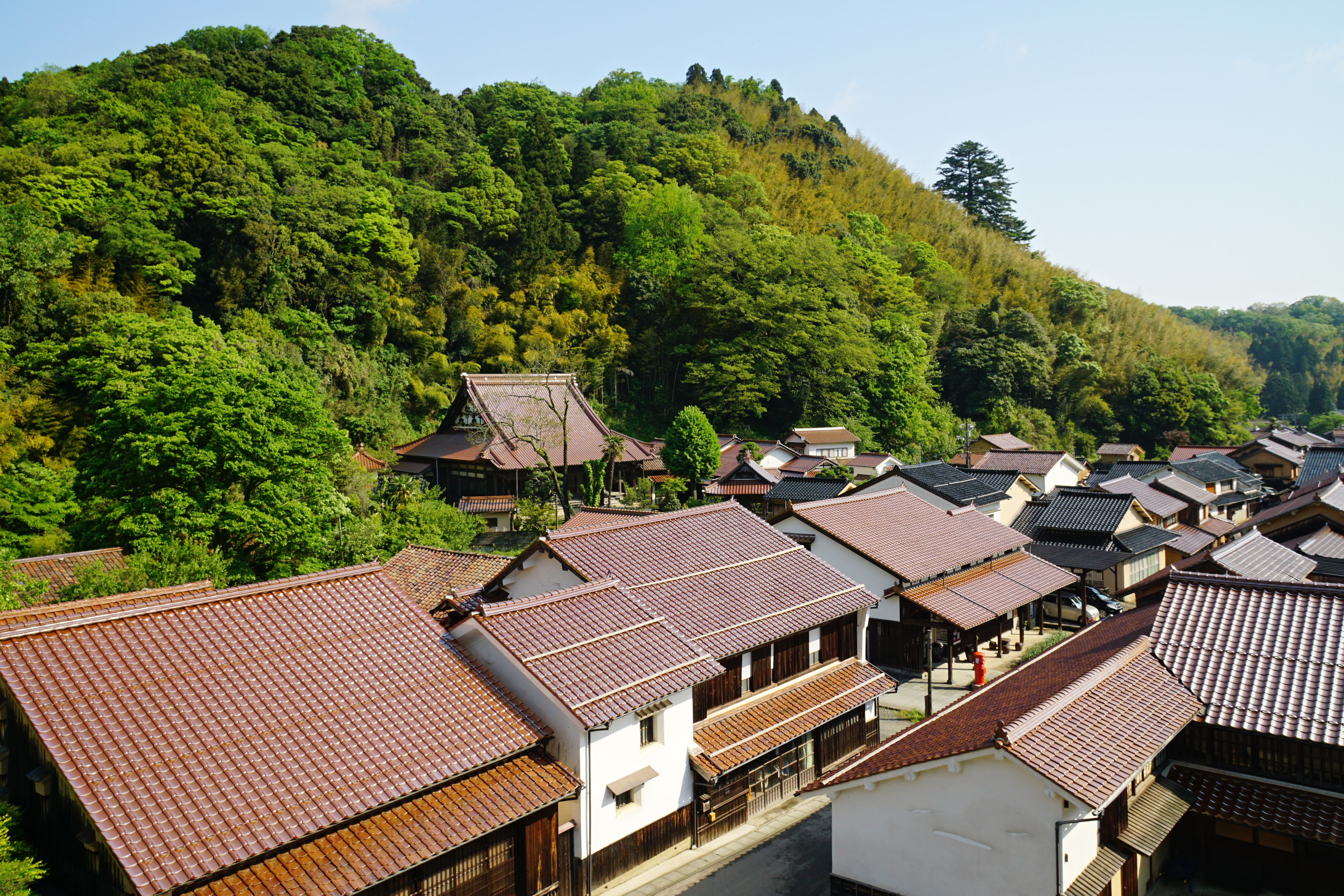
The mine did not exist in isolation. An entire cultural landscape grew around it: castle fortifications at Yataki, Yahazu, and Iwami protected the workings from rival claimants. The settlement of Omori Ginzan housed the miners and their families. Silver refining facilities at Miyanomae processed the raw ore. Transportation routes -- the Iwami Ginzan Kaido -- connected the mine to service ports at Tomogaura, Okidomari, and Yunotsu, where the refined silver was loaded onto ships. The port town of Yunotsu also offered hot springs where exhausted miners could bathe. This interconnected network of mines, settlements, roads, and ports is what UNESCO recognized in 2007 when it inscribed the entire system as a World Heritage Site under the title "Iwami Ginzan Silver Mine and its Cultural Landscape."
Decline and Forest Return
As surface deposits were exhausted and tunnels went deeper, production declined through the Edo period. By the time the mine finally closed in 1923, the mountains had largely reclaimed the workings. Unlike many mining sites that leave scarred, deforested landscapes, Iwami Ginzan is remarkable for how thoroughly the forest has regrown. Walking the old mining trails today, visitors enter narrow tunnel openings -- called mabu -- that penetrate the hillsides like dark doorways, their walls still showing tool marks from centuries of hand excavation. The Ryugenji Mabu mine shaft is one of the most accessible, its low ceiling and rough-hewn walls conveying the cramped conditions miners endured. The Kumagai Family house, once home to a prominent mining family, preserves the domestic life that the silver economy supported.
A World Shaped by Silver
Iwami Ginzan's significance extends far beyond Japan. During the 16th and 17th centuries, Japanese silver -- much of it from this mine -- was a major force in global trade, exchanged for Chinese silk, Portuguese goods, and Southeast Asian spices. The mine helped finance the unification of Japan and funded the construction of castles and temples across the country. The Iwami Ginzan World Heritage Center and the Iwami Silver Mine Museum now interpret this history for visitors, though the site remains remote and lightly visited compared to Japan's more famous heritage sites. In the forested mountains of Shimane, where the tunnels slowly fill with groundwater and the old silver roads are quiet footpaths, it takes imagination to grasp that these hills once produced wealth that moved markets on the other side of the world.
From the Air
Located at 35.107N, 132.438E in the mountainous interior of Shimane Prefecture on the Sea of Japan coast of Honshu. The mine site is in a forested mountain valley with no distinctive aerial landmarks -- the landscape's defining feature is how thoroughly the forest has reclaimed the mining district. Nearest airport is Izumo Enmusubi Airport (RJOC), approximately 50 km northeast. Hiroshima Airport (RJOA) is about 120 km south. The Sea of Japan coast is visible to the north. Best viewed from 5,000-7,000 feet to appreciate the mountainous terrain and the coastline.