Iwasaki Castle: The Fortress That Changed Hands with Every War
Every great family that shaped the Sengoku period left fingerprints on this small hill castle in what is now the city of Nisshin. Oda Nobuhide built it. Matsudaira Kiyoyasu seized it. The Niwa clan held it for half a century until Toyotomi Hideyoshi's army stormed the walls and killed 300 defenders, including the garrison commander's brother. Tokugawa Ieyasu's final victory at Sekigahara in 1600 made the castle irrelevant, and it was abandoned to the elements. Iwasaki Castle is not famous the way Himeji or Osaka Castle is famous. It is something more intimate: a place where the personal ambitions and family rivalries that tore Japan apart for a century left marks you can still read in the hillside.
A Father's Fortification
Sometime in the early sixteenth century, Oda Nobuhide -- father of the man who would begin Japan's unification -- built a castle on a hill overlooking the highway that connected Mikawa Province with Owari Province. The Imagawa clan to the east posed a constant threat, and Nobuhide needed a defensive position to anchor his eastern border. Iwasaki Castle was a hirayamajiro, a hill castle: not perched on an inaccessible mountaintop, but elevated enough to control the road below and spot approaching forces at a distance. It served as a support fortification for the larger Shobata Castle, forming part of a chain of defenses that protected the Oda heartland. The strategic logic was simple -- whoever controlled this hill controlled the highway, and whoever controlled the highway controlled the movement of armies between two provinces.
The Matsudaira Seizure
In 1529, the castle changed hands without a prolonged siege. Matsudaira Kiyoyasu, an aggressive young warlord and the grandfather of the future Tokugawa Ieyasu, captured Iwasaki and made it the headquarters for the Matsudaira clan's operations in the region. Kiyoyasu's ambitions, however, outran his lifespan. In 1535, he was assassinated by one of his own retainers, Abe Masatoyo, in a killing that threw the Matsudaira clan into chaos. Kiyoyasu's son, Matsudaira Hirotada, moved his residence elsewhere, and control of Iwasaki Castle passed to Niwa Ujikiyo, a loyal retainer. The Niwa family would hold the castle for the next five decades, maintaining it as a functioning fortification through the most turbulent years of the Sengoku period.
Three Hundred Dead on the Castle Hill
The Niwa clan's tenure ended violently in 1584. The Battle of Iwasaki Castle was one engagement in the larger Battle of Komaki and Nagakute, the last major armed conflict between Toyotomi Hideyoshi and the forces aligned with Tokugawa Ieyasu. Hideyoshi's army, commanded by the veteran general Ikeda Tsuneoki, besieged Iwasaki. The garrison under Niwa Ujitsugu fought fiercely, but they were overwhelmed. Three hundred defenders were killed, including Ujitsugu's brother, Niwa Ujishige. The castle fell to Hideyoshi's forces. When Tokugawa Ieyasu won the decisive Battle of Sekigahara in 1600 and established the shogunate, Iwasaki Castle had outlived its usefulness. The Niwa clan received new domains in what is now Toyota City, and the castle was abandoned and left to decay.
Concrete, Ceramics, and Memory
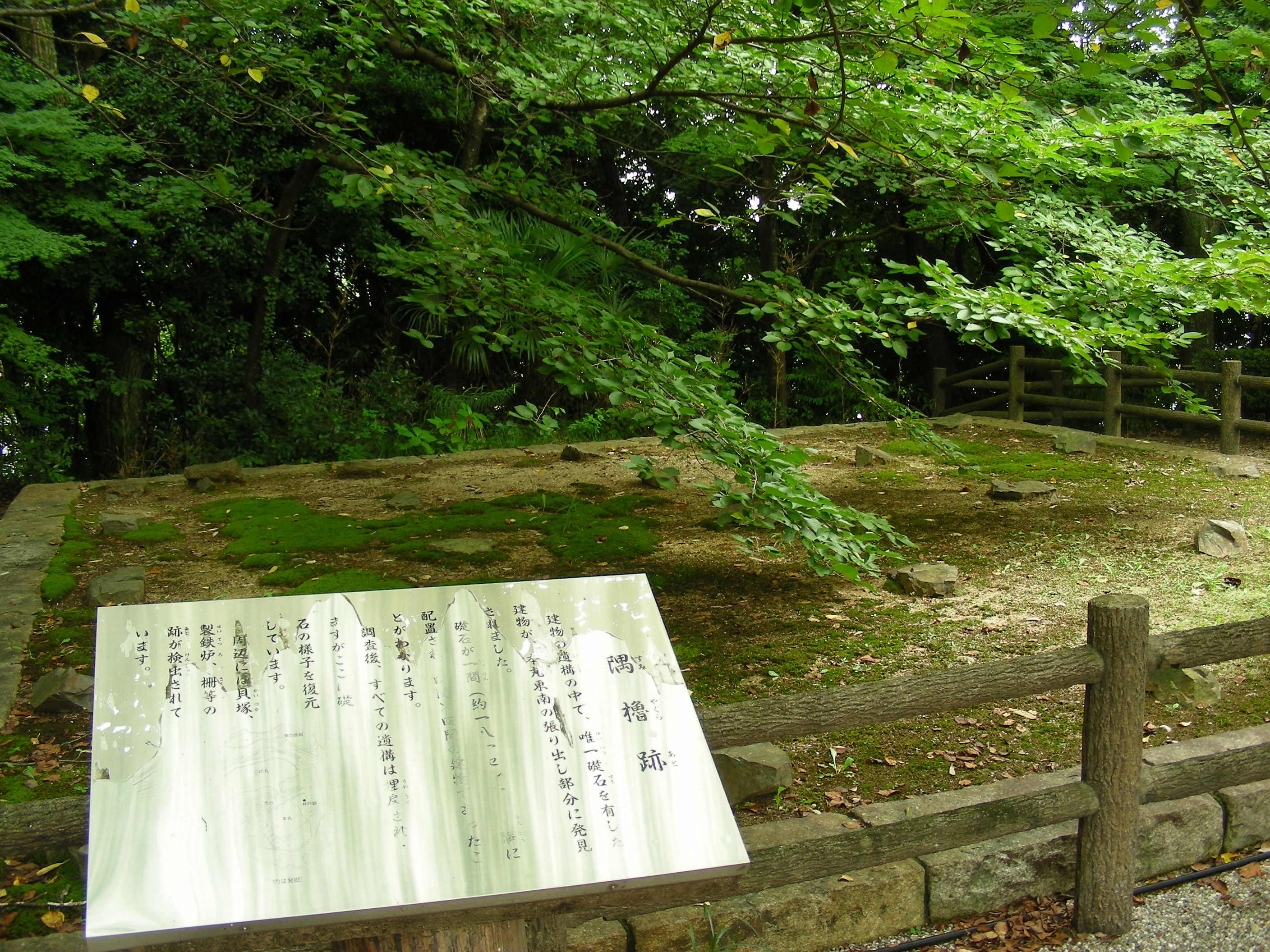
Today Iwasaki Castle sits in a two-hectare park in Nisshin, a suburban city absorbed into the greater Nagoya metropolitan area. Archaeological excavations have uncovered the remains of a well and a yagura, or turret, revealing the outlines of the original fortification beneath the modern landscaping. In 1987, the city reconstructed the castle's tenshu -- its central tower -- in ferro-concrete, a common practice in Japan where historical accuracy yields to the practical need for a durable, visitable structure. Inside, a local history museum displays ceramics, samurai armor, and documents tracing the castle's turbulent ownership. The reconstructed tower is small, four stories at most, but from its upper floors you can see the same terrain that Nobuhide surveyed when he chose this hill: the highway corridor stretching east toward Mikawa, the low hills rolling north, the landscape that made this spot worth fighting over for a century.
From the Air
Located at 35.15°N, 137.04°E in Nisshin City, Aichi Prefecture. The reconstructed castle tower is visible on a low hill surrounded by a park and suburban development. Best viewed at 1,500-3,000 feet AGL. Chubu Centrair International Airport (RJGG) lies approximately 25 nautical miles to the south-southwest. Nagoya Airfield / Komaki (RJNA) is approximately 10 nautical miles to the north-northwest. The castle sits between the Tokaido Shinkansen corridor to the south and the Tomei Expressway to the north.