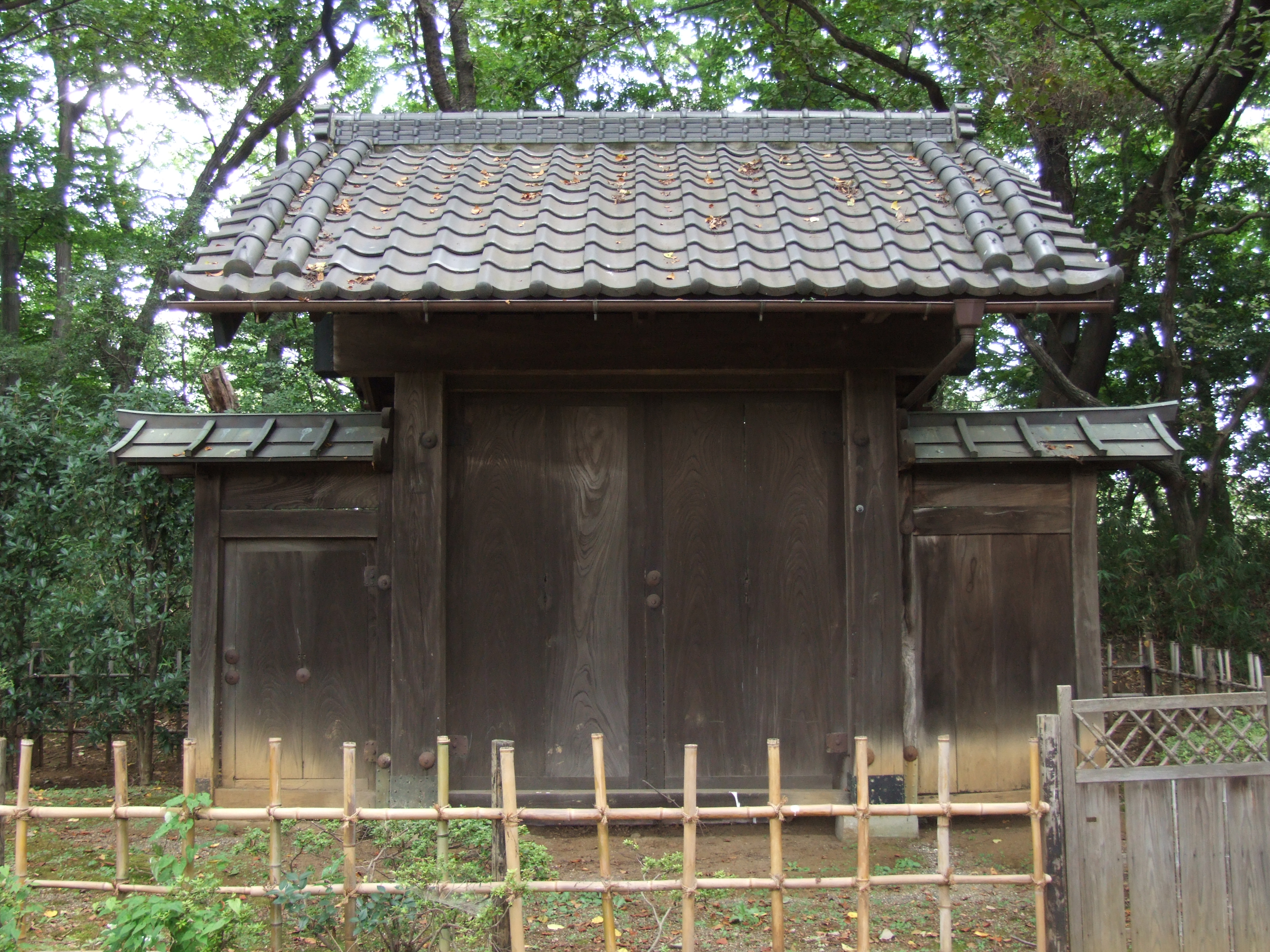
Iwatsuki Castle
In 1564, a father rode out to seek allies. While he was gone, his son opened the gates and handed everything to the enemy. That act of filial betrayal at Iwatsuki Castle was not even the most dramatic chapter in the fortress's history -- just another turn in a saga of shifting allegiances, massive sieges, and serial catastrophe that stretched across five centuries on the Kanto Plain. Built in the early Muromachi period by Narita Jikosai Tosho on a bend of the Arakawa River, the castle exploited the swampy lowlands of former Musashi Province to create a nearly impregnable defensive position. Water was both moat and ally here, with marshes guarding the west and south while the river shielded the north and east.
A Fortress Born from Swampland
Iwatsuki Castle sat on the Kanto Plain near the northern edge of Musashi Province, surrounded by terrain that made conventional assault miserable. The main bailey, second enclosure, and third enclosure were ringed by extraordinarily wide swampy moats, turning the fortress into a series of islands in a landscape of mud and standing water. The castle town grew to the southwest, on slightly drier ground. For generations, historians credited the legendary castle-builder Ota Dokan with constructing Iwatsuki, but newer sources have established that Narita Jikosai Tosho was the original builder. By 1478, the castle was already serving as a bulwark protecting the southern frontier of the Kanto kubo. Large-scale flood-control projects later diverted the Arakawa River's main flow during the mid-Edo period, leaving the castle stranded from the waterway that had once been its greatest natural defense.
Betrayal, Siege, and the Hojo Juggernaut
The Ota clan had established firm control of Iwatsuki by 1522, but the Sengoku period rewarded flexibility over loyalty. After the Siege of Kawagoe Castle in 1546 shattered Uesugi power in the Kanto region, the Ota shifted their allegiance to the Odawara Hojo. When Uesugi Kenshin invaded from the north in 1560, Ota Sukemasa switched back. But Kenshin withdrew his armies in 1561, and the Hojo reclaimed their territory with ruthless speed. Sukemasa refused to submit. He rode out in 1564 to seek help from the Satomi clan, and while he was gone, his own son Ota Ujitsuke betrayed him by surrendering the castle to the Hojo. After Ujitsuke's death in 1567, the Hojo seized Iwatsuki outright, rebuilding it with massive earthen walls and deep moats enclosing over a square kilometer, one of the most powerful fortifications in all of Musashi Province.
Twenty Thousand Against Two Thousand
The Hojo made Iwatsuki a family stronghold, installing a brother of Hojo Ujinao as castellan, followed by another brother, Ujifusa, in 1585. But in 1590, Toyotomi Hideyoshi launched his campaign against the Hojo at the Battle of Odawara and dispatched an army of 20,000 men toward Iwatsuki. The castle's 2,000 defenders, outnumbered ten to one, were quickly overwhelmed. With the Hojo destroyed, Iwatsuki passed to Tokugawa Ieyasu, who assigned the 20,000-koku domain to his trusted retainer Koriki Kiyonaga. Over the following century, the domain cycled through a remarkable succession of fudai daimyo clans: the Aoyama, Abe, Itakura, Toda, Matsudaira, Ogasawara, and Nagai, before the Ooka clan took control and held the castle until the Meiji Restoration.
Fire, Ruin, and Cherry Blossoms
Fate dealt Iwatsuki its cruelest blows not through siege but through flame. In 1775, a catastrophic fire during the tenure of Ooka Tadayoshi consumed the castle and most of the surrounding town. The central donjon burned again in 1865, and Ooka Tadayuki, the last lord, simply lacked the money to rebuild. The Ooka clan chose the winning side in the Boshin War, supporting the pro-imperial forces, but it did not save their castle. After the Meiji Restoration, most remaining structures were dismantled. Land reclamation swallowed much of the former castle grounds into the expanding modern city. What survived was the wettest, marshiest ground, the terrain no one wanted to build on, and that irony preserved the earthworks and moats that now form Iwatsuki Castle Park.
The Swamp That Saved the Story
Today the park retains remnants of the original earthen fortifications and several sections of the wide moats that once made Iwatsuki so formidable. Two original castle gates, preserved by private owners over the generations, have been relocated to the park grounds. In spring, the park becomes one of Saitama's popular sakura-viewing destinations, the ancient moats reflecting clouds of pale pink blossoms where armored boats once patrolled. The marshy terrain that made the castle nearly impossible to storm in the 15th century proved equally resistant to 20th-century development, accidentally ensuring that the bones of the fortress endured. It is a fitting legacy for a castle defined by water -- saved, in the end, by the same swamp that once protected it.
From the Air
Located at 35.951N, 139.710E in Iwatsuki-ku, Saitama City, on the Kanto Plain. The castle park appears as a green area with visible moat outlines within the urban fabric. Best viewed at 2,000-3,000 ft AGL. The nearest major airport is RJTT (Tokyo Haneda), approximately 30 nm south-southwest. RJAA (Narita) is about 40 nm east-southeast. Look for the irregular green space with water features amid the dense residential grid northeast of central Saitama City.