Izapa
Eighty-nine stelae. Sixty-one altars. Three thrones. Sixty-eight miscellaneous monuments. No other site of its era comes close to that count. Izapa, sprawling across 1.5 kilometers of volcanic hillside at the foot of Tacana, the sixth tallest mountain in Mexico, was not just a large settlement. It was a factory of sacred imagery, producing carved stone narratives in such quantity and with such distinctive style that archaeologists gave the entire aesthetic tradition the site's name. The 'Izapan style' is the visual bridge between the Olmec civilization and the Maya, and it was forged here, on the banks of the Izapa River in Chiapas.
Older Than It Looks
Izapa reached its peak between 850 and 100 BC, but several archaeologists believe the site may have been occupied as early as 1500 BC, making it potentially as old as the great Olmec centers of San Lorenzo and La Venta. If that dating holds, Izapa was already a going concern when the Olmec were shaping the first complex civilization in the Americas. The settlement persisted through the Early Postclassic period until roughly 1200 AD, an occupation spanning more than two and a half millennia. Linguist Lyle Campbell proposed that the Izapa culture was at least partially inhabited by speakers of Mixe-Zoque languages, placing it within the linguistic sphere associated with the Olmec themselves. The site sits on wet, hilly land of volcanic soil in the Soconusco region, a major cacao-producing area that the Aztecs would later prize for its beans.
A City in Six Plazas
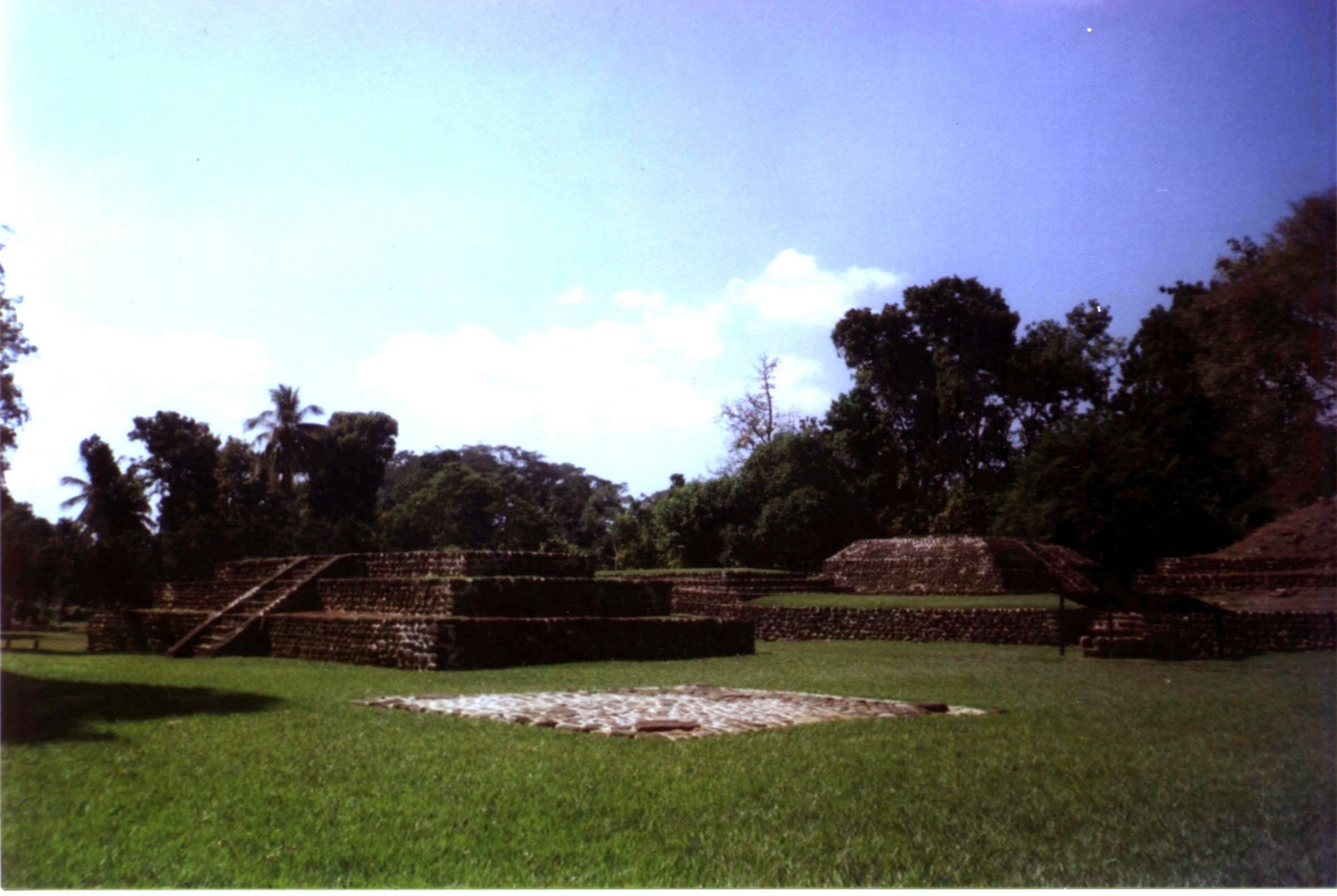
The New World Archaeological Foundation mapped 161 mounds at Izapa, with the Formative-period core organized into six major plazas designated Groups A through H. The architecture amounts to roughly 250,000 cubic meters of construction, including pyramids, sculptured plazas, and at least two elongated open areas that may have been ballcourts. Mound 30A held a stepped pyramid about ten meters high, likely serving religious and ceremonial purposes. The site is oriented 21 degrees east of true north, an alignment whose significance continues to generate scholarly debate. Groups A, B, and F are open to visitors today through Mexico's National Institute for Anthropology and History. Group F, at the northern end, represents the latest phases of occupation, with construction spanning from the Terminal Formative through the Early Postclassic.
Stories Carved Without Words
What makes Izapa's sculpture remarkable is not just its quantity but its character. While Epi-Olmec carving 550 kilometers away focused on glorifying individual rulers, Izapan sculpture depicted mythological and religious subjects in elaborate narrative scenes. Frog-shaped altars symbolized rain and were paired with stelae. Winged figures, long-lipped gods resembling the Maya rain deity Chaac, jaguars, crocodiles, and swirling Olmec-style clouds recur throughout the corpus. Perhaps most striking, Izapa's monuments almost entirely lack glyphs. Scholar Julia Guernsey has proposed that this was intentional: sitting at the juncture of two linguistic regions, Mixe-Zoque and Maya, the site may have developed non-verbal visual strategies to communicate across language barriers. The imagery spoke to everyone, regardless of tongue.
Hero Twins and Bird Demons
Several of Izapa's stelae appear to depict scenes from the Popol Vuh, the K'iche' Maya creation epic, centuries before it was written down. Stela 25 likely shows the Hero Twins shooting a perched bird deity with a blowgun, a scene scholars connect to the defeat of Vucub Caquix, the prideful Seven Macaw. Stela 2 illustrates a related episode from the same mythic cycle. Stela 5 is the most complex relief at the site, centered on a great tree surrounded by a dozen human figures and scores of other images. Stela 4 depicts a king being transformed into a bird, possibly representing a shaman-ruler's ecstatic journey to another world. Stela 21 shows a warrior holding the severed head of a god, one of the rare depictions of divine violence in Mesoamerican art. These are not decorations. They are theology in stone.
Rediscovery and Revelation
Mexican professor Carlos A. Culebro first published drawings of Izapa's monuments. Karl Ruppert visited in 1938 for the Carnegie Institution, and Matthew Stirling spent a week excavating in 1941 for the Smithsonian. From 1961 to 1965, the New World Archaeological Foundation conducted four seasons of excavation under Gareth Lowe. But the biggest surprise came from modern technology. Beginning in 2011, the Izapa Regional Settlement Project used lidar to remap the site and discovered that the Formative-period center was actually twice as large as previously understood, and the Classic-period occupation nearly three times larger. The scans revealed terracing and an E-Group astronomical alignment in the site center that no one had seen before. After three thousand years, Izapa is still getting bigger.
From the Air
Located at 14.923°N, 92.180°W on the Pacific slope of Chiapas, Mexico, at the base of Volcan Tacana (4,060 meters). The site occupies hilly volcanic terrain along the Izapa River, a tributary of the Suchiate River which forms the Guatemala-Mexico border. Nearest major airport is Tapachula International (MMTP), approximately 15 km south. Tacana volcano provides a dramatic visual landmark to the north. The archaeological site's 161 mounds spread across 1.5 km of terrain; the largest structures and plaza groups may be visible from lower altitudes. Expect humid, tropical conditions with frequent cloud cover.