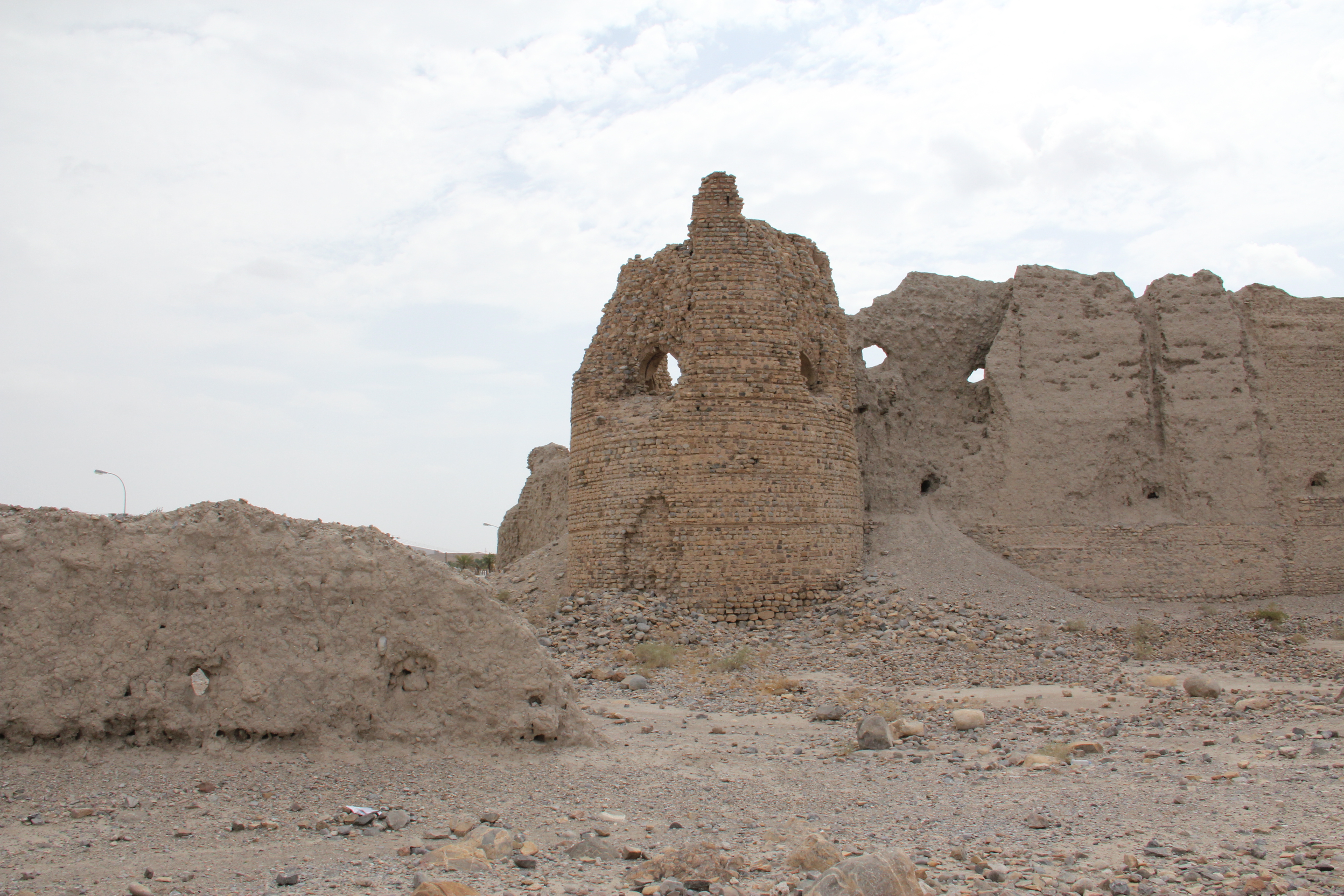
Izki
In 640 BC, according to Neoassyrian cuneiform texts found at Nineveh, a king named Pade who lived in a place called 'Izke' sent envoys on a six-month journey to the court of Ashurbanipal. They arrived burdened with gifts and asked to cultivate good relations. If Izke is indeed Izki -- and some scholars believe it is -- then this modest Omani town was conducting international diplomacy 2,600 years ago, corresponding with one of the most powerful empires the ancient world ever produced.
Twin Towns, Twin Histories
Old Izki is not one settlement but two. Al-Nizar and al-Yemen sit side by side, each once enclosed by its own walls, each with its own character. In 1908, al-Nizar contained an estimated 450 houses; al-Yemen, about 350. Today al-Nizar is still inhabited. Al-Yemen has been deserted since before 1980, though property owners continue to maintain their houses. The regular streets visible in al-Yemen are not original -- they result from an 18th-century destruction and rebuilding. The two towns' differences in size, layout, and appearance reflect centuries of parallel but distinct development. Together they contain about 142 towers, three castles including Al Awamir Castle, and archaeological houses bearing the names Al Nazar and Al Yamin.
1,045 Sites in One Survey
When archaeologist Juergen Schreiber began systematic survey work at Izki in 2007, he tallied 1,045 individual archaeological sites in and immediately around the twin towns. The finds ranged from the Hafit period -- the third millennium BC -- through to the Islamic era. In 2011, excavation partly confirmed his results. The town contains remains of the entire pre-Islamic period, with particularly numerous finds from the Early and Late Iron Age. At the highest point of al-Yemen, excavators uncovered the remains of an older mosque, likely the one destroyed during the civil war that convulsed Oman between 886 and 970 AD. Across the Wadi Khalfayn, a large cemetery contains pottery sherds of the Samad Late Iron Age alongside material from other periods. Izki's claim to be Oman's oldest city rests less on legend than on the density of evidence beneath its streets.
The Golden Calf of Jarnan
Jarnan Cave overlooks the ancient neighborhood of Al-Nazar from an unstable rocky hillside. Named after the pre-Islamic name for the settlement, the cave extends 15 to 20 meters into the rock. Local legend holds that before Islam arrived, the people of Azki worshipped a golden calf named Jarnan, adorned with jewelry and precious gems. When the community embraced Islam, the calf was hidden inside the cave beneath the village, guarded by magical incantations. No one has seen it since. Most locals dismiss the story, but they keep telling it. The cave entrance has eroded over the centuries, narrowing what was once a crawl-space opening to near invisibility. Whether or not a golden idol lies inside, the legend says something true about Izki: this is a place where the pre-Islamic and the Islamic exist in layers, one built literally on top of the other.
Beehive Tombs and Living Crafts
Above the village, the Zakiet archaeological tombs sit on a cylindrical hill, their walls made of mountain rocks arranged in beehive-cell shapes that historians date to the 3rd millennium BC. Their hilltop location suggests they may have doubled as a defensive position. Below, in the living town, traditional crafts continue: leather tanning, weaving, silverware manufacturing, palm weaving, and blacksmithing. The Al Maliki Canal, named after Malik bin Fahm Al Azdi, remains one of the town's most prominent features. Izki sits at 544 meters altitude, bordered by Jebel Akhdar to the west and the state of Samail to the north, about 138 kilometers from Muscat. Its population of roughly 36,000 people occupies a space where every layer of Omani history -- from the Bronze Age to the modern -- is compressed into a single town.
From the Air
Located at 22.93N, 57.78E in Oman's Ad Dakhiliyah region, at approximately 544 m altitude. Izki is bordered by Jebel Akhdar to the west. Nearest major airport is Muscat International (OOMS), approximately 138 km to the north. The twin walled towns are visible as a compact settlement in the arid landscape near the Hajar Mountains.