When the Taps Ran Dry: Jackson's Water Crisis
Fifty-five breaks per hundred miles of water line, every year, for five straight years. That was the rate at which Jackson, Mississippi's aging pipes were failing between 2017 and 2021, nearly four times what engineers consider safe. Half the water the city pumped into the ground never reached a meter. By the time the Pearl River surged over its banks in late August 2022 and overwhelmed the O. B. Curtis Water Treatment Plant, the system had been hemorrhaging for so long that collapse was not a surprise but an inevitability. For roughly 150,000 residents of Mississippi's capital, the taps simply stopped producing safe water, and the question shifted from whether the infrastructure would fail to how long recovery would take.
A System Already on Life Support
Jackson's water network serves more than 71,000 connections across 150 square miles, drawing from the Ross Barnett Reservoir and the Pearl River through two treatment plants: the O. B. Curtis and the J. H. Fewell. By 2022, both were in dire condition. A failed EPA inspection in 2012 had already flagged maintenance failures. A winter storm in February 2021 shut down the Curtis plant entirely, leaving residents without water for a month. City leaders requested $47 million for sewer repairs from the state and received just $3 million. A private contractor failed to send water bills to thousands of customers. Mayor Chokwe Antar Lumumba estimated that fully repairing the system would cost $2 billion. The utility's bonds had been downgraded to junk status, and the city carried $191 million in outstanding revenue bond debt. Staff shortages meant water pressure went unrecorded, lines went unflushed, and chlorine levels drifted unchecked in storage tanks.
The Pearl River Rises
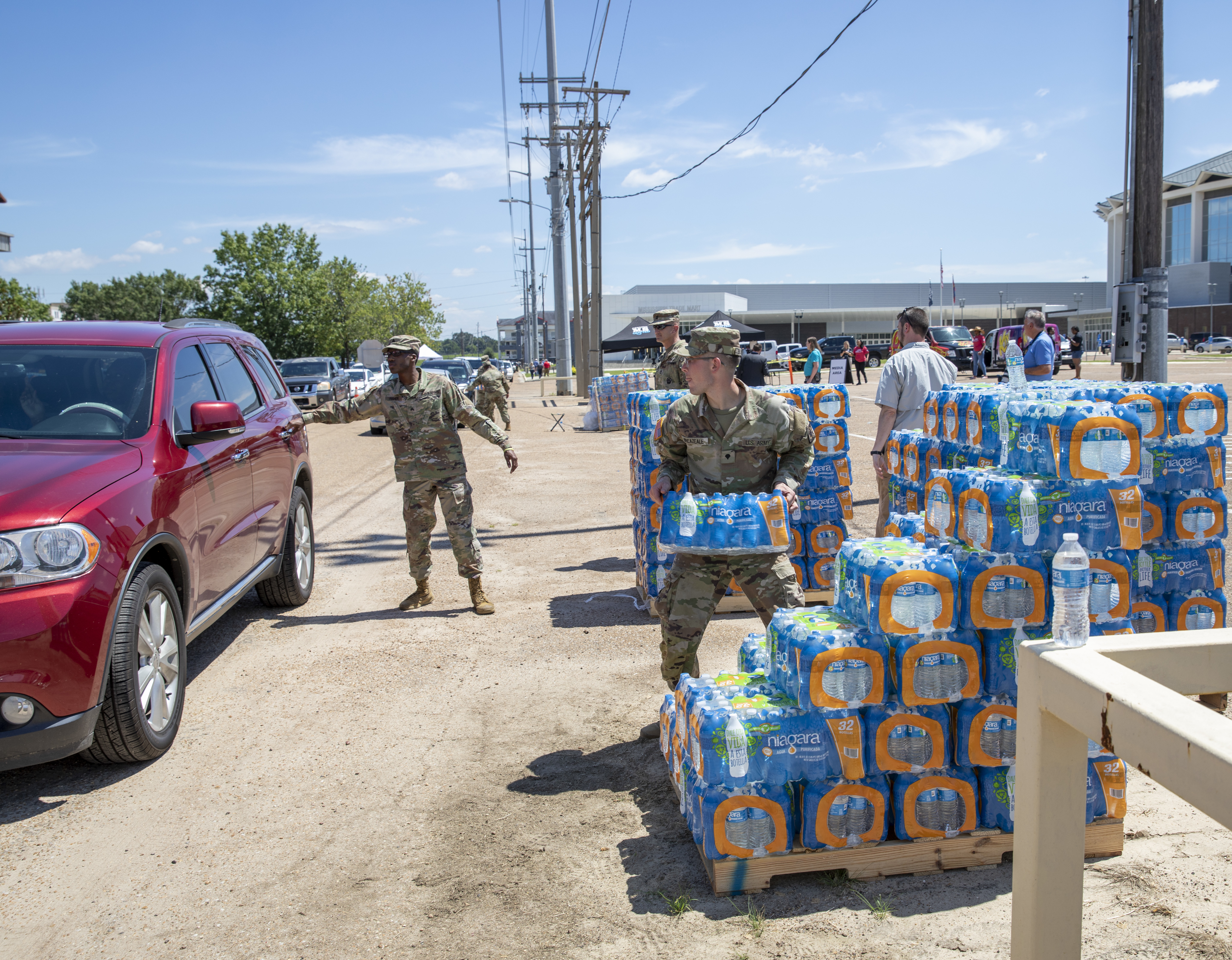
In late August 2022, severe storms sent the Pearl River cresting on August 29, and it did not fall below flood stage until September 1. The flooding forced the Curtis plant to take in a surge of water from the Barnett Reservoir, overwhelming its already compromised treatment process. Water pressure plummeted across the city. The backup Fewell plant could not compensate because its own pumps had failed. By August 30, most Jackson residents had no running water at all. Governor Tate Reeves declared a state of emergency. Six hundred Mississippi National Guard members deployed on August 31 to distribute bottled water and hand sanitizer. President Joe Biden declared Jackson a federal disaster area, triggering FEMA resources. Stores and restaurants shuttered. Schools shifted to virtual learning. Merit Health Central, the one hospital without an independent water supply, stayed open only by trucking water in.
The Long Road Back
On September 4, officials announced that adequate water pressure had been restored to most of the system. By September 15, the boil advisory was withdrawn, though health officials still urged precautions for pregnant women and children. The relief proved fragile. On September 26, a contractor accidentally broke a water line in Byram, triggering a new boil advisory for 1,200 customers. Over 200 additional line breaks appeared throughout the system as pressure increased. On October 20, Jackson partnered with the Department of Justice and the EPA to solicit bids for emergency management of both treatment plants. By October 31, the EPA declared the water safe to drink, and Reeves lifted the state of emergency on November 22. Congress ultimately allocated $600 million for the Jackson water system in December 2022, of which $150 million was earmarked for technical assistance and $450 million for capital infrastructure projects.
Fault Lines Beneath the Pipes
The crisis exposed fractures far deeper than corroded infrastructure. Jackson is approximately 80 percent Black, with 25 percent of residents living below the poverty line. Decades of white flight to suburbs like Madison and Ridgeland shrank the tax base while state legislators reduced or blocked bond issues and sales tax proposals that would have funded repairs. The NAACP filed a complaint under Title VI of the Civil Rights Act of 1964, accusing the state of racial discrimination in funding allocation. The Southern Poverty Law Center documented a pattern of systemic neglect targeting Jackson's Black community. Researchers found that the contaminated water increased the prevalence of asthma, kidney disease, stroke, and coronary heart disease in the city's poorest neighborhoods. Since 2018, Jackson has endured more than 300 boil water notices and over 7,300 water line breaks. As of 2023, many residents still refuse to drink the tap water.
From the Air
Located at 32.30N, 90.18W on the Pearl River in central Mississippi. The O. B. Curtis Water Treatment Plant sits northeast of the city near the Ross Barnett Reservoir, visible as industrial infrastructure along the waterway. Jackson-Medgar Wiley Evers International Airport (KJAN) is the nearest field, approximately 8 miles east of downtown. Hawkins Field (KHKS) is a smaller general aviation airport closer to downtown on the northwest side. The Pearl River corridor and reservoir are prominent landmarks from altitude.