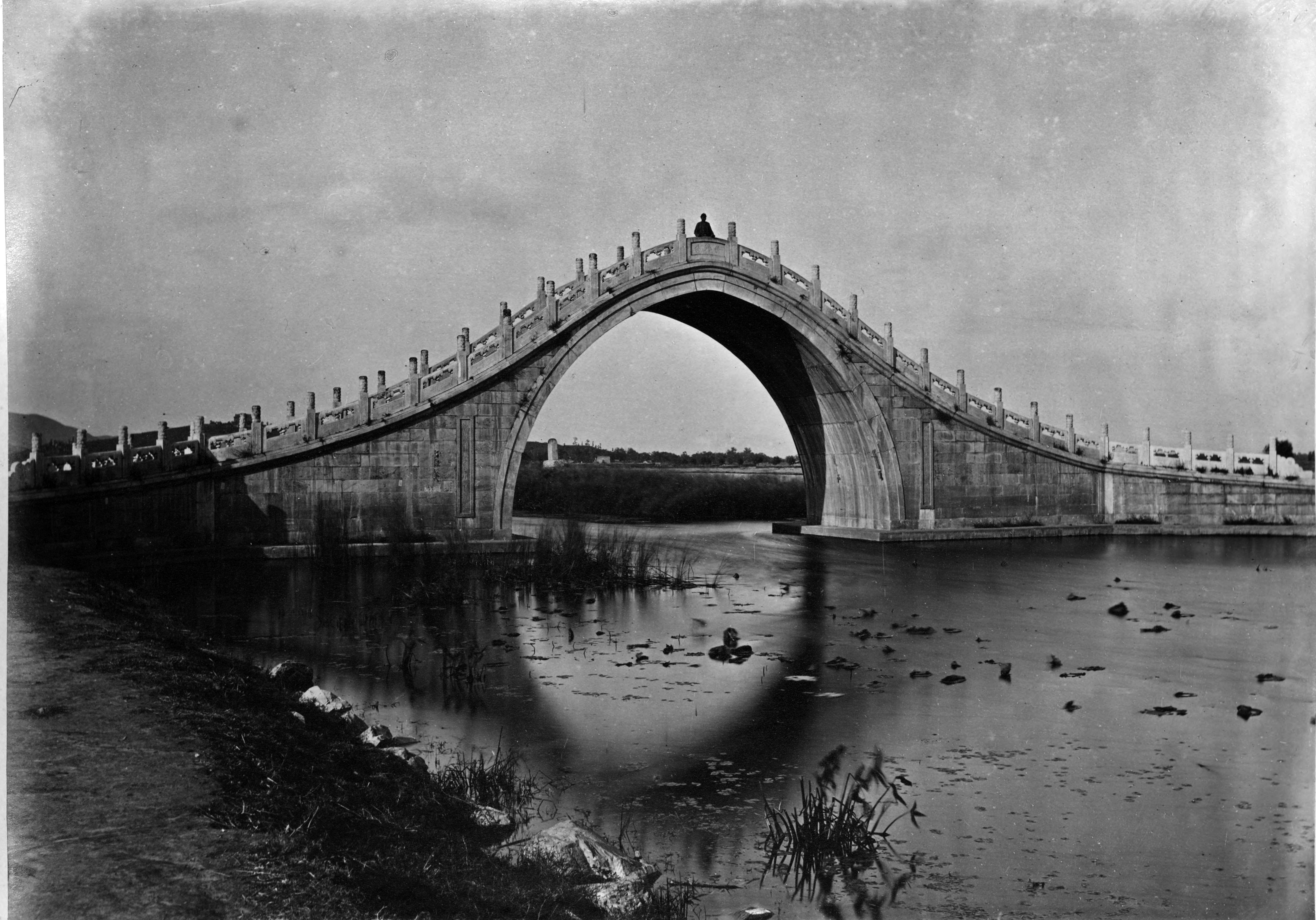
Jade Belt Bridge
Its arch is so steep and slender that Western visitors called it the Camel's Back Bridge, and the nickname stuck. The Jade Belt Bridge, rising in a graceful parabola over the western shore of Kunming Lake, is the most famous of six bridges that line the lakefront at Beijing's Summer Palace. Built in 1750 during the reign of the Qianlong Emperor, its proportions are deliberately exaggerated -- not as architectural whimsy, but for a very practical reason: the emperor's dragon boat needed to pass beneath it.
An Arch Fit for a Dragon Boat
The Jade Belt Bridge stands on the western shore of Kunming Lake, near the point where the lake waters flow into the neighboring Yu River. The Qianlong Emperor commissioned it as part of his ambitious transformation of the area into an imperial garden, and its tall, thin single arch was calculated to provide clearance for the ornate dragon boats used during imperial processions and festivals. On special occasions, the emperor, empress, and their retinue would glide beneath the bridge in their gilded vessels, a ritual passage that required the arch to be both majestic and functional. The bridge is built from marble and white stone, its railings decorated with carved cranes and other animals -- symbols of longevity and good fortune.
Southern Elegance in Northern Stone
The bridge's design deliberately evokes the delicate stone bridges of southern China, a region the Qianlong Emperor admired for its gardens and waterways. He visited the south six times during his reign, and the Summer Palace's landscape incorporates many references to the scenery he encountered on those journeys. The Jade Belt Bridge is one of the most successful transplantations -- a curve of white stone that looks as though it belongs over a canal in Suzhou rather than a lake in Beijing. The effect is intentional: the imperial gardens were meant to be a world in miniature, gathering the best landscapes of the empire into a single park. A similar arch bridge called Xiuyi Bridge stands on the southeast side of the Summer Palace grounds.
Through the Lens of History
The Jade Belt Bridge is one of the most photographed structures in the Summer Palace, and it has been since cameras arrived in China. Thomas Child captured it between 1870 and 1889. Sidney D. Gamble photographed it around 1924. The American artist Charles W. Bartlett made a drawing of it. Each image records the same essential shape -- that improbable arc of white against the water -- but the surroundings change with each era. The bridge survived the destruction that Anglo-French forces inflicted on the Summer Palace during the Second Opium War in 1860, a catastrophe that damaged or destroyed much of the palace complex. Its survival is partly luck, partly the durability of stone.
Poetry in Stone
A stele near the bridge bears a poem attributed to the Qianlong Emperor himself, dated to 1755. The modern scholar Wang Chaosheng deciphered degraded writing on the back of the stone and proposed it references the Jade Belt Bridge in connection with the Pictures of Tilling and Weaving, a celebrated series of paintings depicting agricultural labor. The poem's imagery links silk weavers and plowing farmers, north and south, labor and beauty -- themes the emperor wove into the landscape of the Summer Palace itself. The bridge, in this reading, is not merely decorative. It is a statement about the unity of the empire, rendered in marble and set above water that reflects the sky.
From the Air
Located at 39.99N, 116.26E on the western shore of Kunming Lake within the Summer Palace grounds. From the air, Kunming Lake is the large body of water northwest of central Beijing, with Longevity Hill rising on its northern shore. The white arch of the Jade Belt Bridge may be visible at lower altitudes against the dark water. Beijing Capital International Airport (ZBAA) is approximately 30 km to the northeast.