Jaffna
The palmyrah palms give it away. Tall, slender, unmistakable, they line every road and fill every horizon in Jaffna, the northernmost district of Sri Lanka. Every part of the palmyrah tree has a use here -- its fruit fermented into toddy, its leaves woven into mats, its wood carved into furniture. The tree is the symbol of this place, and like the Tamil people who have lived beneath its shade for centuries, it is hardy, deeply rooted, and impossible to ignore. Jaffna is not the Sri Lanka most visitors know. There are no resort beaches, no elephant safaris, no crowds of backpackers. Instead there are ancient kovils draped in flowers, a cuisine that exists nowhere else on the island, and a quietness that belies a history of extraordinary upheaval.
Kingdom Before Colony
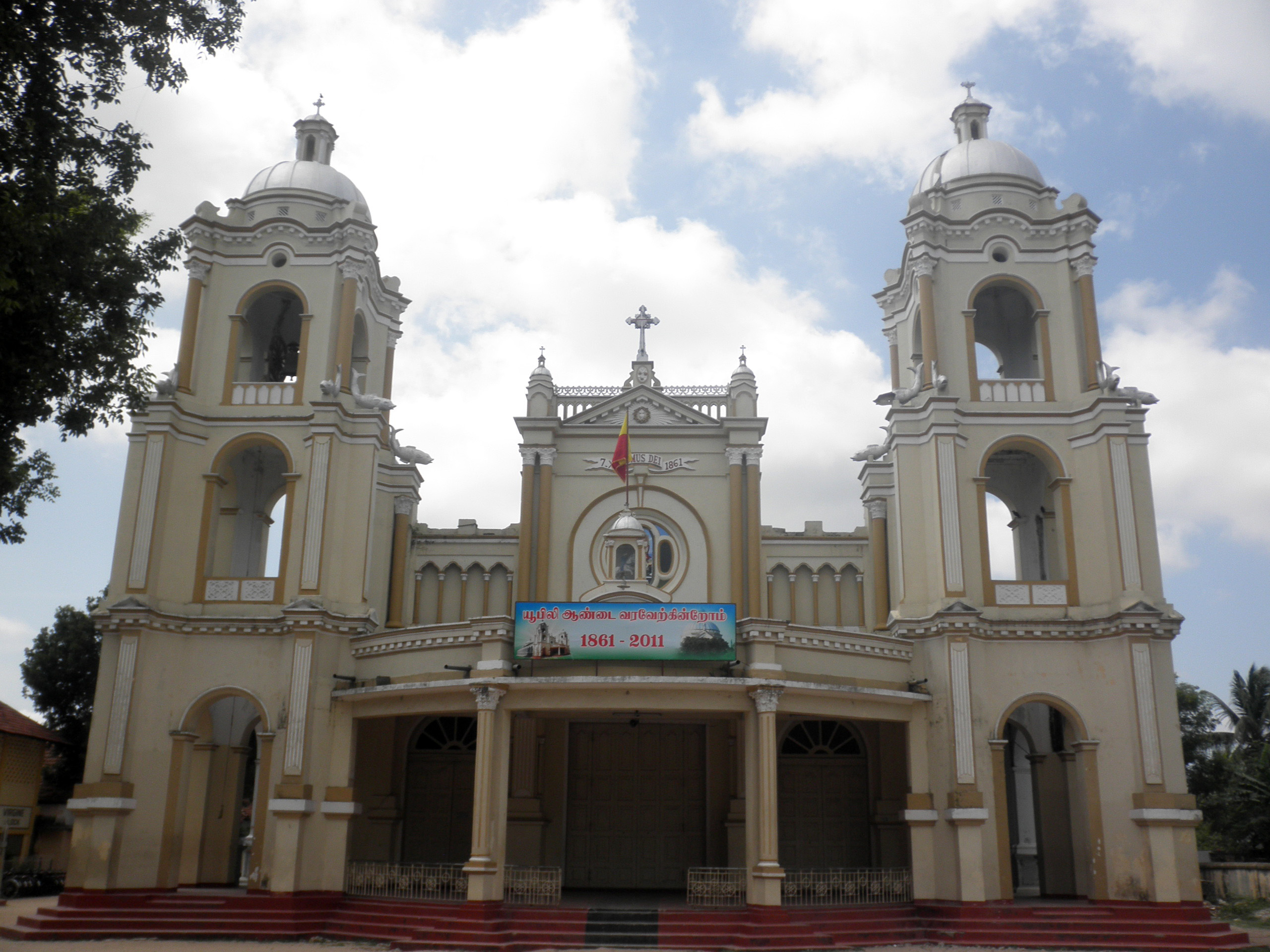
Long before the Portuguese arrived, this peninsula was the seat of the Jaffna Kingdom, with its capital at Nallur. The kingdom's Tamil rulers governed a prosperous trading hub connected to South India across the narrow Palk Strait. When the Portuguese defeated the kingdom in 1619, they founded the modern city of Jaffna in 1621 near Nallur's ruins. The Dutch followed, then the British, each leaving their architectural fingerprints -- star-shaped ramparts, colonial churches, government halls. But through it all, Tamil culture persisted. Today Nallur is a suburb of Jaffna, and its Kandaswamy Kovil remains the city's spiritual heart. During the annual Nallur festival in July and August, the faithful pour in from across the Tamil diaspora to watch the great chariot pulled through temple grounds, a tradition that neither colonialism nor civil war managed to extinguish.
The Wound That Changed Everything
Before the Sri Lankan Civil War erupted in 1983, Jaffna was the island's second-largest city, its population roughly split between Tamils and Sinhalese. By the time the war ended in 2009, the city had fallen to twelfth. The numbers tell only part of the story. Twenty-six years of conflict brought military occupation, displacement, destruction of infrastructure, and the exodus of hundreds of thousands of residents. The Sinhalese population fled during the rise of the Liberation Tigers of Tamil Eelam and did not return, leaving the city almost entirely Tamil. Landmines from the fighting still linger in some areas. The rebuilt Jaffna Public Library stands as both a monument to cultural loss -- its predecessor burned in 1981 with 97,000 irreplaceable volumes -- and a statement of defiance. Jaffna endured. It is still here.
A Taste Found Nowhere Else
Jaffna's cuisine is its own quiet rebellion against homogeneity. Jaffna Kool, a complex, fiery seafood soup layered with crab, squid, and palmyrah root flour, is virtually impossible to find anywhere else in Sri Lanka. Wade -- crispy lentil fritters pronounced "wah-dei" -- are the street food of choice, sold from stalls that seem to occupy every other corner. The district has an almost absurd proliferation of fresh juice vendors, even by Sri Lankan standards. And then there is the toddy. Tapped from coconut and palmyrah trees, it ranges from mildly sweet to bracingly fermented, depending on the tree and the hour. Palmyrah toddy runs sweeter; coconut toddy carries more punch. Either way, it is best consumed in the company of locals who know their trees.
Islands at the Edge
West of Jaffna proper, a scattering of islands extends into the shallow waters between Sri Lanka and India. Velanai connects to the mainland by a long causeway, its fishing village of Kayts still operating much as it has for generations. Karaitivu draws visitors to Casuarina Beach, one of the finest stretches of sand in the north. But the most remote and most compelling is Delft Island -- known in Tamil as Neduntheevu -- reachable only by bus to Kurikattuwan jetty and then a one-hour ferry across open water. On Delft, feral ponies descended from Portuguese stock roam among baobab trees and crumbling colonial ruins. Time moves differently here. The islands are an adventure to reach and reward the effort with a silence that the mainland has forgotten.
Revival at the Tip of the Island
Jaffna today is a city still finding its footing after decades of conflict, and that unfinished quality is part of its appeal. The ferry from Kankesanthurai to Nagapattinam in Tamil Nadu, revived in 2023, reconnects the city to India by sea for the first time in decades. Flights link Jaffna International Airport to Colombo and to cities in Tamil Nadu. The overnight train from Colombo, an eight-hour journey through the island's interior, delivers passengers into a world that feels culturally closer to South India than to the Sinhalese south. Few tourists make it here, which means those who do encounter something increasingly rare: a place that has not yet learned to perform for visitors. The kovils are not attractions -- they are active places of worship. The food is not curated for foreign palates -- it is what people eat. Jaffna offers Sri Lanka without the filter.
From the Air
Located at 9.66N, 80.02E on the Jaffna Peninsula, the northernmost point of Sri Lanka. The peninsula is clearly visible from altitude, connected to the mainland by a narrow causeway across the Jaffna Lagoon. Jaffna International Airport (VCCJ/JAF) sits at Palaly, 7 nautical miles north of the city center, elevation 34 feet, with a single runway 05/23. The Palk Strait separating Sri Lanka from India is only about 30 nautical miles wide here. At lower altitudes, look for the distinctive star shape of Jaffna Fort near the coast and the network of causeways linking the western islands.