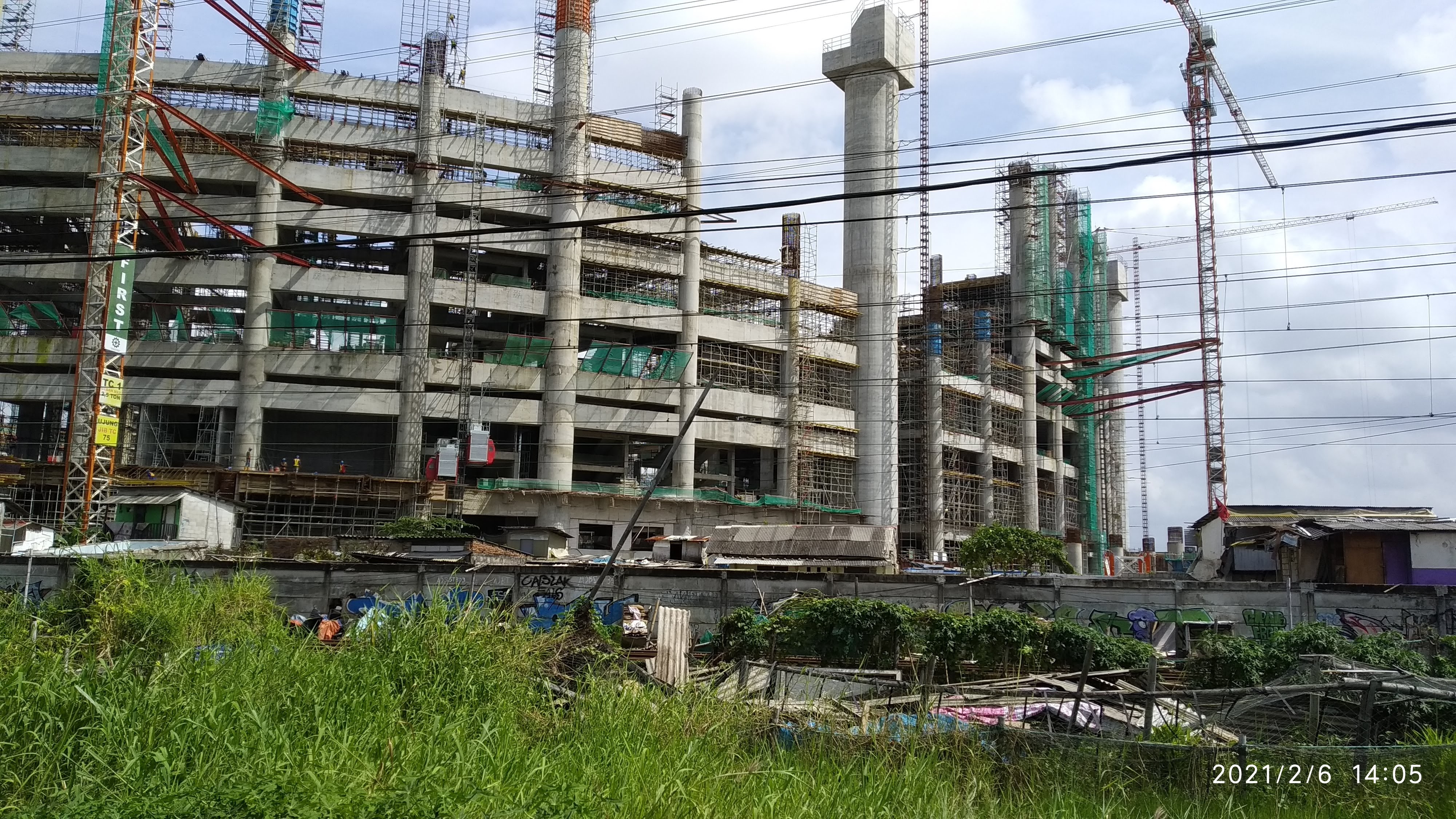
Jakarta International Stadium
Pied stilt birds walk the pitch every morning, picking off insects before the groundskeepers arrive. It is an oddly pastoral scene inside the largest football stadium in Indonesia - 82,000 seats of concrete and steel rising 73 meters above the old port district of Tanjung Priok, where cargo ships and commuter trains compete for space along Jakarta's northern waterfront. Jakarta International Stadium opened on 24 July 2022, but the story of how it got built is almost as dramatic as anything that has happened on its hybrid grass surface since.
A Decade of False Starts
The idea surfaced in the late 2000s: a new home for Persija Jakarta, the capital's football club, to replace the demolished Lebak Bulus Stadium, which had been torn down to make way for a train depot. A 26.5-hectare site near BMW Park in Tanjung Priok was identified, but the land was occupied by squatters who had built homes there over the years. By 2014 the dispute remained unresolved, and an 80,000-seat design floated for the 2018 Asian Games was scrapped in favor of renovating the Gelora Bung Karno Stadium. It took until 2017 for the land to be cleared. Residents of the neighboring Kampung Bayam community sought compensation for damages as their homes were demolished. Two years later, Governor Anies Baswedan broke ground on a new design - 82,000 seats, a retractable roof, and no running track. The stadium finally had a name: Jakarta International Stadium.
Building Through a Pandemic
Construction started in September 2019, seven months before COVID-19 would upend Indonesia's economy. While other projects shut down, JIS kept going - workers underwent daily medical checks and construction continued under strict safety protocols, though the pace slowed as labor shrank and materials were delayed. The estimated opening date slid from October 2021 to April 2022. The most dramatic moment came in June 2021, when crews lifted a 3,900-ton steel roof truss into position over two weeks, a feat that earned an Indonesian record for the heaviest stadium roof structure ever lifted. By December 2021 the sheet metal roof was complete and the venue had reached nearly 88 percent completion. To test the sound system and lights, the vocalist of Indonesian rock band Padi performed an impromptu concert for the construction workers - the stadium's first audience.
Tiger Stripes and Betawi Cloth
The finished stadium wears its identity on its facade. The exterior features a tiger-stripe pattern honoring Persija's mascot, while the overall form draws on the shapes of traditional Betawi clothing, a nod to the indigenous culture of Jakarta. Inside, three tiers of seating wrap around a FIFA-regulation pitch surfaced with hybrid grass - a blend of zoysia matrella and Italian-made Limonta Mixto artificial turf, the first semi-artificial surface in an Indonesian football stadium. The retractable roof, made of ETFE membrane and stretching 100 meters, makes JIS only the second football stadium in Southeast Asia with such a feature, after Singapore's National Stadium. Perched on the roof's edge, the JIS Sky View Deck rises 70 meters above the ground and offers a 180-degree panorama stretching from the Ancol coastal complex to the rooftops of North Jakarta - the first stadium-mounted observation deck in the region.
Opening Night, Finally
Even the opening was delayed. A planned soft launch in December 2021 was postponed by the Omicron variant outbreak; a rescheduled date in February 2022 fell to rising case counts. The stadium finally welcomed spectators on 13 April 2022 for the International Youth Championship, with youth squads from Barcelona, Atletico Madrid, Bali United, and Indonesia competing over a week of matches. Barcelona's under-18 team won the tournament with a 1-0 final. The grand opening followed on 24 July 2022, headlined by a friendly between Persija and Thailand's Chonburi FC. Since then, JIS has hosted 16 matches during the 2023 FIFA U-17 World Cup - more than any other venue in the tournament - as well as concerts by Ed Sheeran and Maroon 5, establishing itself as Jakarta's premier entertainment venue alongside its football duties.
Green Building, Living Groundskeepers
JIS holds a distinction rare among mega-stadiums: it is the first in Indonesia certified as a Platinum Green Building by the Green Building Council Indonesia. The sustainability extends to pitch maintenance, where the pied stilt birds that patrol the grass each morning serve as a natural pest control system, eliminating the need for chemical pesticides on the playing surface. A pedestrian ramp connects the stadium complex to BMW Park and the planned agritourism zone around the neighboring Cincin reservoir and urban forest. The vision is a sporting district woven into green infrastructure rather than isolated behind parking lots - though the full plan, including a commuter rail station on the KRL Pink Line and a Jakarta LRT connection, remains a work in progress.
From the Air
Located at 6.12S, 106.86E in Tanjung Priok, North Jakarta. The stadium's massive retractable roof and distinctive tiger-stripe facade make it visible from considerable altitude. Nearest major airport is Soekarno-Hatta International (WIII), approximately 20 km west-northwest. Halim Perdanakusuma Airport (WIHH) lies about 18 km south-southeast. The Jakarta Inner Ring Road passes adjacent to the stadium, and the Ancol coastal recreation complex is visible to the north along the Java Sea shoreline.