Jallianwala Bagh Massacre
The garden is small enough that you could walk across it in two minutes. On 13 April 1919, it took Brigadier-General Reginald Dyer's troops roughly ten minutes to fire 1,650 rounds into the crowd packed inside. Jallianwala Bagh, a public gathering space in the heart of Amritsar, measured roughly 200 by 200 yards and was enclosed on three sides by the walls of surrounding buildings, some rising three and four stories high. Five narrow passages opened onto it, several fitted with lockable gates. When Dyer marched fifty riflemen to the entrance and ordered them to shoot without warning, the people inside had almost nowhere to run.
A City on Edge
The months leading to April 1919 had wound Punjab tight. The Rowlatt Act, passed over furious Indian opposition, extended wartime emergency powers into peacetime, allowing detention without trial and trials without juries. Millions of Indian soldiers had fought for Britain in the Great War, and many returned expecting political concessions rather than further repression. When popular leaders Satyapal and Saifuddin Kitchlew were arrested in Amritsar on 10 April, protests erupted. A demonstration at the deputy commissioner's residence was met with gunfire. Rioting followed: British banks were torched, and several Europeans were killed. Brigadier-General Dyer arrived in Amritsar on 11 April with reinforcements, already convinced he faced the opening moves of a coordinated rebellion on the scale of 1857.
Ten Minutes in the Bagh
April 13 was Baisakhi, the spring harvest festival. Thousands of people had gathered in Jallianwala Bagh for the celebration and to attend a peaceful protest meeting. Many were pilgrims who had been worshipping at the nearby Golden Temple and were simply passing through. That morning Dyer had issued a proclamation banning public assemblies, but it was announced only in select locations and in a city where many visitors did not hear it. At roughly 5:15 in the afternoon, Dyer arrived at the Bagh with ninety Gurkha and Sikh infantrymen and two armored cars, which could not fit through the narrow entrances. Without ordering the crowd to disperse, he positioned his troops at the main exit and commanded them to fire. Soldiers shot into the densest sections of the crowd. When people fled to the sides, fire followed them there. Some jumped into the garden's deep well trying to escape; a plaque placed after independence records that 120 bodies were pulled from it. Dyer later told the Hunter Commission that his purpose "was not to disperse the meeting but to punish the Indians for disobedience."
The Reckoning That Wasn't
Official British figures counted 379 dead, including 41 boys and a six-week-old baby. Indian estimates ran as high as 1,500. Over 1,200 people were wounded. Dyer imposed a curfew that prevented the injured from being moved, and many bled to death where they fell during the night. He offered no medical assistance. "It was not my job," he told the inquiry. "Hospitals were open and they could have gone there." The Hunter Commission, appointed months later, found that Dyer had overstepped his authority and that no conspiracy to overthrow British rule had existed. Yet no criminal charges were brought. Dyer was relieved of his command but never prosecuted, and a public subscription in Britain raised 26,000 pounds in his support. Winston Churchill called the massacre "unutterably monstrous." Former Prime Minister Asquith called it "one of the worst outrages in the whole of our history." Parliament voted 247 to 37 against Dyer, but many Britons still regarded him as a hero.
The Slow Burn of Consequence
The massacre did not end British rule in India, but it ended something perhaps more important: the belief, held by many moderate Indians, that the Empire's intentions were fundamentally decent. Rabindranath Tagore renounced his knighthood in protest, writing that he wished to stand "by the side of those of my countrymen who, for their so-called insignificance, are liable to suffer degradation not fit for human beings." Gandhi's non-cooperation movement of 1920-22 drew much of its moral force from the memory of Amritsar. Twenty-one years later, Udham Singh, who had been wounded in the Bagh as a young man, walked into Caxton Hall in London and shot Michael O'Dwyer, the lieutenant-governor of Punjab who had approved Dyer's actions. Singh was hanged in July 1940. In 1952, Prime Minister Nehru honored him with the title Shaheed, meaning martyr.
What the Walls Remember
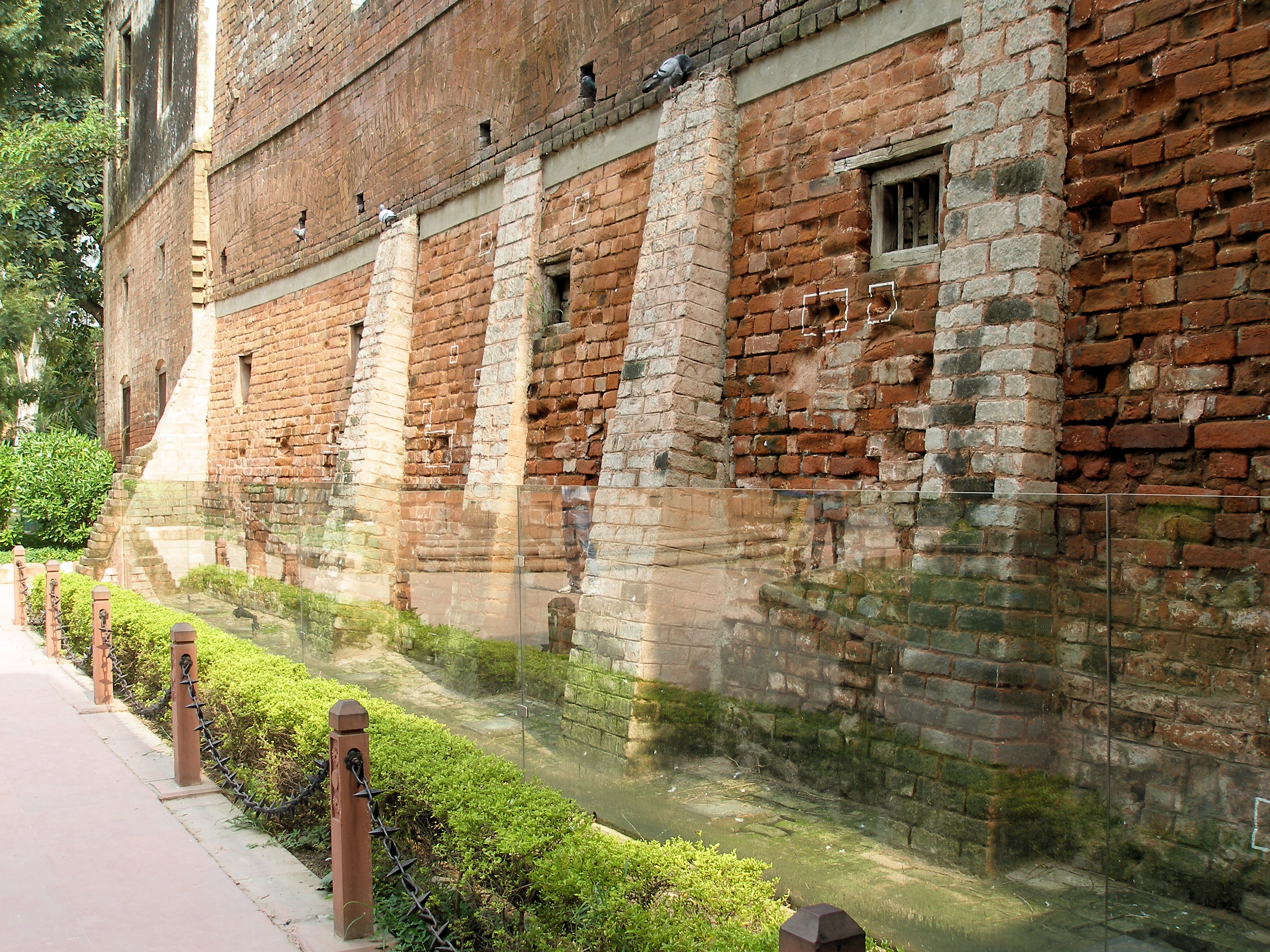
The garden is a memorial now. Bullet marks still pit the surrounding walls, preserved behind glass. The well into which desperate people leaped stands as a protected monument. An eternal flame burns at a memorial designed by American architect Benjamin Polk and inaugurated by President Rajendra Prasad on 13 April 1961. Britain has never formally apologized. David Cameron visited in 2013 and called the massacre "a deeply shameful event," but stopped short of the word "sorry." Theresa May, on the centenary in 2019, called it "a shameful scar." The gap between regret and apology, measured in carefully chosen words over more than a century, has itself become part of the story. The Bagh remains a place where history is not abstract. The walls are close, the exits few, and the silence, once you know what happened here, is heavy.
From the Air
Jallianwala Bagh is located in central Amritsar at 31.6206N, 74.8806E, adjacent to the Golden Temple (Harmandir Sahib), one of the most visually distinctive landmarks in the Punjab. The golden dome of the temple complex is clearly visible from altitude. Nearest major airport is Sri Guru Ram Dass Jee International Airport (VIAR), approximately 11 km northwest. Best viewed at 3,000-5,000 feet AGL. The walled garden itself is small and embedded within dense urban fabric, but the adjacent Golden Temple complex with its sacred pool provides an unmistakable reference point.