Jam Gadang
Four clock faces look out over the central square of Bukittinggi, each one ticking through the equatorial hours from a tower that has outlasted every government that tried to claim it. The Jam Gadang -- Minangkabau for "Big Clock" -- was built in 1926 as a gift from Queen Wilhelmina of the Netherlands to the city's colonial controleur. It cost 3,000 guilders, a considerable sum for a timepiece in the Sumatran highlands. Architects Yazid Abidin and Sutan Gigi Ameh designed the structure, and though the Dutch commissioned it, they did not get the last word on what it would look like. The tower's roof has been reshaped more than once, each transformation reflecting the power that held the city at the time.
Three Roofs, Three Eras
When the Dutch built the Jam Gadang, its crown was a round cupola -- European in style, a colonial punctuation mark planted in the center of Minangkabau country. During the Japanese occupation of World War II, when the 25th Army made Bukittinggi its Sumatran headquarters, the cupola was replaced with a tiered pagoda shape. After Indonesian independence, the tower received the roofline it carries today: the gonjong, the upward-sweeping horn curves of traditional Minangkabau architecture, echoing the shape of the Rumah Gadang, the great houses of the matrilineal Minangkabau people. Each roof tells a chapter of the same story -- a structure claimed and reclaimed, its silhouette rewritten to match the authority of whoever held the pen. The clock mechanism itself kept running through all three transformations, indifferent to politics.
The Center of Everything
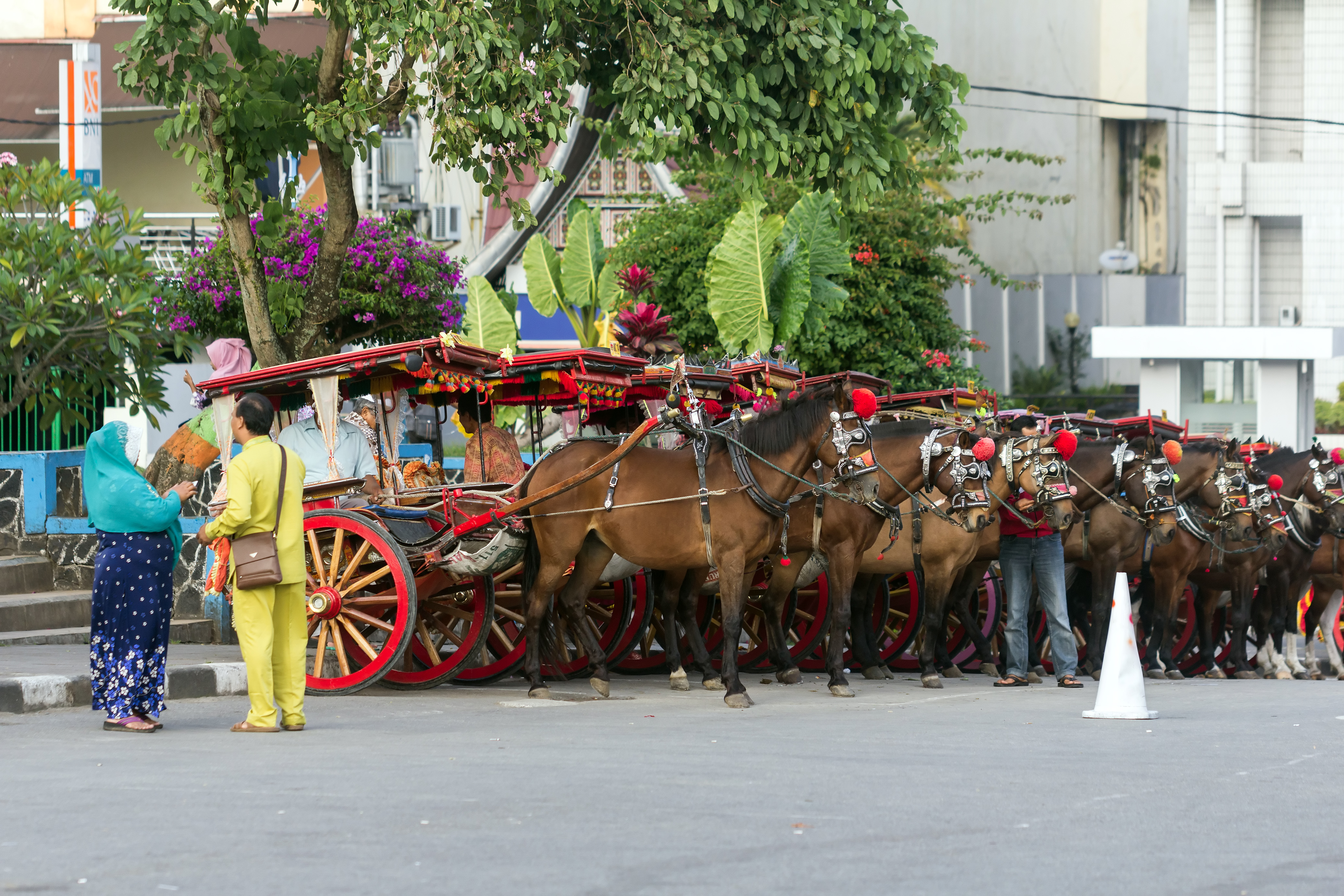
The Jam Gadang sits in Sabai Nan Aluih Park, at the junction of Bukittinggi's commercial and civic life. The Pasar Ateh market sprawls nearby, a dense trading ground for textiles, spices, and everyday goods that draws shoppers from across West Sumatra and from Malaysia. Mohammad Hatta's palace -- the birthplace of Indonesia's first vice president and co-proclaimer of independence -- stands within walking distance. The tower anchors the city the way a church steeple anchors a New England town: it is the thing you orient yourself by, the structure visible from streets that might otherwise tangle into confusion. Local residents offer photography services at the base, and the tradition of posing in front of the Jam Gadang has become as much a part of visiting Bukittinggi as riding the bendi horse carts or descending into Sianok Canyon.
A Living Square
Since 2016, the plaza surrounding the Jam Gadang has served as a stage for traditional Minang dances performed for visitors. The performances transform the square from a transit point into a gathering place, weaving the cultural traditions of the Minangkabau into the rhythm of daily tourism. New Year celebrations center on the tower as well, drawing crowds that fill the surrounding streets. Hotels cluster in the blocks nearby, and the bendi carriages wait along the avenues, their horses patient in the highland cool. The tower's image appears on nearly everything sold in the city -- printed on T-shirts, painted on canvases, sculpted into miniature souvenirs and refrigerator magnets. Visitors once could climb to the top of the tower, though written permission is now required. From below, the four clock faces remain legible from a distance, their hands sweeping through hours that the Minangkabau Highlands measure differently than the lowlands: at 930 meters, time here feels slower, cooled by altitude and stretched by the long view across volcanic ridgelines.
More Than a Clock
What makes the Jam Gadang endure is not its timekeeping but its capacity for reinvention. A colonial gift became a national symbol. A European form acquired a Minangkabau crown. The tower's function -- marking the hours in a city square -- is ordinary enough; clock towers stand in town centers across the world. But few have been physically reshaped by three successive political orders, each one literally removing the previous regime's roof and replacing it with their own architectural statement. The gonjong curves that top the Jam Gadang today are not merely decorative. They assert that this clock, this square, this city belongs to the Minangkabau people who lived here long before any controleur received gifts from any queen. The clock keeps ticking. The roof tells the story.
From the Air
Located at 0.305S, 100.370E in central Bukittinggi, West Sumatra, at approximately 930 meters elevation. The Jam Gadang clock tower is identifiable from low altitude by its distinctive horn-curved Minangkabau roofline and its position in the central square near the Pasar Ateh market. Mount Marapi (2,891m) provides a volcanic backdrop to the north. Nearest major airport: Minangkabau International Airport (WIPT) near Padang, approximately 90 km south. Best viewed at 1,500-3,000 feet AGL for architectural detail.