Jambi Sultanate
In 1636, Dutch sailors boarded a Chinese junk trading pepper off the coast of Sumatra. They seized 32 Chinese crew members and transferred them to a Dutch vessel. The remaining Chinese fought back, killed all 13 Dutch sailors aboard, and retook their ship. The pirate lord Zheng Zhilong demanded the prisoners' release. This was not an isolated skirmish. It was business as usual in the waters around Jambi, a Sumatran sultanate where pepper was currency, loyalty was negotiable, and the Dutch East India Company's dream of monopoly crashed repeatedly against the reality of a trade network it could not control.
Before the Sultans
Jambi's history as a trading center predates its sultanate by centuries. As early as the 7th century, a Malay kingdom based here operated as either an independent trading community or a vassal of the Srivijaya empire. By the 11th century, Jambi was sending diplomatic delegations to China. Between 1082 and 1095, the Jambi ruler dispatched at least five missions, sending cloth, camphor, and letters written in Chinese to Guangzhou. Song and Yuan dynasty porcelain unearthed at Muara Jambi, near the modern city, confirms that trade flowed both ways. For centuries, Jambi sat within the orbit of larger empires, first Srivijaya, then the Javanese Majapahit from the mid-14th century. It broke free in the early 16th century, and around 1615, Datuk Puduko Berhalo established Jambi as an independent sultanate.
Pepper, Gold, and Nine Rivers
The sultanate's wealth flowed from its rivers. The domains claimed by the Jambi sultan were known as "Jambi with its nine rivers" - the Batang Tembesi, Merangin, Asai, Tebir, Tebo, Bungo, Uleh, Jujuhan, and Siau. These waterways drained the highlands where pepper grew and gold was mined. Forest products like beeswax, resin, and timber added to the exports. Chinese junks arrived every year to buy pepper that came from the Minangkabau highlands, and Chinese merchants came to dominate Jambi's commerce. The title of Shahbandar, the harbor master who regulated foreign trade, was held by a Han Chinese in Jambi. This was no colonial imposition but a reflection of how deeply Chinese commercial networks had woven themselves into Sumatran life. Local Muslim women married Chinese traders, who converted to Islam. These intermarriages knit the communities together in ways that transcended ethnic boundaries.
The Dutch Obsession
The Dutch East India Company wanted what every European trading power wanted in the 17th century: a monopoly on pepper. Jambi refused to cooperate. The sultanate traded with anyone who showed up with goods and ships, which meant Chinese junks, Thai vessels, and occasionally English merchants. The Dutch responded with blockades, seizures, and threats. They attacked Chinese ships, impounded Thai junks, and attempted to force all pepper trade through their own port at Batavia. When the Jambi Sultanate sent pepper and flowers as tribute to Thailand, the Dutch were furious, sparking tensions with the Thai kingdom in 1663-1664 and again in 1680-1685. Chinese merchants continued to violate Dutch trade bans with impunity. Han Chinese interpreters even advised the Jambi sultan to wage war against the Dutch. The Company's frustration was real: Jambi sat at the center of a trade web that connected Sumatra to China, Thailand, Cambodia, and Brunei, and no amount of naval force could sever all those threads at once.
Division and Conquest
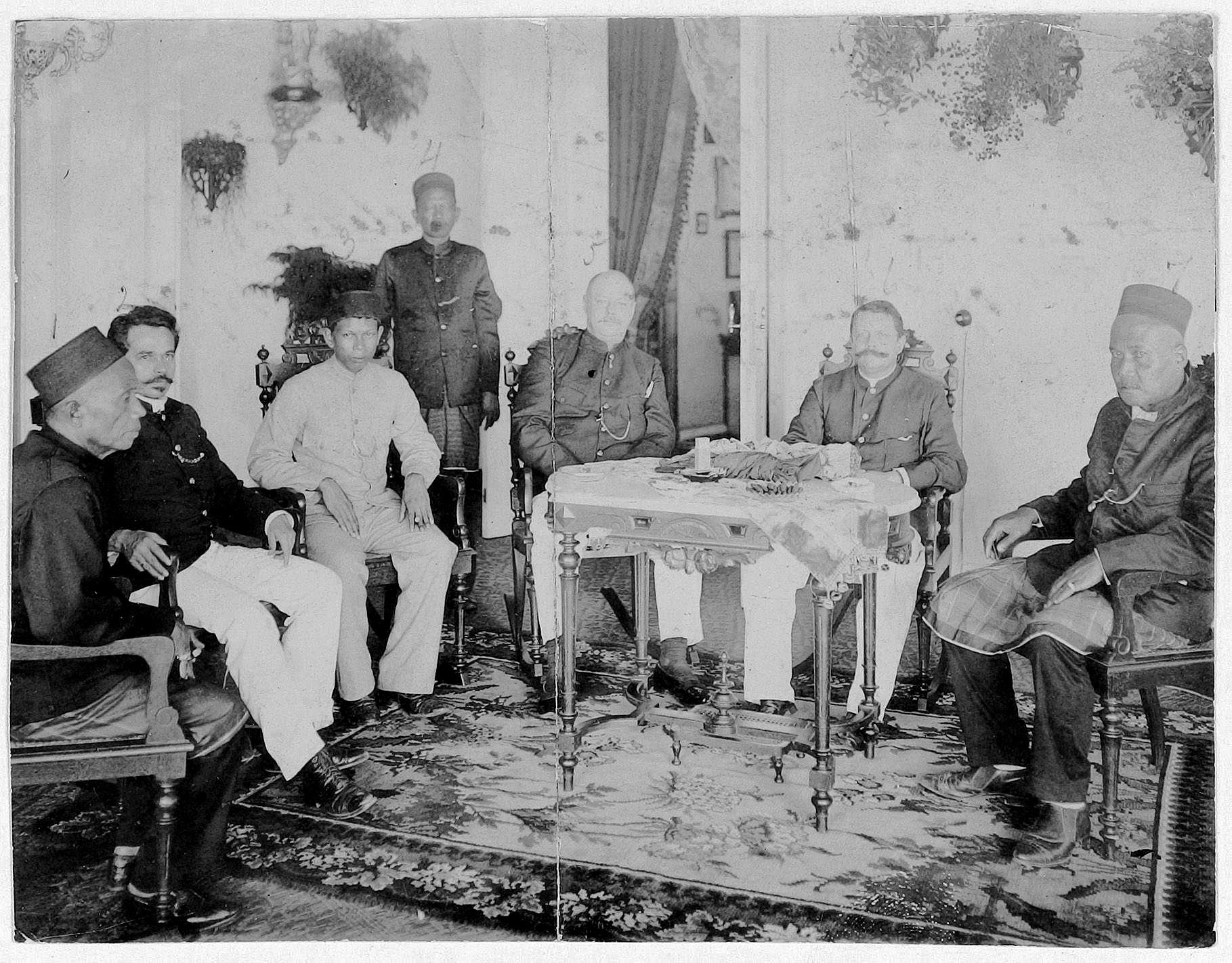
Internal conflict weakened what external pressure could not destroy. The Johor-Jambi wars of the mid-to-late 17th century drained the sultanate's resources and began a long decline. By 1852, Jambi's entire population was estimated at just 60,000, thinly spread across a vast territory. The Dutch grew more aggressive in the 19th century, inserting themselves into the sultanate's internal politics. In 1858, a Dutch expedition deposed Sultan Taha in a single day. He fled upstream into the highlands of Upper Jambi while his uncle, Ahmad Nazaruddin, was installed as ruler of Lower Jambi. The sultanate split in two, restoring a highland-lowland divide that had not existed for over a century. Sultan Taha never stopped resisting. He held out in the interior for decades, a ghost sultan ruling a shrinking domain. The Dutch finally killed him in 1904, ending nearly three centuries of Jambi sovereignty. On March 26 of that year, the crown prince surrendered the sultanate's insignia to a Dutch official. The pepper kingdom of nine rivers was finished.
A Crossroads Written in Coins
The Jambi court absorbed influences from every direction. Javanese culture shaped the court's rituals, partly out of a desire to ally with the powerful Mataram Sultanate to the south. Jambian coins were inscribed in Javanese script, an unusual choice for a Malay state whose neighbors all used Jawi. Chinese, Arab, and Makassarese traders married into Jambi families, and the sultanate sold gunpowder to Muhyiddin during the Brunei Civil War, helping him seize the Bruneian throne. What remains today is the modern province of Jambi, the archaeological site at Muara Jambi, and a story that upends simple narratives about European colonial dominance. For most of its history, Jambi navigated a world where the Dutch were just one player among many, and not always the most important one.
From the Air
The historical center of the Jambi Sultanate is located at approximately 1.59S, 103.61E, along the Batang Hari River in eastern Sumatra. The modern city of Jambi sits on both banks of the river. Sultan Thaha Airport (WIPA) serves the city. The river system that defined the sultanate's territory is visible from altitude, with nine major tributaries draining the highlands to the west. The archaeological site at Muara Jambi lies 26 km east of the city along the river.