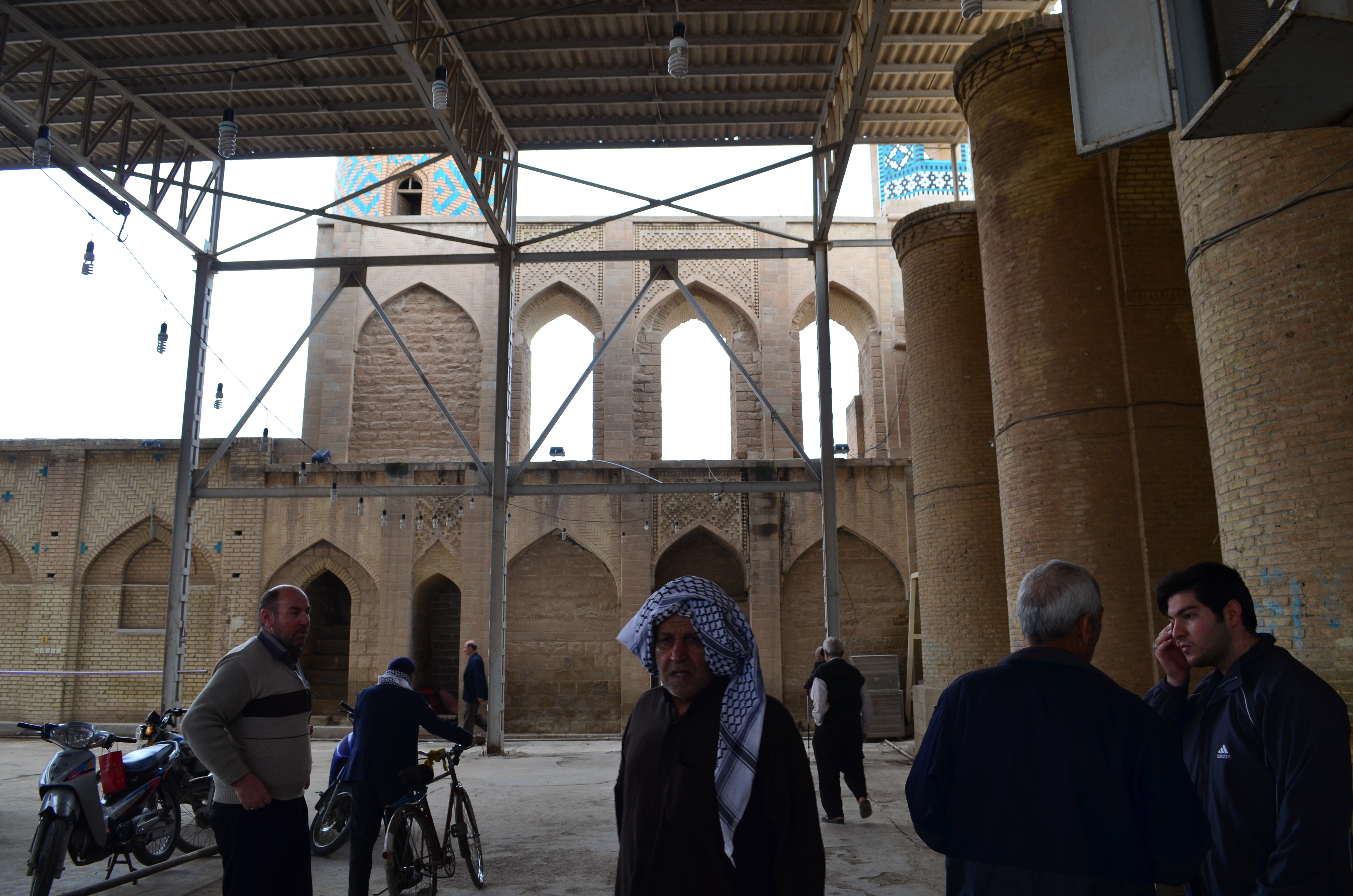
Jameh Mosque of Shushtar
Forty-eight stone pillars hold up the darkness. Step inside the shabestan of the Jameh Mosque of Shushtar and the fierce Khuzestan sun vanishes, replaced by cool shadow and the geometry of arches repeating into depth. This prayer hall was old when the Safavid shahs arrived to renovate it. It was old when the Mongols swept through Iran. Built during the Abbasid Caliphate in the 9th century CE, the mosque has absorbed the architectural ambitions of every dynasty that claimed this corner of southwestern Iran, and it has outlasted them all.
A City Shaped by Water
Shushtar exists because of water. The Karun River, Iran's only navigable waterway, splits and braids around the city, creating a natural island that ancient engineers transformed into one of the most sophisticated hydraulic systems in the pre-industrial world. Dams, canals, and water mills attributed to periods from the Achaemenid king Darius I through the Sasanian era channeled the river into agricultural irrigation and mechanical power. UNESCO inscribed the Shushtar Historical Hydraulic System as a World Heritage Site in 2009, calling it a masterpiece of creative genius. The Jameh Mosque sits within this engineered landscape, a spiritual anchor in a city defined by the practical mastery of its element. Where the hydraulic system controlled the river's body, the mosque tended to the city's soul.
Abbasid Bones, Safavid Skin
The mosque's core dates to the 5th century of the Islamic calendar, roughly the 9th century CE, when the Abbasid Caliphate governed from Baghdad and Khuzestan was a prosperous province at the empire's heart. The plan follows the typical congregational mosque layout: a square courtyard surrounded by barrel-vaulted arcades supported by slightly pointed brick arches on squat circular pillars. These pillars echo pre-Islamic Sasanian construction traditions, a quiet reminder that Islamic architecture in Iran did not erase what came before but built upon it. Centuries later, the Safavid dynasty undertook significant renovations. Plasterwork in the Safavid style now decorates the adytum on the southern side of the shabestan. Royal decrees appear as inscriptions and plaster engravings on the surrounding walls. The transition between the two eras is visible in the materials themselves -- rough Abbasid brick giving way to refined Safavid ornament.
Words in Stone and Brick
The external doorway to the adytum is the mosque's most decorated surface. Arches frame the entrance, and decorative brickwork -- colored patterns laid into the wall face -- surrounds two stone inscriptions bearing verses from the Quran. Stone was the prestige material. Brick was the everyday one. Using both together signaled importance. On the eastern side of the mosque stands the remnant of a minaret dating from the 8th century of the Islamic calendar, roughly the 14th century CE. Originally twenty-six meters tall, it is intricately worked with sacred calligraphy: the names Allah, Mohammad, and Ali are inscribed into the tower's surface, their letters woven into the geometric brickwork so that decoration and devotion become the same act. A second minaret of similar height once stood nearby; together they marked the mosque's presence against the flat Khuzestan skyline from considerable distance, though only one survives today.
The Weight of Registration
On March 3, 1937, the Jameh Mosque of Shushtar was added to the Iran National Heritage List, administered by the Cultural Heritage, Handicrafts and Tourism Organization of Iran. That date matters. Iran in 1937 was in the midst of Reza Shah's modernization campaign, a period when many traditional structures were demolished in the name of progress. Registration meant protection. The mosque survived not because it was forgotten but because someone decided it was worth preserving at a moment when preservation was unfashionable. Today the mosque remains an active place of worship. Friday prayers still gather in the shabestan where those forty-eight pillars divide the space into a forest of stone and shadow. The plasterwork needs conservation. The minarets show their age. But the mosque continues to do what it has done for over a thousand years: provide a cool, quiet space for prayer in one of the hottest cities in Iran.
From the Air
The Jameh Mosque of Shushtar is located at 32.042°N, 48.847°E in the heart of Shushtar, Khuzestan province, Iran. The city sits on an island formed by the Karun River and its canals, visible from altitude as a dense urban area surrounded by water channels in an otherwise flat alluvial plain. The UNESCO-listed hydraulic structures including dams and water mills are visible to the south of the city. Nearest airport is Ahvaz International Airport (OIAW), approximately 90 km to the southwest. Best viewed at 5,000-10,000 feet to appreciate the river system that defines the city's layout. The flat Khuzestan terrain makes the city's island position particularly clear from above.