Jamestown
On May 14, 1607, 104 English colonists established a settlement on a marshy peninsula in the James River, naming it Jamestown for their king. They had come seeking gold and a passage to Asia. They found instead brackish water, malarial mosquitoes, and the determined resistance of the Powhatan Confederacy. Within months, disease and starvation had killed more than half. The survivors cannibalized the dead during the 'Starving Time' of 1609-1610. Yet Jamestown endured - the first permanent English settlement in North America, predating Plymouth by thirteen years. Here John Smith imposed military discipline and negotiated with the Powhatans. Here Pocahontas married John Rolfe, briefly bridging two worlds. Here Rolfe's tobacco experiments created the cash crop that would make Virginia wealthy and, eventually, make slavery essential to the colonial economy. The first enslaved Africans arrived in 1619, the same year the first representative assembly in America convened. Jamestown planted the seeds of both democracy and slavery - the contradictions that would define American history.
Desperate Beginnings
The Virginia Company of London organized the expedition as a commercial venture, hoping to find gold, silver, or a route to the Pacific. The colonists who arrived were poorly suited to survival in the wilderness - too many gentlemen unwilling to work, not enough farmers or craftsmen. They chose their site for defense, not health: the peninsula was easily fortified but surrounded by swamp. The water was contaminated. Mosquitoes bred prolifically. The colonists quickly antagonized the Powhatan Confederacy, whose paramount chief, Wahunsenacah, controlled the region's resources. By September 1607, half the colonists were dead. Captain John Smith took charge, imposing the rule that those who did not work would not eat. He negotiated - at sword-point when necessary - with the Powhatans for corn. His leadership kept the colony alive, but just barely. When Smith returned to England in 1609, injured by a gunpowder explosion, the colony collapsed.
The Starving Time
The winter of 1609-1610 nearly ended English colonization of America. The Powhatans, tired of English demands and aggression, cut off trade and laid siege. Of approximately 500 colonists present that fall, only sixty survived the winter. They ate horses, dogs, rats, shoe leather, and - archaeological evidence confirms - human flesh. At least one woman was executed for killing and eating her husband. When supply ships finally arrived in May 1610, the survivors abandoned Jamestown, sailing down the James River toward home. They might have left forever, but at the river's mouth they met new ships carrying supplies and settlers under Lord De La Warr. The colony was saved - or rather, condemned to try again. De La Warr imposed martial law. The Anglo-Powhatan Wars intensified. The colony survived not by finding gold but by finding tobacco.
Tobacco and Slavery
John Rolfe's experiments with Caribbean tobacco seeds transformed Virginia. By 1617, the colony was exporting the addictive leaf to England in profitable quantities. Suddenly Virginia had an economic future - one that demanded vast amounts of land and labor. Colonists spread along the James River, seizing Powhatan territory. Indentured servants poured in from England, working in exchange for passage and eventual freedom. But in 1619, a Dutch ship arrived carrying 'twenty and odd' Africans, probably captured from a Portuguese slave ship. These first Africans may initially have been treated as indentured servants, but by the 1660s, Virginia's laws had transformed African servitude into permanent, hereditary slavery. Tobacco had created the economic demand; racism provided the justification; law encoded the system that would persist for centuries. Jamestown had established both the democratic ideal - the House of Burgesses also met for the first time in 1619 - and its dark shadow.
Decline and Discovery
Jamestown remained Virginia's capital until 1699, when the government moved to Williamsburg after a fire. The original settlement gradually disappeared, reclaimed by the river and the forest. For centuries, historians assumed the original fort had eroded into the James. Then in 1994, archaeologist William Kelso began excavating and found the fort's footprint intact. Subsequent discoveries have revolutionized understanding of early Jamestown: the colonists' diet, their relationships with the Powhatans, the archaeological evidence of cannibalism during the Starving Time, the identities of specific individuals buried in unmarked graves. A skeleton identified as the colony's first Anglican minister was found in 2015. The excavations continue, each season revealing more about the desperate, brutal, transformative years when English colonization took root in North America.
Visiting Jamestown
Two sites interpret Jamestown history. Historic Jamestowne, operated by the National Park Service and Preservation Virginia, contains the actual archaeological site where Kelso's team continues excavating. Visitors can see the church tower (the only standing seventeenth-century structure), the reconstructed statehouse, and the ongoing excavations. The Archaearium museum displays artifacts and forensic reconstructions of colonists and Powhatans. Adjacent Jamestown Settlement, operated by the Commonwealth of Virginia, offers full-scale recreations: a Powhatan village, the colonists' fort, and replicas of the three ships that brought the original settlers. Costumed interpreters demonstrate daily life in both cultures. The two sites complement each other - one offering authentic archaeology, the other immersive recreation. Together they take half a day to a full day. Jamestown lies within the Colonial National Historical Parkway connecting it to Yorktown and Williamsburg. Richmond International Airport (RIC) is 50 miles northwest; Norfolk International (ORF) is 40 miles southeast.
From the Air
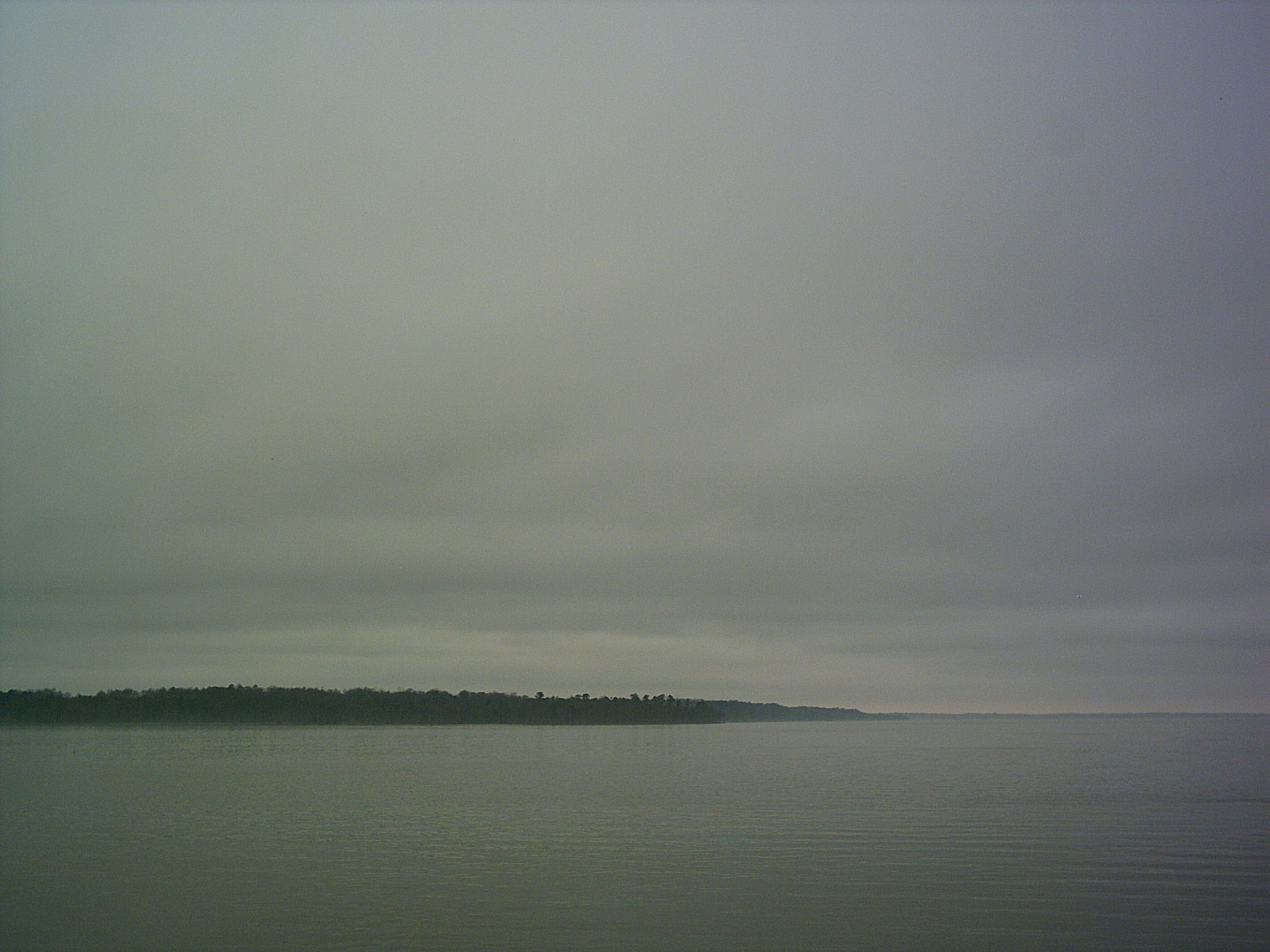
Located at 37.21°N, 76.78°W on the James River in southeastern Virginia. From altitude, Jamestown Island appears as a peninsula jutting into the wide James River. The Colonial Parkway links it to Williamsburg and Yorktown. The Chesapeake Bay lies to the east. The Hampton Roads area with its military installations spreads to the southeast.