Hollywood's Favorite Gold Rush Town
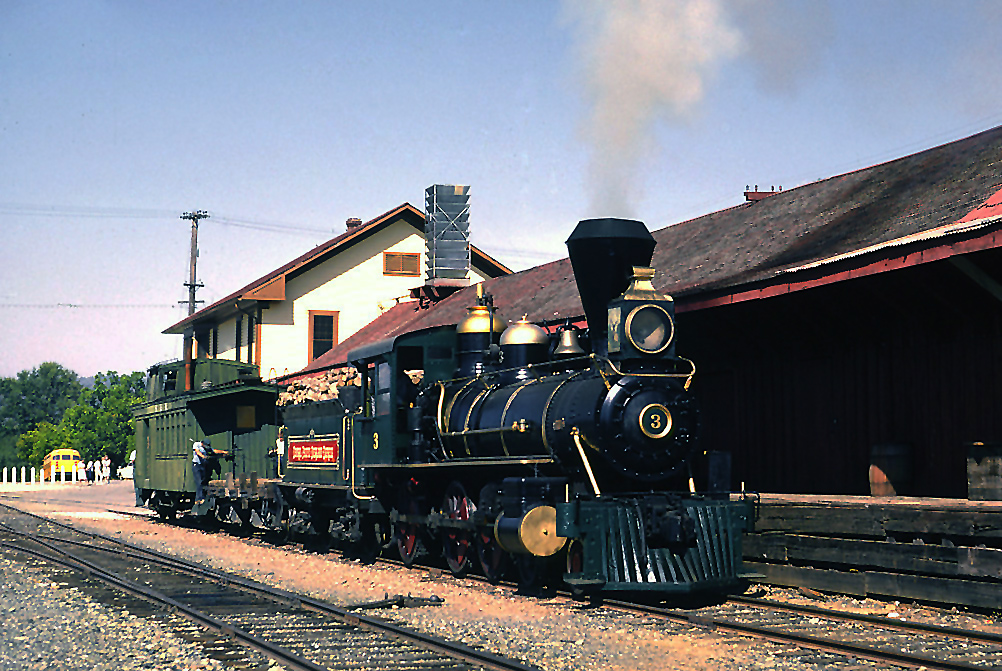
Somewhere in Tuolumne County, a steam locomotive built in 1891 has appeared in more films, television shows, and commercials than most human actors. Sierra No. 3, a 4-6-0 "Ten-Wheeler" built by the Rogers Locomotive Works of Paterson, New Jersey, has been starring in Hollywood productions for over a century. Its home is Jamestown, California, a Gold Rush settlement that found its second fortune not in quartz veins but in looking the part. When Robert Zemeckis needed a nineteenth-century railroad for Back to the Future Part III, when Clint Eastwood rode into a mining town in Pale Rider, when the Hooterville Cannonball chugged through the opening credits of Petticoat Junction, they all came here.
Gateway to the Mother Lode
Jamestown was founded in 1848, the year the Gold Rush began, making it one of the earliest settlements in Tuolumne County. It was the first place where gold was discovered in the county, earning it a reputation as the gateway to the Mother Lode, that immense belt of gold-bearing quartz stretching through the western Sierra Nevada foothills. Miners flooded in, and the town grew rapidly around the diggings. The initial frenzy of placer mining gave way to hard-rock operations as surface deposits thinned. Nearby, the Jamestown Mine would eventually become one of the most significant gold producers in the county. The town survived the boom-and-bust cycles that killed off dozens of neighboring settlements, anchored by its location along the main routes into the southern mines and its stubborn refusal to become a ghost town.
The Railroad That Stayed
In 1897, the Sierra Railway Company of California laid tracks through Jamestown, connecting the mining and timber regions of Tuolumne County to the Central Valley town of Oakdale. The railroad transformed Jamestown from a fading mining camp into a transportation hub. Ore, lumber, and passengers moved through the town's depot. The roundhouse and maintenance shops became the economic heart of the community. When mining declined, the railroad facilities remained, preserved not by nostalgia but by continued use. Today, the complex operates as Railtown 1897 State Historic Park, where nineteenth-century buildings, turntable, roundhouse, and rolling stock have been in continuous operation for more than a century. Visitors can ride behind working steam locomotives on the same tracks that once hauled Sierra gold and timber to market.
The Movie Star Locomotive
Sierra No. 3 arrived in Jamestown in 1897, purchased by the Sierra Railway from the Prescott and Arizona Central Railway. It spent its working years hauling freight and passengers, an unremarkable career for a steam engine. Then Hollywood discovered the Mother Lode. The combination of authentic rolling stock, a working railroad, and scenery that looked like every American's mental image of the Old West made Railtown irresistible to film crews. Sierra No. 3 has since appeared in more than 200 productions. It pulled the train that Doc Brown and Marty McFly hijacked in Back to the Future Part III. It steamed through episodes of The Wild Wild West and Green Acres. Scenes from Little House on the Prairie and the 2004 film Hidalgo were shot in and around Jamestown. The locomotive's fame eventually earned it a nomination for the National Register of Historic Places, a distinction few machines can claim.
Miwok Country
Long before prospectors arrived, this land belonged to the Central Sierra Miwok people. Their presence here stretches back thousands of years, through the oak woodlands and river valleys of the western Sierra foothills. The Gold Rush displaced Indigenous communities across the Mother Lode, but the Miwok maintained their connection to Tuolumne County. Today, Jamestown is the headquarters of the Chicken Ranch Rancheria of Me-Wuk Indians of California, a federally recognized tribe. The Rancheria occupies a small parcel of land in the county, but the tribe's influence extends further. Their casino and resort, which first opened as a bingo hall in 1985, has become one of the region's major employers. In a place defined by successive waves of fortune-seeking, from gold miners to railroad builders to film crews, the Miwok remain the thread that connects the land to its deepest history.
A Town That Knows Its Angles
Jamestown today has a population of about 3,500 people, a quiet census-designated place where the median age skews older and the pace runs slow. Main Street retains its Gold Rush-era facades, the kind of streetscape that looks almost too perfect, which is precisely why cameras keep coming back. The town sits at the intersection of its multiple identities: living Gold Rush landmark, railroad museum, Hollywood backlot, and tribal headquarters. Huell Howser featured it on his Road Trip series. Travel writers call it a hidden village. Residents simply call it home. For a settlement that has been continuously reinventing its reason to exist since 1848, Jamestown has proven remarkably durable, surviving the end of gold, the end of steam, and the end of the Western genre by simply being too photogenic to forget.
From the Air
Jamestown sits at approximately 37.955N, 120.405W in the Sierra Nevada foothills of Tuolumne County. From the air, the Railtown 1897 complex with its roundhouse and turntable is visible on the east side of town. Main Street runs roughly north-south with characteristic Gold Rush-era building patterns. Don Pedro Reservoir is visible to the south. Nearest airports: Columbia Airport (O22) approximately 8 nm northeast, Oakdale Municipal Airport (O27) approximately 28 nm west. Best viewed at 2,000-3,000 feet AGL. The town lies along the CA-49/108 corridor, the scenic Gold Country highway.