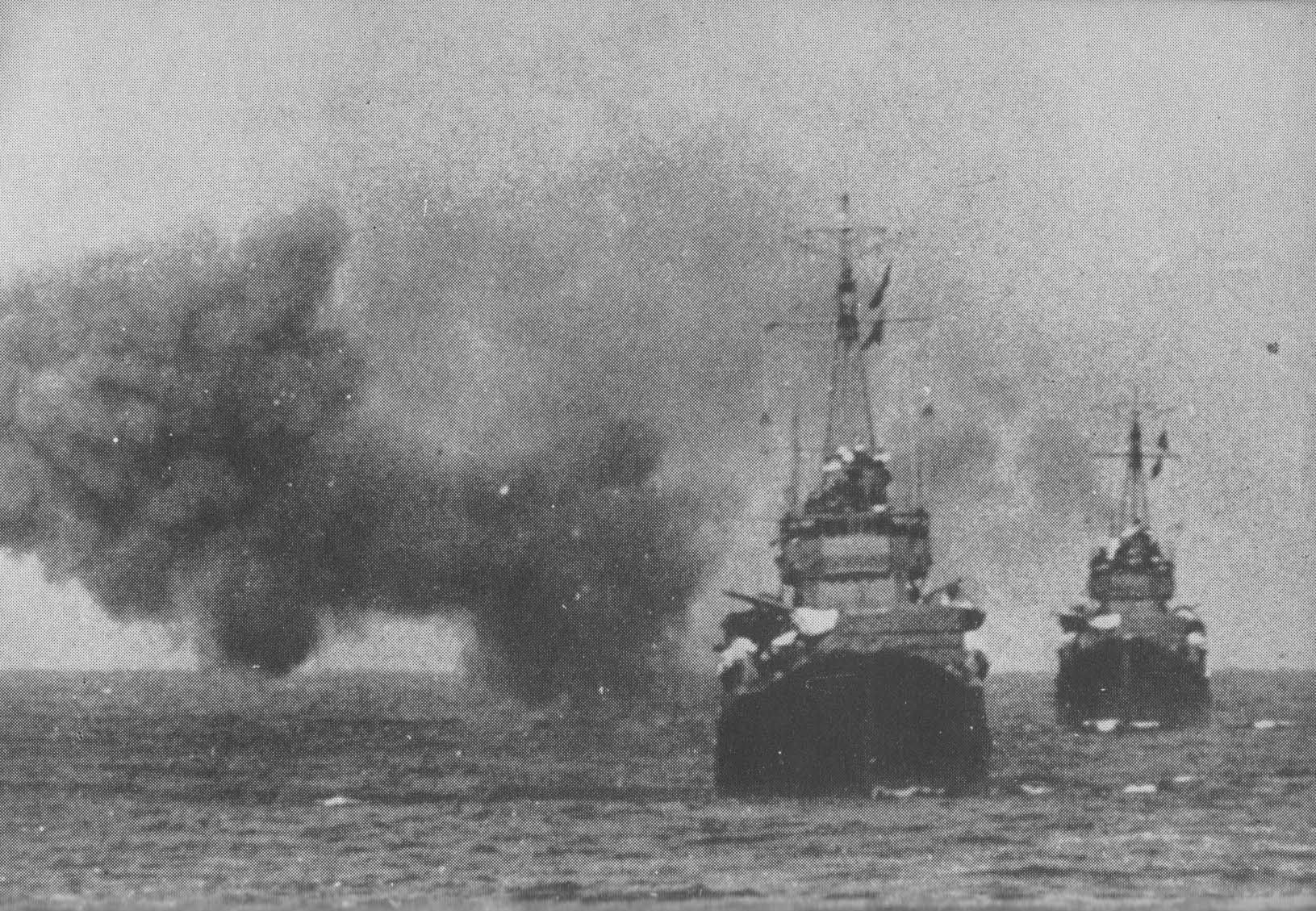
Japanese destroyer Shigure (1935)
Her name meant "autumn rain" -- a gentle word for a ship that sailed through the worst the Pacific War could deliver. The Japanese destroyer Shigure survived battles that annihilated the ships around her, emerged from engagements that should have killed her crew, and earned a reputation in the Imperial Japanese Navy as either blessed or cursed, depending on who was telling the story. By the time a torpedo finally found her in the Gulf of Siam on January 24, 1945, Shigure had outlasted nearly every destroyer in the Japanese fleet. Her wreck lies in these waters roughly 160 miles east of Kota Bharu, a monument to the thin line between luck and fate.
Built for a War That Hadn't Started
Shigure was laid down at the Uraga Dock Company on December 9, 1933, launched on May 18, 1935, and commissioned on September 7, 1936 -- the second of ten Shiratsuyu-class destroyers. The class was designed with a specific purpose: accompany the Japanese main striking force and conduct day and night torpedo attacks against the United States Navy as it advanced across the Pacific. It was a war that existed only in strategic projections when Shigure slid into the water. Her first duties were almost ceremonial -- serving as escort for the battleship Hiei, Emperor Hirohito's favored vessel, on voyages and fleet reviews off Kobe. She was a peacetime ship learning peacetime routines. Then the Second Sino-Japanese War broke out in July 1937, and Shigure saw her first combat at the Battle of Shanghai, conducting shore bombardment under fire from Chinese batteries. The prelude was over.
The Luck of Shigure
What set Shigure apart from her sister ships was not superior design or exceptional armament. It was survival. During the Solomon Islands campaign of 1943, she fought in engagement after engagement -- the Battle of Kula Gulf, the Battle off Horaniu, actions around Vella Lavella and Kolombangara -- repeatedly emerging undamaged while the ships beside her burned and sank. At the Battle of Empress Augusta Bay on November 2, 1943, she engaged an American cruiser-destroyer formation and came through unscathed. Her crew began to believe in their ship's charmed existence. Captain Tameichi Hara, who commanded Destroyer Division 27 with Shigure as his flagship, would later write the only memoir by a Japanese destroyer captain to survive the entire Pacific War. In it, Shigure occupies a central place -- not as a machine of war, but as something closer to a living thing with a will to endure.
Surigao Strait and the Southern Force
Shigure's most remarkable survival came at the Battle of Leyte Gulf in October 1944 -- the largest naval battle in history. On October 24, a bomb struck her forward gun turret, killing five crewmen and wounding six. The next day brought the Battle of Surigao Strait, where the Japanese "Southern Force" sailed into an American ambush. A direct shell hit and several near misses knocked out Shigure's radio, compass, and steering. Around her, the battleships Yamashiro and Fuso were sinking. The heavy cruiser Mogami was burning. Every other ship in the Southern Force was destroyed or crippled. Shigure, steering by manual control, limped back to Brunei on October 27 -- the only vessel of the force to survive. None of the ten Shiratsuyu-class destroyers would outlast the war, but Shigure came closer than any of them.
The Last Convoy
In December 1944, Shigure escorted the aircraft carrier Unryu toward Manila. When a submarine sank Unryu, Shigure rescued 146 survivors and turned back for Sasebo rather than pressing on. The other escorts continued the mission; both were sunk with all hands within hours of each other. Shigure's decision to turn back -- or her captain's decision, more precisely -- saved the ship one final time. But luck is a finite resource. On January 24, 1945, while escorting a convoy from Hong Kong to Singapore, a submarine's torpedo struck Shigure in the Gulf of Siam. She sank slowly enough for 270 of her crew to escape. Thirty-seven men went down with the ship. She was struck from the navy list on March 10, 1945. The unsinkable ship had finally sunk, but she had outlived nearly everything the Imperial Japanese Navy had put to sea.
From the Air
The wreck site lies at approximately 6.00N, 103.80E in the Gulf of Thailand (historically the Gulf of Siam), roughly 160 miles east of Kota Bharu, Malaysia. No surface features mark the location -- this is open water with depths around 50-70 meters. Nearest airports include WMKC (Sultan Ismail Petra Airport, Kota Bharu) to the west and VTSK (Pattani Airport) to the northwest. The waters here are busy with commercial shipping traffic between Singapore and the South China Sea.