The Japanese Folk Crafts Museum: Where Ordinary Objects Became Art
The word he invented changed how Japan saw itself. In 1925, philosopher Yanagi Soetsu sat with potters Shoji Hamada and Kanjiro Kawai and coined the term mingei -- literally "arts of the people" -- to describe the handmade objects of daily life: rice bowls glazed by unnamed potters, indigo-dyed cotton woven by farm women, lacquerware shaped for a family table rather than a museum case. A decade later, Yanagi built a museum to house them. The Japan Folk Crafts Museum, or Mingeikan, opened in September 1936 in the residential neighborhood of Komaba in Tokyo's Meguro ward, and it remains there today -- a calm, wood-floored space where 17,000 objects make the case that beauty lives not in the singular genius of a famous artist but in the honest repetition of a skilled hand.
The Philosophy That Built a Museum
Yanagi Soetsu was not a potter or a weaver. He was a philosopher, an aesthetician who looked at the utilitarian objects filling Japanese homes and Korean markets and saw something the art world had overlooked: unconscious beauty. His theory held that objects made in quantity by anonymous craftspeople -- without ego, without the self-conscious striving of the individual artist -- achieved a purity that deliberate art could not match. He and Hamada announced their desire to establish a folk crafts museum as early as 1926, but a decade passed before the building was ready. Construction began in 1935, and the museum opened in 1936 with Yanagi as its first director. Hamada Shoji, who would later be designated a Living National Treasure for his pottery, succeeded him.
A Building That Practices What It Preaches
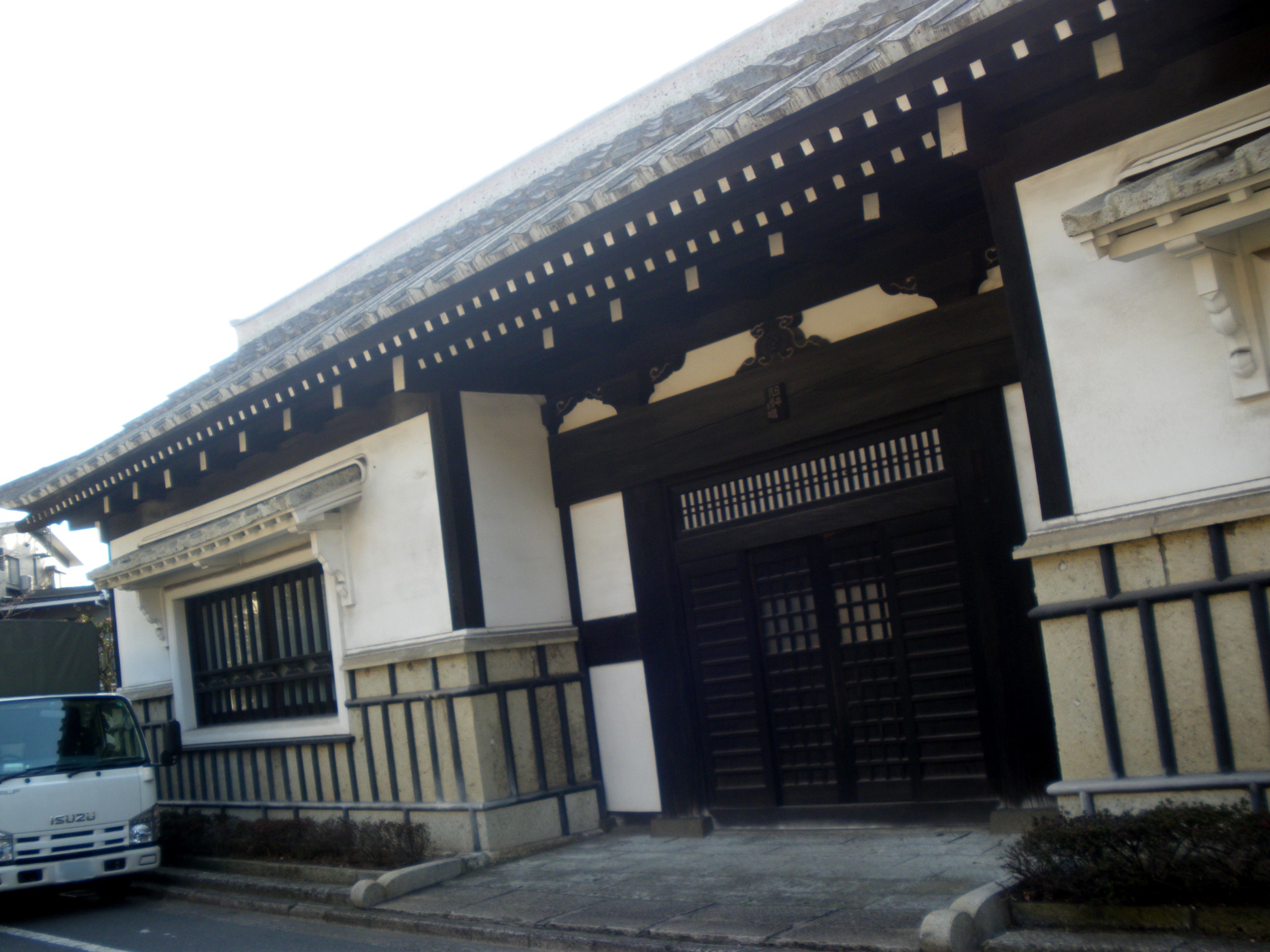
The museum itself embodies mingei principles. Covering 1,818 square meters, it was constructed in traditional Japanese architectural style -- a deliberate choice by Yanagi, who believed the container should honor its contents. A nagaya-mon, a long stone-roofed gate that once served as both entrance and residence, was transported from Tochigi Prefecture and reassembled in front of the main building. Across the street stands the Western Building, Yanagi's own Meiji-era residence, now restored and open to the public four times a month. The original main hall was eventually dismantled and reconstructed at Toyota City's folk art museum, but the Komaba site retains its atmosphere of quiet domesticity -- the kind of space where a painted Karatsu jar with a reed pattern, registered as an Important Cultural Property of Japan in 2003, sits in a display case with the same dignity it might have held on a kitchen shelf.
What the Shelves Hold
The collection spans the full range of Japanese and East Asian craft traditions: ceramics from every kiln region, textiles dyed and woven using techniques passed through generations, lacquerware, woodwork, bamboo baskets, metalwork, and stonework. The painted Karatsu jar is the museum's most celebrated single object, considered a representative example of Karatsu pottery -- a tradition from Saga Prefecture known for its warm, earthy glazes and bold brushwork. But the power of the Mingeikan lies not in individual treasures. It lies in accumulation: shelf after shelf of objects that were made to be used, not admired. A rice bowl. A sake cup. A farmer's jacket. Each one anonymous, each one carrying the quiet confidence of a hand that has repeated the same motion thousands of times.
A Living Tradition in a Changing City
Tokyo has reinvented itself many times since 1936, but the Mingeikan endures in its residential corner of Komaba, a short walk from Komaba-Todaimae Station on the Keio Inokashira Line. In 2001, each building was reinforced and renovated with support from the Nippon Foundation and Japan's business community, ensuring the structures could carry their collection into a new century. The museum continues to publish catalogs and mount special exhibitions that introduce mingei to audiences who may never have held a hand-thrown bowl or worn hand-dyed cloth. Yanagi died in 1961, but his idea proved more durable than any single object in his collection: that the most beautiful things in a culture are often the ones nobody thought to sign.
From the Air
Located at 35.661N, 139.679E in the Komaba neighborhood of Meguro ward, western Tokyo. The museum is a low-profile traditional structure in a residential area, difficult to spot individually from altitude. The large green campus of the University of Tokyo's Komaba campus directly adjacent serves as a useful visual landmark. Tokyo Haneda International Airport (RJTT) lies approximately 8 nautical miles to the south-southeast. Best oriented by locating the Keio Inokashira rail line running through the area.