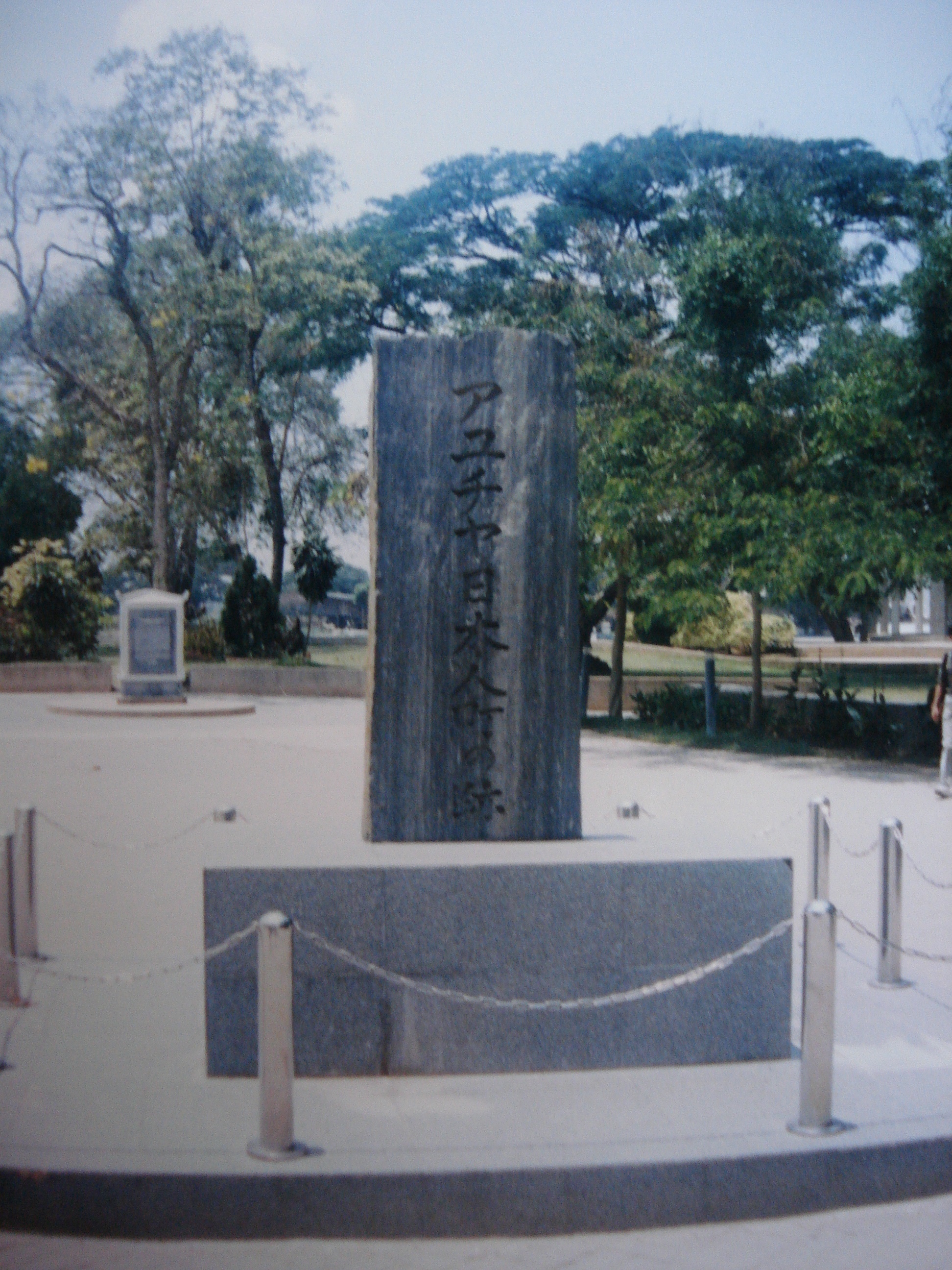
Japanese Village (Ayutthaya)
After the Battle of Sekigahara in 1600, the losing side had nowhere to go. Thousands of ronin -- samurai who had backed the wrong faction in Japan's defining civil war -- found themselves without lords, without livelihoods, and increasingly without a country willing to keep them. Some drifted into piracy. Others became merchants. And a remarkable number boarded ships bound for Southeast Asia, where a kingdom on the Chao Phraya River was hiring. The Ayutthaya Kingdom needed soldiers. Japan had a surplus. On the eastern bank of the river, just outside the capital walls, a settlement took shape that would become one of the most extraordinary ethnic enclaves in Asian history.
Swords for Sale in a River Kingdom
The Japanese began arriving in significant numbers after Ming China banned Sino-Japanese trade, cutting off legitimate commerce and pushing adventurers further south. Ayutthaya, locked in a grinding military struggle with the Burmese Toungoo Empire, needed experienced fighters. Portuguese gun corps had been the mercenary force of choice, but the arrangement had an awkward problem: the Toungoo had hired Portuguese mercenaries too, and Portuguese soldiers were reluctant to fire on their own countrymen. Japanese ronin had no such conflicts of loyalty. They were available, they were skilled, and they were desperate enough to fight anyone for the right price. Between 200 and 800 Japanese mercenaries eventually served the Ayutthayan court, and their military value translated into political power. Under the kingdom's Three Seals Law, Japanese mercenaries occupied the Phraya rank -- the third-highest tier in the entire Siamese feudal system.
Ban Yipun: A World in Miniature
The settlement they built was called Ban Yipun -- literally 'Japanese Village.' It sat on the east bank of the Chao Phraya, facing the Portuguese enclave across the water and abutting British and Dutch trading posts. Estimates of its population range widely: Thai sources suggest 1,000 to 1,500 Japanese residents, while the Japanese chronicle Shamu-koku fudo gunki claims as many as 8,000 during the Kan'ei period of 1624 to 1644. The community was not homogeneous. Alongside the mercenaries lived traders seeking fortune in the spice routes, Japanese Christians fleeing persecution under the Tokugawa shogunate, and -- a fact that complicates any romanticized picture -- enslaved Thai and Chinese people who served Japanese households. Ban Yipun was a place of opportunity and exploitation existing side by side, a microcosm of the broader forces reshaping seventeenth-century Asia.
The Rise and Murder of Yamada Nagamasa
The most famous resident of Ban Yipun was Yamada Nagamasa, a former palanquin bearer from Suruga Province who rose to become the settlement's leader and one of the most powerful foreigners in Siam. His downfall came in 1629, when King Prasat Thong seized the throne. Nagamasa had opposed the new king's coronation, making himself a political liability. Rather than confront the Japanese leader directly, Prasat Thong appointed him governor of the distant southern province of Nakhon Si Thammarat -- effectively an exile. It was also a death sentence. In 1630, Nagamasa was assassinated. With their leader dead, Ban Yipun met a swift and violent end: Siamese soldiers and forces under Sheikh Ahmad burned the settlement and killed many of its Japanese inhabitants under the pretext of suppressing a rebellion. Survivors fled into the Khmer Empire or melted into the Thai population over subsequent generations.
Ghosts and a Memorial Park
Nothing remains of the original Japanese buildings. Tropical growth, the passage of four centuries, and the deliberate destruction of 1630 erased every physical trace. In their place stands a memorial park with a small museum and a monument. The museum displays a modest collection: books sent from Japan during the Edo period, ceramic fragments, and interpretive panels tracing the settlement's history. A Japanese-speaking guide is available for tour groups, a quiet acknowledgment that the connection between these two cultures endures. The site sits within the broader Ayutthaya Historical Park, surrounded by temple ruins that tell a similar story of grandeur followed by destruction. What makes Ban Yipun distinctive is how completely it vanished -- not slowly, like Ayutthaya's temples weathering over centuries, but in a single violent night. The memorial exists to mark a place that otherwise would leave no trace at all.
From the Air
Located at 14.33N, 100.58E on the eastern bank of the Chao Phraya River, adjacent to the Ayutthaya Historical Park. The memorial park is a small site not individually distinguishable from altitude, but the river bend and surrounding Ayutthaya ruins provide clear visual reference. Nearest airfield is Ayutthaya (VTBX). Don Mueang International Airport (VTBD) is approximately 60 km south. Best viewed as part of a low-altitude pass over the Ayutthaya historical area at 2,000-3,000 feet AGL.