Jebel al-Salayli (archaeological site)
Copper brought people here. Three thousand years ago, someone looked at this narrow valley between the mountains of Oman's Northern Sharqiyah province and saw not isolation but opportunity. They sank a mine into the rock. They smelted ore in quantities that left extensive slag fields across the landscape. They built settlements. And when they died, they were buried in distinctive hut-shaped tombs just 400 meters from the mine entrance, as if even in death they would not stray far from the source of their livelihood.
The Hut Tombs
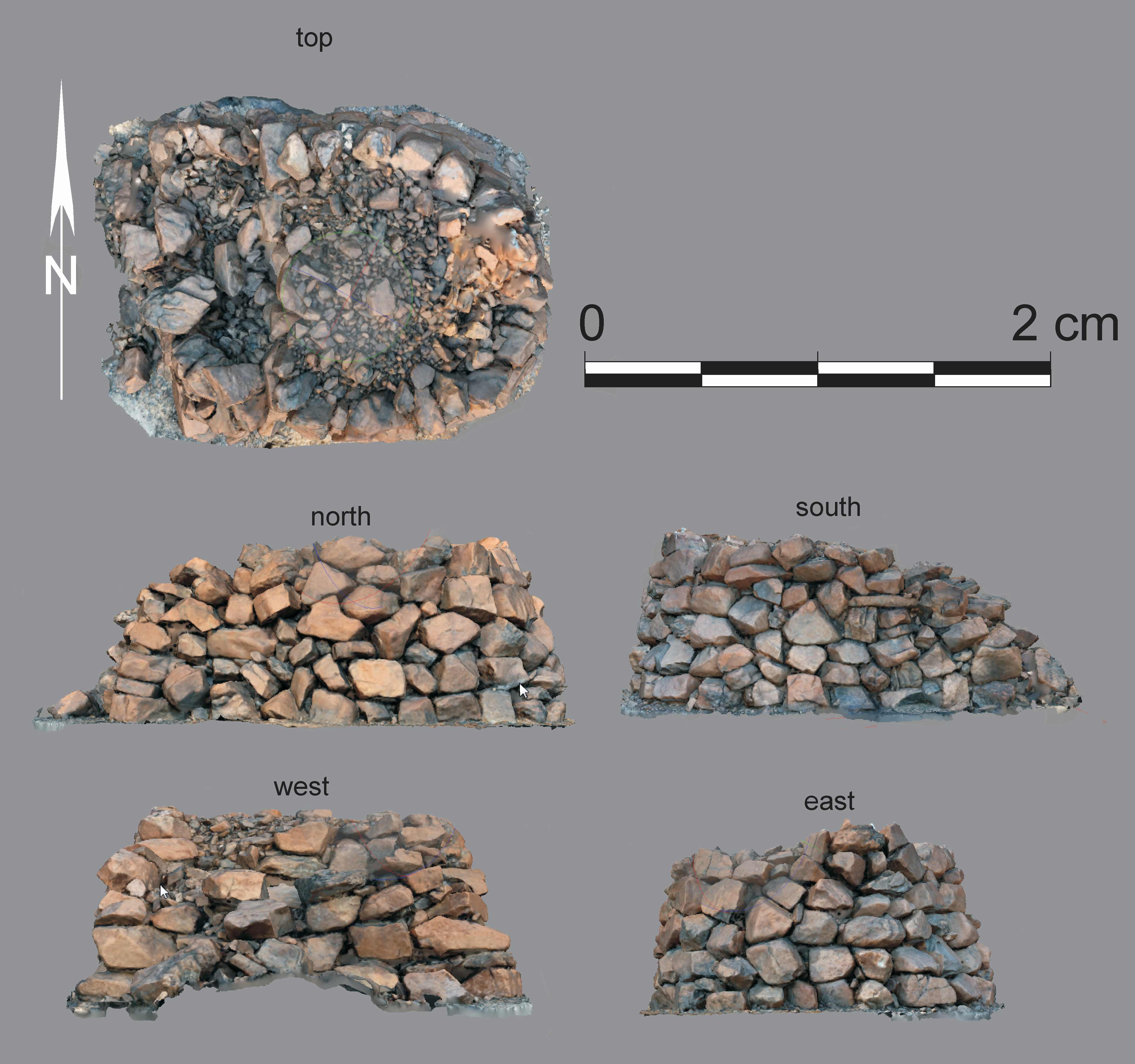
The Early Iron Age tombs at Jebel al-Salayli are distinctive structures that archaeologists call hut tombs -- stone constructions whose rounded forms echo the shape of the dwellings their builders inhabited in life. These are not monumental structures. They are human-scaled, intimate, built with the same mountain stone that surrounds them. The site attracted its first scholarly attention in 1976 when a preliminary mining survey noted the archaeological remains. The first public citation mistakenly identified the location as 'Musfa,' a site several kilometers to the north. The actual site, also known as al-Wuqbah or al-Wuqayb, sits at about 704 meters altitude, nestled into a valley at the lower end of a wadi. Its relative inaccessibility has been its salvation: the hut tombs remain in relatively good condition.
Following the Copper
The abandoned copper mine 400 meters east of the tombs explains everything about why people lived and died in this particular valley. Copper was one of the most valuable commodities of the ancient Near East, essential for making bronze. Oman's mountains held substantial copper deposits, and mining communities like the one at Jebel al-Salayli extracted and processed the ore for trade. The extensive slag fields scattered across the site testify to the scale of smelting operations. These were not occasional prospectors. They were industrial workers in an ancient supply chain that connected Omani mountain valleys to the great civilizations of Mesopotamia and the Indus.
Layers of Habitation
The settlement ruins at Jebel al-Salayli span two major periods: the Early Iron Age, when the copper mine was likely active, and the later Muslim Period. This layering is common across Oman's interior: people returned to the same sites generation after generation because the geography that made a location viable -- water, shelter, mineral resources -- did not change. The site's relationship to the adjacent mountain (the Jebel that gives it its name) provided natural protection and orientation. Paul Yule and Michela Gaudiello documented several of the hut tombs using photogrammetric recording techniques, creating detailed three-dimensional records that will preserve the site's current condition even as erosion and time continue their slow work on the stone.
Between the Mountains, Between the Ages
Jebel al-Salayli is not a tourist destination. There are no signs, no visitor center, no interpretive panels. The site exists in a quiet valley where the principal sounds are wind and the occasional call of a bird. The hut tombs face the wadi. The slag fields darken the ground with the residue of ancient industry. The mine entrance is silent. What makes this place significant is not spectacle but evidence: here, preserved by remoteness and mountain terrain, is proof that Oman's interior supported not just pastoral herders but organized mining communities with technical skills, trade connections, and burial customs that expressed something specific about how they understood life and death. The copper is gone. The tombs remain.
From the Air
Located at 22.93N, 58.29E in Oman's Northern Sharqiyah province, at approximately 704 m altitude. The site is nestled in a mountain valley and not easily spotted from high altitude. Nearest major airport is Muscat International (OOMS), approximately 200 km northwest. Mountainous terrain with limited access roads. No nearby airstrip.