Jedediah Island Marine Provincial Park
No ferry runs to Jedediah Island. No road leads there. To reach this 243-hectare park in the Gulf Islands, you need a boat and a willingness to leave modern convenience behind. That is precisely why the Mattice family bought it in 1949, why the Palmers lived on it for twenty years, and why a small group of Lasqueti Island residents fought to keep it from disappearing into private hands forever.
A Family's Island
Evan and Mary Mattice came from Seattle and bought Jedediah Island in 1949 as a summer retreat for their two sons. For decades the family traveled north from Washington state, nurturing the dream of living there full-time. After Mary remarried, she and her second husband Albert Palmer moved to the island in 1972, becoming year-round residents for the next twenty years. Evan continued visiting even after the divorce, drawn back to the island until his death in the early 1990s. In 1979, the Mattices' eldest son relocated his family from Kirkland, Washington to Vancouver Island and built a house at Long Bay on Jedediah, clearing land for horticulture farming. The island was becoming a multigenerational homestead, but Mary Palmer eventually decided to sell.
Six Months to Save an Island
In 1994, when a land trust commitment fell through and the Palmers faced selling to a private buyer, a small group of Lasqueti Island residents launched one of British Columbia's more remarkable conservation campaigns. In less than six months, they raised more than four million dollars. A major donation came from the family of Dan Culver, a Canadian educator, whitewater rafting pioneer, sailor, and mountain climber. Contributions arrived from across the province as word spread. The provincial Minister for the Environment joined the effort, pushing the total past its target. But Mary Palmer added one condition before she would sign: the island had to receive Class A provincial park status, meaning it could never be logged or mined. With that guarantee secured, she handed Jedediah over to become a new Gulf Islands provincial park.
The Foot on the Beach
Jedediah Island gained a different kind of notoriety in the summer of 2007, when a visiting family discovered the remains of a human foot on the beach. It turned out to be the first in what became a series of detached feet washing ashore throughout the Salish Sea over the following years, a mystery that generated international headlines. The foot found on Jedediah was eventually traced to a man who had been missing since 2004, and investigators determined that foul play was not involved. The phenomenon, unsettling as it sounds, has been attributed to natural decomposition and the buoyancy of modern athletic shoes, which can carry remains long distances on ocean currents.
Wild Shores
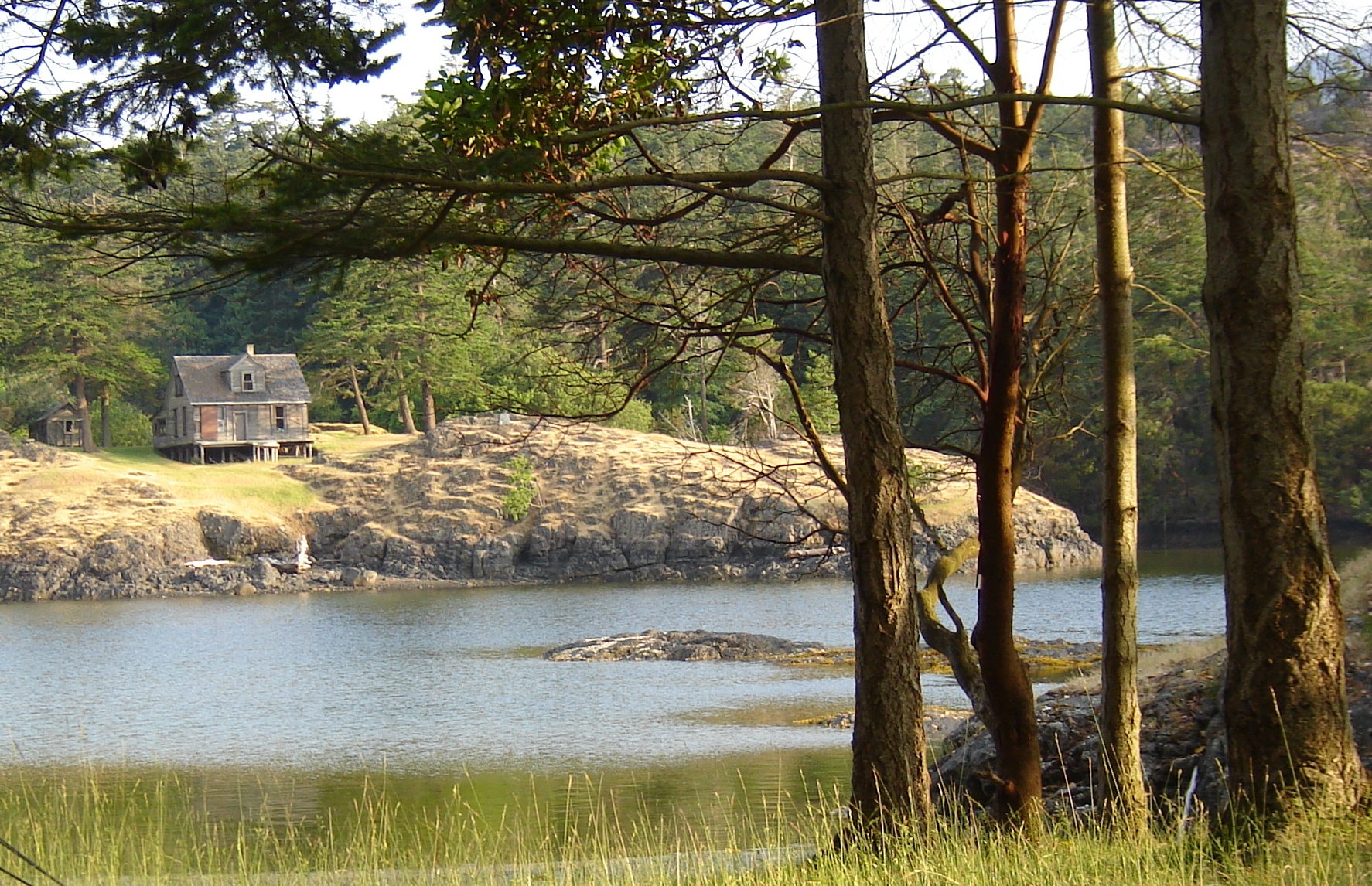
Today, anyone is free to camp on Jedediah Island. Steller sea lions haul out on the rocky shoreline, their barking carrying across the water. The island's interior preserves forest and the remnants of the Mattice-Palmer homestead, a heritage farm that tells the story of people who chose isolation deliberately. The nearest access point is Lasqueti Island, itself one of the most off-grid communities in the Gulf Islands, with no connection to BC Hydro's power grid. Reaching Jedediah requires crossing waters that can turn rough without warning in the Strait of Georgia. That difficulty is part of its appeal: this is a park that rewards effort with solitude, a place where the only sounds are wind, waves, and sea lions.
From the Air
Located at 49.50N, 124.20W in the Strait of Georgia between Vancouver Island and the mainland. Jedediah Island is visible as a forested landmass just north of Lasqueti Island. Look for Steller sea lion colonies on the rocky points. No airstrip on the island; nearest airports are Qualicum Beach Airport (CAT4) on Vancouver Island and Powell River Airport (CYPW) to the north. Best viewed at 2,000-4,000 feet to appreciate the island's shape and its relationship to neighboring Lasqueti and Texada Islands.