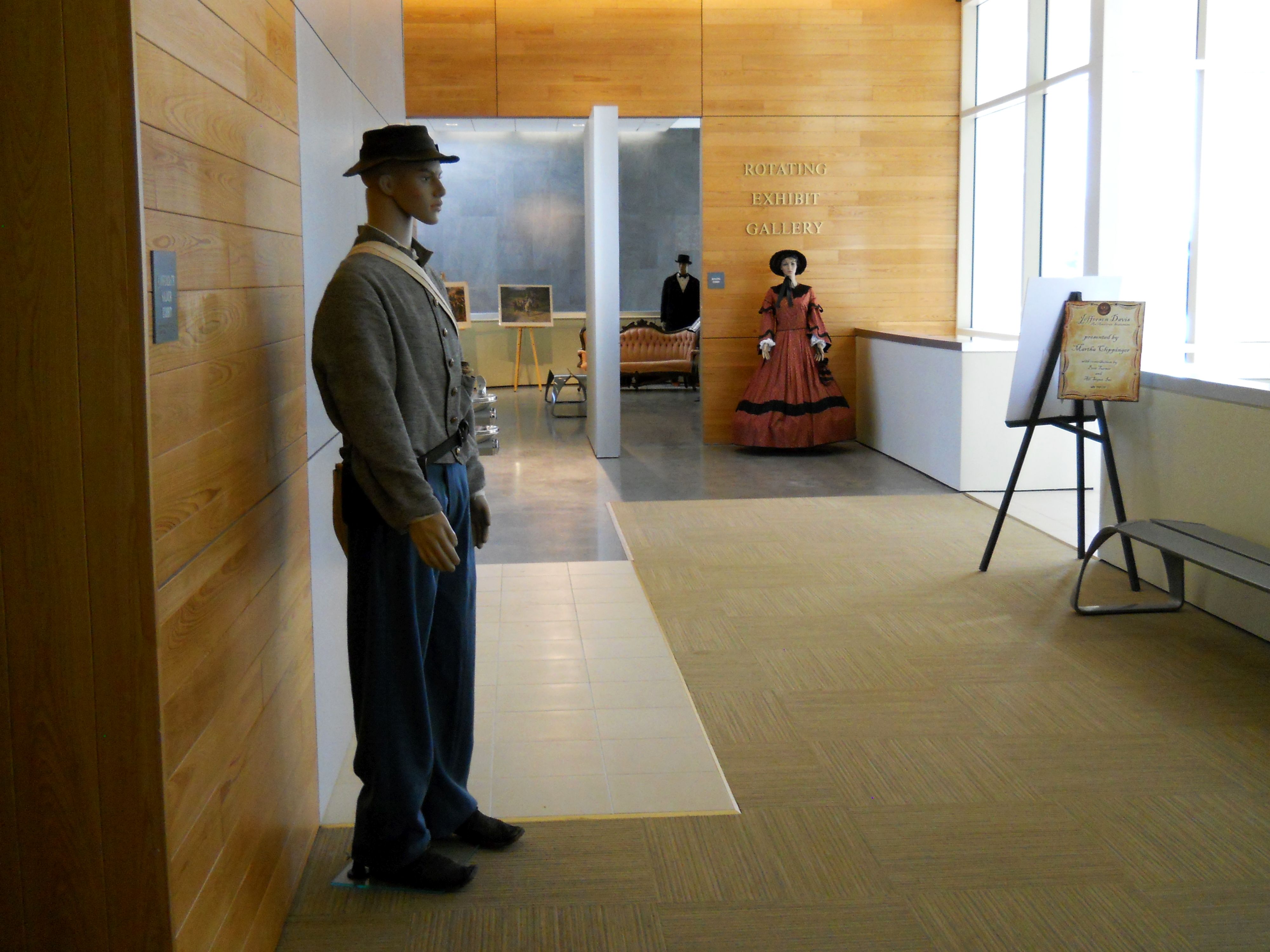
Jefferson Davis Presidential Library and Museum
It calls itself a presidential library, but no president of the United States ever worked from behind its doors. The Jefferson Davis Presidential Library and Museum occupies one of the more peculiar corners of American historical memory, sitting within the grounds of Beauvoir, the antebellum estate where the sole President of the Confederate States of America spent the last twelve years of his life. The distinction matters. Unlike every other presidential library in the country, this one falls outside the National Archives and Records Administration. Instead, it is supported by the State of Mississippi and managed by the Mississippi Division of the Sons of Confederate Veterans, preserving the papers, artifacts, and records of a man whose legacy remains among the most debated in American history.
A Beautiful View
Beauvoir, French for "beautiful view," earns its name honestly. Built between 1848 and 1852 by planter James Brown as a seaside vacation estate, the raised cottage sits on a stretch of Mississippi Gulf Coast beachfront in Biloxi. Jefferson Davis purchased the property in 1877, twelve years after the Confederacy's collapse and two years after his release from federal imprisonment at Fort Monroe, Virginia. Here, facing the waters of the Mississippi Sound, Davis wrote his memoir, "The Rise and Fall of the Confederate Government." He died in New Orleans in 1889, but Beauvoir remained central to his legacy. His widow Varina sold the property in 1902 to the Mississippi Division of the Sons of Confederate Veterans, stipulating it serve as a home for Confederate veterans. From 1903 until 1957, roughly 2,500 veterans and their families lived on the grounds.
The Storm and the Rebuilding
On August 29, 2005, Hurricane Katrina made landfall along the Mississippi Gulf Coast, and Beauvoir took a devastating hit. The main house survived but was badly damaged. The Hayes Cottage, Library Pavilion, a barracks replica, the original Confederate Museum, and the director's home were all destroyed. Roughly forty percent of the historical collection was lost. Federal Emergency Management Agency officials approved support for restoration, recognizing Beauvoir's status as a U.S. National Historic Landmark. On June 3, 2008, the 200th anniversary of Jefferson Davis's birth, the restored mansion reopened for public tours. A new presidential library building, designed by Larry Albert of Albert and Associates Architects, was completed and opened in 2013, replacing the structure lost in the storm.
What the Library Holds
The current library houses the official papers, records, and artifacts of Jefferson Davis's career, from his years as a U.S. Senator and Secretary of War under Franklin Pierce through his presidency of the Confederacy. A permanent exhibit traces Davis's life from his birth in Kentucky through his death in Louisiana. Continually changing temporary exhibits offer rotating perspectives on the Civil War era and the Gulf Coast's history. Outside the museum, a statue of Davis by sculptor William Beckwith stands on the grounds. The library's scholarly resources are supplemented by the Jefferson Davis Estate Papers held at the Mississippi Department of Archives and History and the Papers of Jefferson Davis collection maintained by Rice University in Houston.
A Contested Legacy on the Coast
Beauvoir and its library occupy an uncomfortable but real place in the American story. The property sits along Beach Boulevard in Biloxi, a city shaped as much by casino tourism and military presence as by antebellum history. Keesler Air Force Base, home to the Air Force's Hurricane Hunters, lies just minutes away. The contrast captures something essential about the Gulf Coast: layers of history stacked upon each other, none easily ignored. For visitors, the site offers a direct encounter with the artifacts and arguments of the Confederacy, presented by an organization with an explicit mission to preserve that particular version of Southern heritage. Whether one comes to study, to reflect, or to reckon with the past, Beauvoir does not allow indifference.
From the Air
Located at 30.393N, 88.970W on the Mississippi Gulf Coast beachfront in Biloxi. The Beauvoir estate is visible along Beach Boulevard (US-90) facing the Mississippi Sound. Best viewed below 3,000 feet AGL. Nearest airports: Keesler AFB (KBIX) approximately 3 miles east, Gulfport-Biloxi International (KGPT) approximately 12 miles west. The white-columned main house and surrounding grounds are set among live oaks between the highway and the beach.