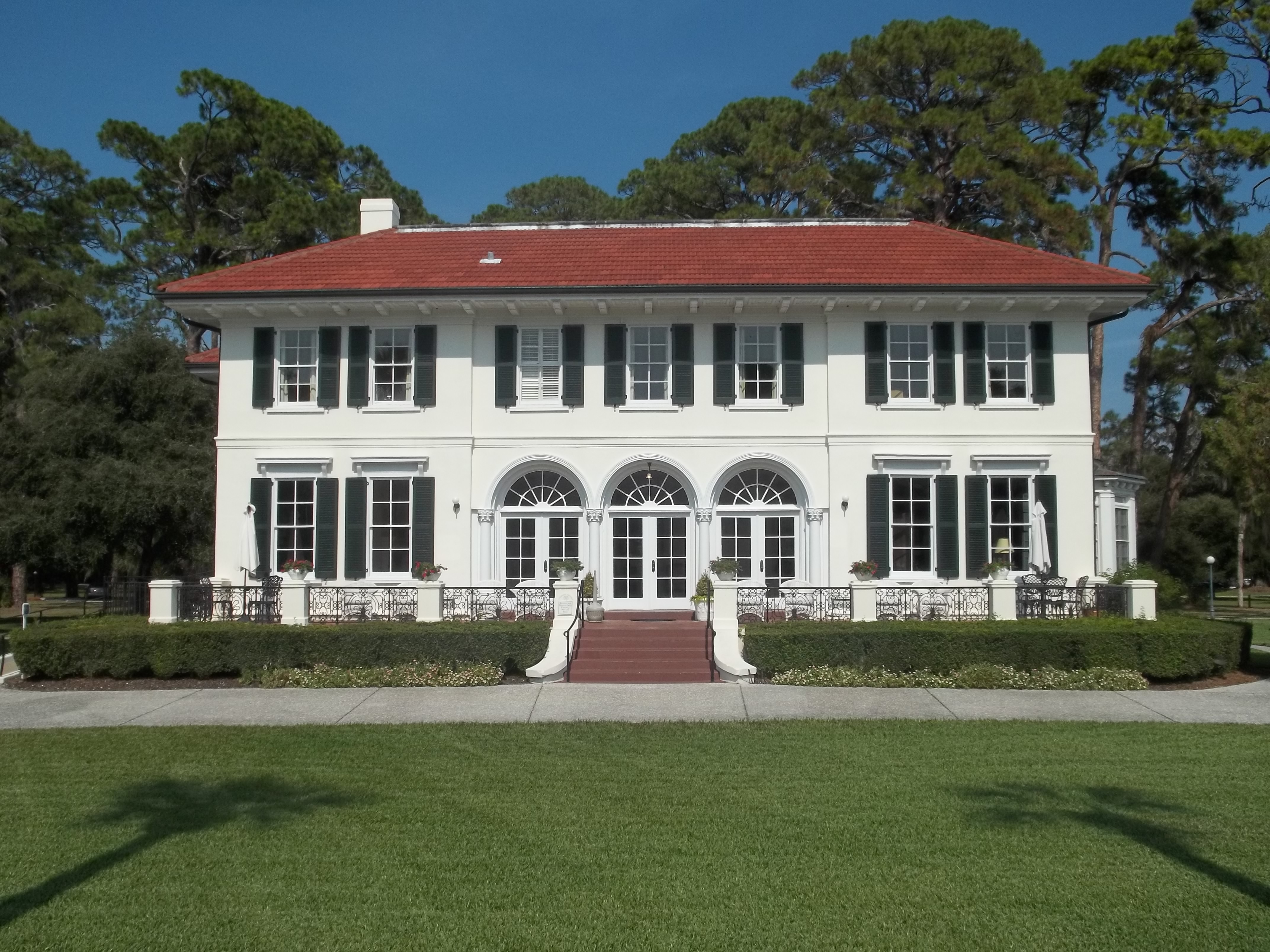
Jekyll Island Club: The Private Playground Where America's Fortune Was Redesigned
Picture a party of the nation's greatest bankers stealing out of New York on a private railroad car under cover of darkness. That is how Forbes magazine founder Bertie Charles Forbes later described the November 1910 journey to Jekyll Island, Georgia, where seven men representing roughly one quarter of the world's wealth gathered in secret to draft the framework for America's central bank. But the Jekyll Island Club had been a stage for extraordinary wealth and power for decades before that clandestine meeting. Founded in 1886 as a winter retreat for the ultra-rich, the club counted J.P. Morgan, Joseph Pulitzer, William K. Vanderbilt, and Marshall Field among its members. For sixty years, this barrier island off Georgia's coast was the most exclusive address in America -- a private kingdom where the rules of democracy stopped at the dock.
Buying an Island
The club began with a brother-in-law's suggestion. Newton Finney proposed to John Eugene du Bignon, the island's owner, that they sell Jekyll to Northern businessmen as a winter resort. By 1885, du Bignon was the sole owner, and Finney, along with New York associate Oliver K. King, gathered a group of investors who incorporated the "Jekyl Island Club" on December 9, 1885. They sold 100 shares at $600 each -- about $15,000 in today's dollars. On February 17, 1886, du Bignon sold the entire island for $125,000. The founding members included Henry Hyde of Equitable Life, retail magnate Marshall Field, banking titan J.P. Morgan, newspaper publisher Joseph Pulitzer, and railroad heir William K. Vanderbilt. Charles A. Alexander of Chicago designed the clubhouse, and celebrated landscape architect Horace William Shaler Cleveland laid out the grounds. The club opened for its first season on January 21, 1888, its signature turret rising above the live oaks.
The Secret Meeting That Built the Fed
Following the Panic of 1907, which exposed dangerous fragility in American banking, Senator Nelson Aldrich of Rhode Island -- chairman of the National Monetary Commission -- spent two years studying European banking systems. Upon his return, he needed absolute secrecy to draft a reform plan without political interference. On the evening of November 22, 1910, Aldrich and six companions left Hoboken, New Jersey, on a private rail car, using only first names or code names to hide their identities. They traveled to Jekyll Island under the pretext of a duck hunting trip. The group included A.P. Andrews of the Treasury Department, Paul Warburg of Kuhn Loeb, Frank Vanderlip of National City Bank, Henry P. Davison and Charles D. Norton of the Morgan banking empire, and Benjamin Strong, also representing J.P. Morgan interests. Over ten days of secret deliberation, they drafted what became the Aldrich Plan. Though modified before passage, key elements of their work were incorporated into the Federal Reserve Act of 1913. The participants denied the meeting had occurred for years afterward.
Seasons of Splendor
The Jekyll Island Club operated from January through March each year, when America's wealthiest families fled Northern winters for the mild Georgia coast. Membership was capped at 100, and the waiting list stretched for decades. Members built elaborate "cottages" -- mansions by any ordinary standard -- surrounding the main clubhouse. Hunting was the original draw; a gamekeeper stocked the island with pheasant, turkey, quail, and deer, and members reported their daily kills to the club kitchen, where wild game appeared regularly on the menu. A taxidermist shop operated within the compound for mounting prize trophies. Over time, golf overtook hunting as the dominant pastime, with courses built north of the compound and later along the oceanfront. In 1915, the club hosted another historic moment when AT&T president Theodore N. Vail placed the first transcontinental telephone call from Jekyll Island, connecting Alexander Graham Bell, Thomas Watson, and President Woodrow Wilson.
The Gilded Age Fades
The Great Depression touched even the wealthiest families, and membership in an exclusive island club became an extravagance difficult to justify. Numbers declined through the 1930s. In 1933, the executive committee created a more affordable Associate membership to attract younger and less wealthy members, briefly revitalizing the roster. J.P. Morgan Jr. served as club president from 1933 to 1938. But World War II delivered the final blow. The club opened for the 1942 season but closed early, unable to maintain staff or operations during wartime. U.S. Army troops moved in, manning observation towers to watch for German submarines and using the clubhouse grounds as a military post. The club never reopened. In 1947, Georgia's revenue commissioner pushed to acquire a barrier island for public use, and the state purchased Jekyll through condemnation proceedings for $675,000 -- less than some individual members had spent on their cottages.
From Private Kingdom to Public Park
Georgia's attempt to run the club as a public resort failed financially, and the complex closed by 1971. But the buildings survived. In 1972, the Jekyll Island Club Historic District was added to the National Register of Historic Places, and in 1978 it was designated a National Historic Landmark. The 240-acre district contains thirty-three contributing properties, including the separately listed Rockefeller Cottage and Faith Chapel. Savannah landscape architect Clermont Huger Lee created a master plan in the late 1960s to restore "Millionaire's Village" to its early twentieth-century appearance. In 1985, the complex was restored and reopened as a luxury resort hotel, now operating as the Jekyll Island Club Resort and recognized as a member of Historic Hotels of America. The island that once embodied absolute exclusivity -- where no outsider set foot without invitation -- is now open to anyone who crosses the causeway from Brunswick.
From the Air
Located at 31.06N, 81.42W on Georgia's Atlantic coast, Jekyll Island is one of the Golden Isles barrier island chain. From altitude, the island appears as a narrow green strip bordered by beaches, connected to the mainland by a causeway across tidal marshes. The historic district clusters on the island's western side, the clubhouse and cottages visible as a compact cluster of structures distinct from later resort development. Brunswick spreads across the mainland to the west; St. Simons Island lies to the north. The nearest airports are Brunswick Golden Isles Airport (KBQK) approximately 8 miles to the northwest and McKinnon St. Simons Island Airport (KSSI) about 6 miles to the north. Best viewed at 2,000-3,000 feet AGL. The fractal patterns of marshland and tidal creeks between the islands are striking from the air.
Sources
- Jekyll Island Club - Wikipedia
- Jekyll Island Club - Wikipedia (detailed article)
- The Meeting at Jekyll Island - Federal Reserve History
- Jekyll Island Club Resort - Official History
- Jekyll Island - A Long-Distance Call for the Ages
- Georgia Historical Society - M.E. Thompson and the Purchase of Jekyll Island